Saturday, June 30, 2018

Food, brain health and Alzheimer's

Learn more HERE.


Imagine for a moment that you surmount life's outrageous fortunes and you go over the hurdles, and then you face toward the end of your life the reward for your appropriate and successful aging, the loss of your most human qualities--your ability to reason, make decisions, remember.


That is the fate that my Aunt Barbara faced and a percentage of Americans must deal with. That is, a large fraction of us, if we don't find solutions, ultimately will will suffer the syndrome called Alzheimer's disease.

If you live to 85, you have a 50 per cent chance of getting Alzheimer's.

With the enormous increase in people achieving the age of 65, we cannot allow this disease to become the scourge it already is. Alzheimer's will be much more prevalent in the future by the ironic fact that medical science is helping us live longer.

Now, it is the case that not everyone will suffer this tragic disorder. Currently, experts say that if you live to 85, you will have a 50 per cent chance of getting Alzheimer's.

Researchers and doctors are focused now on making Alzheimer's a treatable condition since indications are that the disease can begin up to 20 years before symptoms such as memory loss manifest themselves.

For example, some scientists believe that a simple test, an exam of the retina (considered part of the brain) by a eye examination, can show early build up of the plaques and tangles that are the hallmark of the disease.

The model of Alzheimer's treatment would be a disease such as diabetes, in which symptoms can be detected and treated with diet, exercise and medications. We treat but don't cure diabetes.

Friday, June 15, 2018

Childhood brain trauma lasts a lifetime

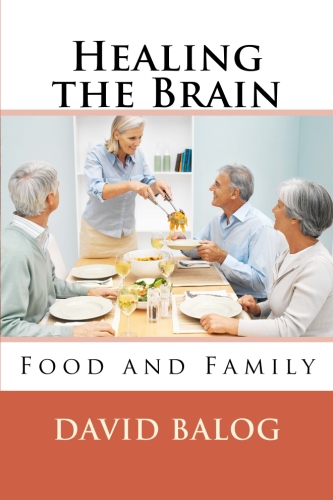
From Healing the Brain, by David Balog

How trauma affects the developing brain.

Traumatized Children and Youth in Romania--A Tragedy of Epic Proportions
Beginning in the 1960s, the country of Romania's harsh economic policies meant that most families were too poor to support multiple children. So, without other options, thousands of parents left their babies in government-run orphanages.

By Christmas day 1989, when revolutionaries overthrew the government, an estimated 170,000 children were living in more than 700 state orphanages. As the regime crumbled, journalists and humanitarians swept in. In most institutions, children were getting adequate food, hygiene and medical care, but had woefully few interactions with adults, leading to severe behavioral and emotional problems.

Unlike growing up in a family, the children didn't have lots of interactions with adults holding them, talking to them, singing or playing with them, and that lack of stimulation affected their brain development.

An American scientist who went to study the crisis, recalls "a boy in a red T-shirt and sweats skipped up to me, grabbed my hand, and wouldn’t let go. His head didn’t reach my shoulders, so I figured he was eight or nine years old. He was 13, my guide said. The boy kept looking up at me with an open, sweet face, but I found it difficult to return his gaze.

Thursday, June 14, 2018

What childhood trauma does to the brain


What does PTSD look like in infants and children?

Animal models have taught us that stressing the mother in pregnancy can alter brain development in the offspring; and that prolonged separation of infant from mother impairs in the newborn other aspects of brain development and function. Furthermore, inconsistent maternal care and maternal anxiety, for example, from food insecurity, produce anxiety in offspring and contribute to the predisposition to diabetes, which itself has adverse effects on the brain.

Learn about the brain in clear language.
....Studies on children growing up in adversity have added to the information gained from animal research. Chaos in the home and inconsistent parenting impairs development of self regulatory behaviors, which can lead to substance abuse, earlier onset of sexual activity, bad decision making, and poor mood control.

School-aged children (ages 5-12)
These children may not have flashbacks or problems remembering parts of the trauma, the way adults with PTSD often do. Children, though, might put the events of the trauma in the wrong order. They might also think there were signs that the trauma was going to happen. As a result, they think that they will see these signs again before another trauma happens. They think that if they pay attention, they can avoid future traumas.

Children of this age might also show signs of PTSD in their play. They might keep repeating a part of the trauma. These games do not make their worry and distress go away. For example, a child might always want to play shooting games after he sees a school shooting. Children may also fit parts of the trauma into their daily lives. For example, a child might carry a gun to school after seeing a school shooting.

Wednesday, May 30, 2018

Stroke essentials. Save a life--yours.

May ends and so does Stroke Awareness Month. Get these basics from our book, and learn more about this leading killer of Americans.

Order your copy today!

Tuesday, May 15, 2018

Suicide in America: Know the Signs

Suicide in America: Frequently Asked Questions.

Suicide is a major public health problem and a leading cause of death in the United States. The effects of suicide go beyond the person who acts to take his or her life: it can have a lasting effect on family, friends, and communities. 

Learn about the brain in health and illness. Click here.

National Institute of Mental Health (NIMH), can help you, a friend, or a family member learn about the signs and symptoms, risk factors and warning signs, and ongoing research about suicide and suicide prevention.

If You Know Someone in Crisis: Call the toll-free National Suicide Prevention Lifeline (NSPL) at 1–800–273–TALK (8255), 24 hours a day, 7 days a week. The service is available to everyone. The deaf and hard of hearing can contact the Lifeline via TTY at 1–800–799–4889. All calls are confidential. Contact social media outlets directly if you are concerned about a friend’s social media updates or dial 911 in an emergency. Learn more on the NSPL’s website. The Crisis Text Line is another resource available 24 hours a day, 7 days a week. Text “HOME” to 741741.


What Is Suicide?
Suicide is when people direct violence at themselves with the intent to end their lives, and they die because of their actions. It’s best to avoid the use of terms like “committing suicide” or a “successful suicide” when referring to a death by suicide as these terms often carry negative connotations.
A suicide attempt is when people harm themselves with the intent to end their lives, but they do not die because of their actions.

Who Is at Risk for Suicide?

Suicide does not discriminate. People of all genders, ages, and ethnicities can be at risk.
The main risk factors for suicide are:
  • A prior suicide attempt
  • Depression and other mental health disorders
  • Substance abuse disorder
  • Family history of a mental health or substance abuse disorder
  • Family history of suicide
  • Family violence, including physical or sexual abuse
  • Having guns or other firearms in the home
  • Being in prison or jail
  • Being exposed to others’ suicidal behavior, such as a family member, peer, or media figure
  • Medical illness
  • Being between the ages of 15 and 24 years or over age 60 
Even among people who have risk factors for suicide, most do not attempt suicide. It remains difficult to predict who will act on suicidal thoughts.

Are certain groups of people at higher risk than others?

According to the Centers for Disease Control and Prevention (CDC), men are more likely to die by suicide than women, but women are more likely to attempt suicide. Men are more likely to use more lethal methods, such as firearms or suffocation. Women are more likely than men to attempt suicide by poisoning.
Also per the CDC, certain demographic subgroups are at higher risk. For example, American Indian and Alaska Native youth and middle-aged persons have the highest rate of suicide, followed by non-Hispanic White middle-aged and older adult males. African Americans have the lowest suicide rate, while Hispanics have the second lowest rate. The exception to this is younger children. African American children under the age of 12 have a higher rate of suicide than White children. While younger preteens and teens have a lower rate of suicide than older adolescents, there has been a significant rise in the suicide rate among youth ages 10 to 14. Suicide ranks as the second leading cause of death for this age group, accounting for 425 deaths per year and surpassing the death rate for traffic accidents, which is the most common cause of death for young people.
Looking for more data and statistics? For the most recent statistics on suicide and more information about risk, please visit the CDC website at www.cdc.gov/ViolencePrevention/suicide/index.html.

Why do some people become suicidal while others with similar risk factors do not?

Most people who have the risk factors for suicide will not kill themselves. However, the risk for suicidal behavior is complex. Research suggests that people who attempt suicide may react to events, think, and make decisions differently than those who do not attempt suicide. These differences happen more often if a person also has a disorder such as depression, substance abuse, anxiety, borderline personality disorder, and psychosis. Risk factors are important to keep in mind; however, someone who has warning signs of suicide may be in more danger and require immediate attention.

What Are the Warning Signs of Suicide?

The behaviors listed below may be signs that someone is thinking about suicide.
  • Talking about wanting to die or wanting to kill themselves
  • Talking about feeling empty, hopeless, or having no reason to live
  • Planning or looking for a way to kill themselves, such as searching online, stockpiling pills, or newly acquiring potentially lethal items (e.g., firearms, ropes)
  • Talking about great guilt or shame
  • Talking about feeling trapped or feeling that there are no solutions
  • Feeling unbearable pain, both physical or emotional
  • Talking about being a burden to others
  • Using alcohol or drugs more often
  • Acting anxious or agitated
  • Withdrawing from family and friends
  • Changing eating and/or sleeping habits
  • Showing rage or talking about seeking revenge
  • Taking risks that could lead to death, such as reckless driving
  • Talking or thinking about death often
  • Displaying extreme mood swings, suddenly changing from very sad to very calm or happy
  • Giving away important possessions
  • Saying goodbye to friends and family
  • Putting affairs in order, making a will

Do People Threaten Suicide to Get Attention?

Suicidal thoughts or actions are a sign of extreme distress and an alert that someone needs help. Any warning sign or symptom of suicide should not be ignored. All talk of suicide should be taken seriously and requires attention. Threatening to die by suicide is not a normal response to stress and should not be taken lightly.

If You Ask Someone About Suicide, Does It Put the Idea Into Their Head?

Asking someone about suicide is not harmful. There is a common myth that asking someone about suicide can put the idea into their head. This is not true. Several studies examining this concern have demonstrated that asking people about suicidal thoughts and behavior does not induce or increase such thoughts and experiences. In fact, asking someone directly, “Are you thinking of killing yourself,” can be the best way to identify someone at risk for suicide.

What Should I Do if I Am in Crisis or Someone I Know Is Considering Suicide?

If you or someone you know has warning signs or symptoms of suicide, particularly if there is a change in the behavior or a new behavior, get help as soon as possible.
Often, family and friends are the first to recognize the warning signs of suicide and can take the first step toward helping an at-risk individual find treatment with someone who specializes in diagnosing and treating mental health conditions. If someone is telling you that they are going to kill themselves, do not leave them alone. Do not promise anyone that you will keep their suicidal thoughts a secret. Make sure to tell a trusted friend or family member, or if you are a student, an adult with whom you feel comfortable. You can also contact the resources noted below.
How can doctors and other health care providers play a role in suicide prevention?
Health care providers can help prevent suicide when they understand the risk factors and use evidence-based treatments and therapies. In addition, The Joint Commission recommends screening all patients in all medical settings for suicide risk using validated, population and setting-specific tools.
Clinicians should be advised that it is no longer acceptable to “contract for safety” with patients. Safety planning for managing future suicidal thoughts and means restriction (removing or ensuring safe storage of potentially lethal items) have been proven to be effective ways of preventing suicide. Health care providers can find educational resources on the Zero Suicide website and news about the latest research on the NIMH website at www.nimh.nih.gov.

What if Someone Is Posting Suicidal Messages on Social Media?

Knowing how to get help for a friend posting suicidal messages on social media can save a life. Many social media sites have a process to report suicidal content and get help for the person posting the message. In addition, many of the social media sites use their analytic capabilities to identify and help report suicidal posts. Each offers different options on how to respond if you see concerning posts about suicide. For example:
  • Facebook Suicide Prevention webpage can be found at www.facebook.com/help/594991777257121/[use the search term “suicide” or “suicide prevention”].
  • Instagram uses automated tools in the app to provide resources, which can also be found online at https://help.instagram.com [use the search term, “suicide,” self-injury,” or “suicide prevention”]
  • Snapchat’s Support provides guidance at https://support.snapchat.com [use the search term, “suicide” or “suicide prevention”]  
  • Tumblr Counseling and Prevention Resources webpage can be found at https://tumblr.zendesk.com[use the search term “counseling” or “prevention,” then click on “Counseling and prevention resources”].
  • Twitter’s Best Practices in Dealing With Self-Harm and Suicide at https://support.twitter.com [use the search term “suicide,” “self-harm,” or “suicide prevention”].
  • YouTube’s Safety Center webpage can be found at https://support.google.com/youtube [use the search term “suicide and self injury”].
If you see messages or live streaming suicidal behavior on social media, call 911 or contact the toll-free National Suicide Prevention Lifeline at 1–800–273–TALK (8255), or text the Crisis Text Line (text HOME to 741741) available 24 hours a day, 7 days a week. Deaf and hard-of-hearing individuals can contact the Lifeline via TTY at 1–800–799–4889. All calls are confidential. This service is available to everyone. People—even strangers—have saved lives by being vigilant.

What Treatment Options and Therapies Are Available?

Effective suicide intervention practices are based on research findings and tested to see how various programs benefit various specific groups of people. For example, research has shown that borderline personality disorder is a risk factor for suicidal behavior, and there are programs that are effective in reducing suicide attempts.
Among its research on suicide, the National Institute of Mental Health (NIMH) has supported research on strategies that have worked well for those who have mental health conditions related to suicide such as depression and anxiety. These mainly include types of psychotherapies (such as cognitive behavior therapy or dialectical behavioral therapy). NIMH also conducts research on suicide risk screening tools for health care clinicians to use as a guide for screening patients for suicide risk.
For basic information about psychotherapies and medications, visit the NIMH website (www.nimh.nih.gov/health). For the most up-to-date information on medications, side effects, and warnings, visit the Food and Drug Administration (FDA) website.
Looking for a mental health provider in your area?
For general information on mental health and to locate treatment services in your area, call the Substance Abuse and Mental Health Services Administration (SAMHSA) Treatment Referral Helpline at 1–800–662–HELP (4357). SAMHSA also has a Behavioral Health Treatment Locator on its website that can be searched by location.

Talking to Your Doctor

Suicide is often not discussed in medical visits where physical symptoms are more of the focus. If you have thoughts of suicide, tell your health care provider. Asking questions and providing information to your doctor or health care provider can improve your care. Talking with your doctor builds trust and leads to better results, quality, safety, and satisfaction. Visit the Agency for Healthcare Research and Quality website for tips at www.ahrq.gov/patients-consumers.
Source: NIMH
Saturday, April 28, 2018

Eating dark chocolate reduces stress and inflammation

Data represent first human trials examining the impact of dark chocolate consumption on cognition and other brain functions

Date:
April 24, 2018
Source:
Loma Linda University Adventist Health Sciences Center
Summary:
Findings from two new studies show dark chocolate consumption reduces stress and inflammation, while improving memory, immunity and mood.


Research shows there might be health benefits to eating certain types of dark chocolate.
Credit: LLU Health
New research shows there might be health benefits to eating certain types of dark chocolate. Findings from two studies being presented today at the Experimental Biology 2018 annual meeting in San Diego show that consuming dark chocolate that has a high concentration of cacao (minimally 70% cacao, 30% organic cane sugar) has positive effects on stress levels, inflammation, mood, memory and immunity. While it is well known that cacao is a major source of flavonoids, this is the first time the effect has been studied in human subjects to determine how it can support cognitive, endocrine and cardiovascular health.
Learn about your brain in clear English. Click here!


The flavonoids found in cacao are extremely potent antioxidants and anti-inflammatory agents, with known mechanisms beneficial for brain and cardiovascular health. The following results will be presented in live poster sessions during the Experimental Biology 2018 meeting.

Tuesday, April 10, 2018

April Is Autism Awareness Month: Part II: Causes

Causes and Risk Factors

While scientists don’t know the exact causes of ASD, research suggests that genes can act together with influences from the environment to affect development in ways that lead to ASD. Although scientists are still trying to understand why some people develop ASD and others don’t, some risk factors include:
  • Having a sibling with ASD
  • Having older parents
  • Having certain genetic conditions—people with conditions such as Down syndrome, fragile X syndrome, and Rett syndrome are more likely than others to have ASD
  • Very low birth weight

Diagnosing ASD

Doctors diagnose ASD by looking at a person’s behavior and development. ASD can usually be reliably diagnosed by the age of two. It is important for those with concerns to seek out assessment as soon as possible so that a diagnosis can be made, and treatment can begin.

Diagnosis in Young Children

Diagnosis in young children is often a two-stage process.

Stage 1: General Developmental Screening During Well-Child Checkups

Every child should receive well-child check-ups with a pediatrician or an early childhood health care provider. The American Academy of Pediatrics recommends that all children be screened for developmental delays at their 9-, 18-, and 24- or 30-month well-child visits and specifically for autism at their 18- and 24-month well-child visits. Additional screening might be needed if a child is at high risk for ASD or developmental problems. Those at high risk include children who have a family member with ASD, have some ASD behaviors, have older parents, have certain genetic conditions, or who were born at a very low birth weight.
Get the basics of the brain, in easy-to-read language.

Parents’ experiences and concerns are very important in the screening process for young children. Sometimes the doctor will ask parents questions about the child’s behaviors and combine those answers with information from ASD screening tools, and with his or her observations of the child. Read more about screening instruments on the Centers for Disease Control and Prevention (CDC) website.
Children who show developmental problems during this screening process will be referred for a second stage of evaluation.

Stage 2: Additional Evaluation

This second evaluation is with a team of doctors and other health professionals who are experienced in diagnosing ASD.
This team may include:
  • A developmental pediatrician—a doctor who has special training in child development
  • A child psychologist and/or child psychiatrist—a doctor who has specialized training in brain development and behavior
  • A neuropsychologist—a doctor who focuses on evaluating, diagnosing, and treating neurological, medical, and neurodevelopmental disorders
  • A speech-language pathologist—a health professional who has special training in communication difficulties
The evaluation may assess:
  • Cognitive level or thinking skills
  • Language abilities
  • Age-appropriate skills needed to complete daily activities independently, such as eating, dressing, and toileting
Because ASD is a complex disorder that sometimes occurs along with other illnesses or learning disorders, the comprehensive evaluation may include:
  • Blood tests
  • Hearing test
The outcome of the evaluation will result in a formal diagnosis and recommendations for treatment.
Source: NIH