Monday, August 12, 2019

Healing the Brain: Gut-brain connection helps explain obesity


August 12, 2019
Source:
Baylor College of Medicine
Summary:
A research team reveals a previously unknown gut-brain connection that helps explain how those extra servings lead to weight gain.


Overeating, junk food concept (stock image).
Credit: © motortion / Adobe Stock
Eating extra servings typically shows up on the scale later, but how this happens has not been clear. A new study published today in the Journal of Clinical Investigation by a multi-institutional team led by researchers at Baylor College of Medicine reveals a previously unknown gut-brain connection that helps explain how those extra servings lead to weight gain.
Mice consuming a high-fat diet show increased levels of gastric inhibitory polypeptide (GIP), a hormone produced in the gut that is involved in managing the body's energy balance. The study reports that the excess GIP travels through the blood to the brain where it inhibits the action of leptin, the satiety hormone; consequently, the animals continue eating and gain weight. Blocking the interaction of GIP with the brain restores leptin's ability to inhibit appetite and results in weight loss in mice.
"We have uncovered a new piece of the complex puzzle of how the body manages energy balance and affects weight," said corresponding author Dr. Makoto Fukuda, assistant professor of pediatrics at Baylor and the USDA/ARS Children's Nutrition Research Center at Baylor and Texas Children's Hospital.
Researchers know that leptin, a hormone produced by fat cells, is important in the control of body weight both in humans and mice. Leptin works by triggering in the brain the sensation of feeling full when we have eaten enough, and we stop eating. However, in obesity resulting from consuming a high-fat diet or overeating, the body stops responding to leptin signals -- it does not feel full, and eating continues, leading to weight gain.
"We didn't know how a high-fat diet or overeating leads to leptin resistance," Fukuda said. "My colleagues and I started looking for what causes leptin resistance in the brain when we eat fatty foods. Using cultured brain slices in petri dishes we screened blood circulating factors for their ability to stop leptin actions. After several years of efforts, we discovered a connection between the gut hormone GIP and leptin."
GIP is one of the incretin hormones produced in the gut in response to eating and known for their ability to influence the body's energy management. To determine whether GIP was involved in leptin resistance, Fukuda and his colleagues first confirmed that the GIP receptor, the molecule on cells that binds to GIP and mediates its effects, is expressed in the brain.
Then the researchers evaluated the effect blocking the GIP receptor would have on obesity by infusing directly into the brain a monoclonal antibody developed by Dr. Peter Ravn at AstraZeneca that effectively prevents the GIP-GIP receptor interaction. This significantly reduced the body weight of high-fat-diet-fed obese mice.
"The animals ate less and also reduced their fat mass and blood glucose levels," Fukuda said. "In contrast, normal chow-fed lean mice treated with the monoclonal antibody that blocks GIP-GIP receptor interaction neither reduced their food intake nor lost body weight or fat mass, indicating that the effects are specific to diet-induced obesity."
Further experiments showed that if the animals were genetically engineered to be leptin deficient, then the treatment with the specific monoclonal antibody did not reduce appetite and weight in obese mice, indicating that GIP in the brain acts through leptin signaling. In addition, the researchers identified intracellular mechanisms involved in GIP-mediated modulation of leptin activity.
"In summary, when eating a balanced diet, GIP levels do not increase and leptin works as expected, triggering in the brain the feeling of being full when the animal has eaten enough and the mice stop eating," Fukuda said. "But, when the animals eat a high-fat diet and become obese, the levels of blood GIP increase. GIP flows into the hypothalamus where it inhibits leptin's action. Consequently, the animals do not feel full, overeat and gain weight. Blocking the interaction of GIP with the hypothalamus of obese mice restores leptin's ability to inhibit appetite and reduces body weight."
These data indicate that GIP and its receptor in the hypothalamus, a brain area that regulates appetite, are necessary and sufficient to elicit leptin resistance. This is a previously unrecognized role of GIP on obesity that plays directly into the brain.
Although more research is needed, the researchers speculate that these findings might one day be translated into weight loss strategies that restore the brain's ability to respond to leptin by inhibiting the anti-leptin effect of GIP.

Tuesday, August 6, 2019

Socially active 60-year-olds face lower dementia risk

Learn about your amazing brain in clear, easy-to-understand language. Click here!

Date:
August 2, 2019
Source:
University College London
Summary:
Being more socially active in your 50s and 60s predicts a lower risk of developing dementia later on, finds a new UCL-led study published in PLOS Medicine.
Share:
    
FULL STORY
Being more socially active in your 50s and 60s predicts a lower risk of developing dementia later on, finds a new UCL-led study.

advertisement

The longitudinal study, published in PLOS Medicine, reports the most robust evidence to date that social contact earlier in life could play an important role in staving off dementia.

"Dementia is a major global health challenge, with one million people expected to have dementia in the UK by 2021, but we also know that one in three cases are potentially preventable," said the study's lead author, Dr Andrew Sommerlad (UCL Psychiatry).

"Here we've found that social contact, in middle age and late life, appears to lower the risk of dementia. This finding could feed into strategies to reduce everyone's risk of developing dementia, adding yet another reason to promote connected communities and find ways to reduce isolation and loneliness."

The research team used data from the Whitehall II study, tracking 10,228 participants who had been asked on six occasions between 1985 and 2013 about their frequency of social contact with friends and relatives. The same participants also completed cognitive testing from 1997 onwards, and researchers referred to the study subjects' electronic health records up until 2017 to see if they were ever diagnosed with dementia.

For the analysis, the research team focused on the relationships between social contact at age 50, 60 and 70, and subsequent incidence of dementia, and whether social contact was linked to cognitive decline, after accounting for other factors such as education, employment, marital status and socioeconomic status.

The researchers found that increased social contact at age 60 is associated with a significantly lower risk of developing dementia later in life. The analysis showed that someone who saw friends almost daily at age 60 was 12% less likely to develop dementia than someone who only saw one or two friends every few months.

They found similarly strong associations between social contact at ages 50 and 70 and subsequent dementia; while those associations did not reach statistical significance, the researchers say that social contact at any age may well have a similar impact on reducing dementia risk.

Social contact in mid to late life was similarly correlated with general cognitive measures.

Monday, July 22, 2019

Short exercise boosts memory


Researchers discover a gene in mice that's activated by brief periods of exercise

Date: July 2, 2019
Source:
Oregon Health & Science University

Summary:
Neuroscientists, working with mice, have discovered that a short burst of exercise directly boosts the function of a gene that increases connections between neurons in the hippocampus, the region of the brain associated with learning and memory.


FULL STORY

Neuroscientists at OHSU in Portland, Oregon, working with mice, have discovered that a short burst of exercise directly boosts the function of a gene that increases connections between neurons in the hippocampus, the region of the brain associated with learning and memory.

The research is published online in the journal eLife.

"Exercise is cheap, and you don't necessarily need a fancy gym membership or have to run 10 miles a day," said co-senior author Gary Westbrook, M.D., senior scientist at the OHSU Vollum Institute and Dixon Professor of Neurology in the OHSU School of Medicine.

Previous research in animals and in people shows that regular exercise promotes general brain health. However, it's hard to untangle the overall benefits of exercise to the heart, liver and muscles from the specific effect on the brain. For example, a healthy heart oxygenates the whole body, including the brain.

"Previous studies of exercise almost all focus on sustained exercise," Westbrook said. "As neuroscientists, it's not that we don't care about the benefits on the heart and muscles but we wanted to know the brain-specific benefit of exercise."

So the scientists designed a study in mice that specifically measured the brain's response to single bouts of exercise in otherwise sedentary mice that were placed for short periods on running wheels. The mice ran a few kilometers in two hours.

The study found that short-term bursts of exercise -- the human equivalent of a weekly game of pickup basketball, or 4,000 steps -- promoted an increase in synapses in the hippocampus. Scientists made the key discovery by analyzing genes that were increased in single neurons activated during exercise.

Wednesday, June 19, 2019

Celebrating the history and meaning of LGBTQ Pride Month


This June, the LGBTQ community holds its annual Pride celebration by commemorating the 50th anniversary of the Stonewall Riots in New York City. In 1969, a tenacious and determined group from the community, led by drag queens, said no to decades of harassment and imprisonment by the police by fighting back. Three nights of riots sent a powerful message to the world and resulted in the first large-scale march for gay rights the next year. Progress for equality has pushed forward since then, always threatened, however, by forces of hate and intolerance.

In this excerpt from our book, Healing the Brain: Stress, Trauma and LGBTQ Youth, we peel away the confusion and show the reality of minority stress and the gay community. How words and acts of hate literally diminish the physical and mental health of this targeted group.


Unique to the LGBT form of minority stress—as opposed to minority stress engendered by societal prejudice based upon race, ethnicity, gender, or disability—is that one's sexual orientation usually is invisible to others. As a result, in addition to being the target of overt discrimination, LGBT individuals are constantly subject to subtle, inadvertent, or insensitive attacks on the core of their very nature, even by people who profess no disdain or disrespect for them.

For instance, if someone has a lesbian colleague but doesn't know the colleague's orientation, an innocent question—such as asking her if she has a boyfriend, rather than asking “Are you seeing someone special?”—implies a judgment regarding what is “normal.” When the “other” is invisible, faceless, or nameless, it is common for those in power to ignore the reality of the other's existence and the challenges the other faces. This interplay of power and prejudice, whether overt or covert, constitutes the phenomenon of heterosexism. Similarities to the racism and sexism so prevalent during the civil rights movements of past generations are obvious.

Internalizing Predjudice

This sexual-minority status, as explained by Riggle and Rostosky, is defined by a culture of devaluation, including overt and subtle prejudice and discrimination, [one that] creates and reinforces the chronic, everyday stress that interferes with optimal human development and well-being.

LGBT individuals, stigmatized by negative societal attitudes directed at the essence of their being, struggle on a daily basis to balance the dual dangers of publicly engaging their need for equality and validation and remaining closeted to find some calm through an escape from public scrutiny. Many gay persons internalize such discrimination and prejudice. Fractured social-support mechanisms and minority-stress–associated low self-esteem contribute to a high prevalence of self-destructive behaviors, such as substance abuse, suicide, and risky sexual behavior. Order Here!


Saturday, November 3, 2018

A national sleep crisis: Pt. 1

Poor sleep impairs work and productivity, raises risks of car crashes, and may play a key role in risk for developing Alzheimer's disease.

It's serious stuff.

In this excerpt from Healing the Brain: Stress, Trauma and Development, we take a close look at sleep.


Fighting a National Sleep Crisis


Many people view sleep as merely a “down time” when their brains shut off and their bodies rest. People may cut back on sleep, thinking it won’t be a problem, because other responsibilities seem much more important. But research shows that a number of vital tasks carried out during sleep help people stay healthy and function at their best. While you sleep, your brain is hard at work forming the pathways necessary for learning and creating memories and new insights. Without enough sleep, you can’t focus and pay attention or respond quickly. A lack of sleep may even cause mood problems. Also, growing evidence shows that a chronic lack of sleep increases your risk of obesity, diabetes, cardiovascular disease, and infections.

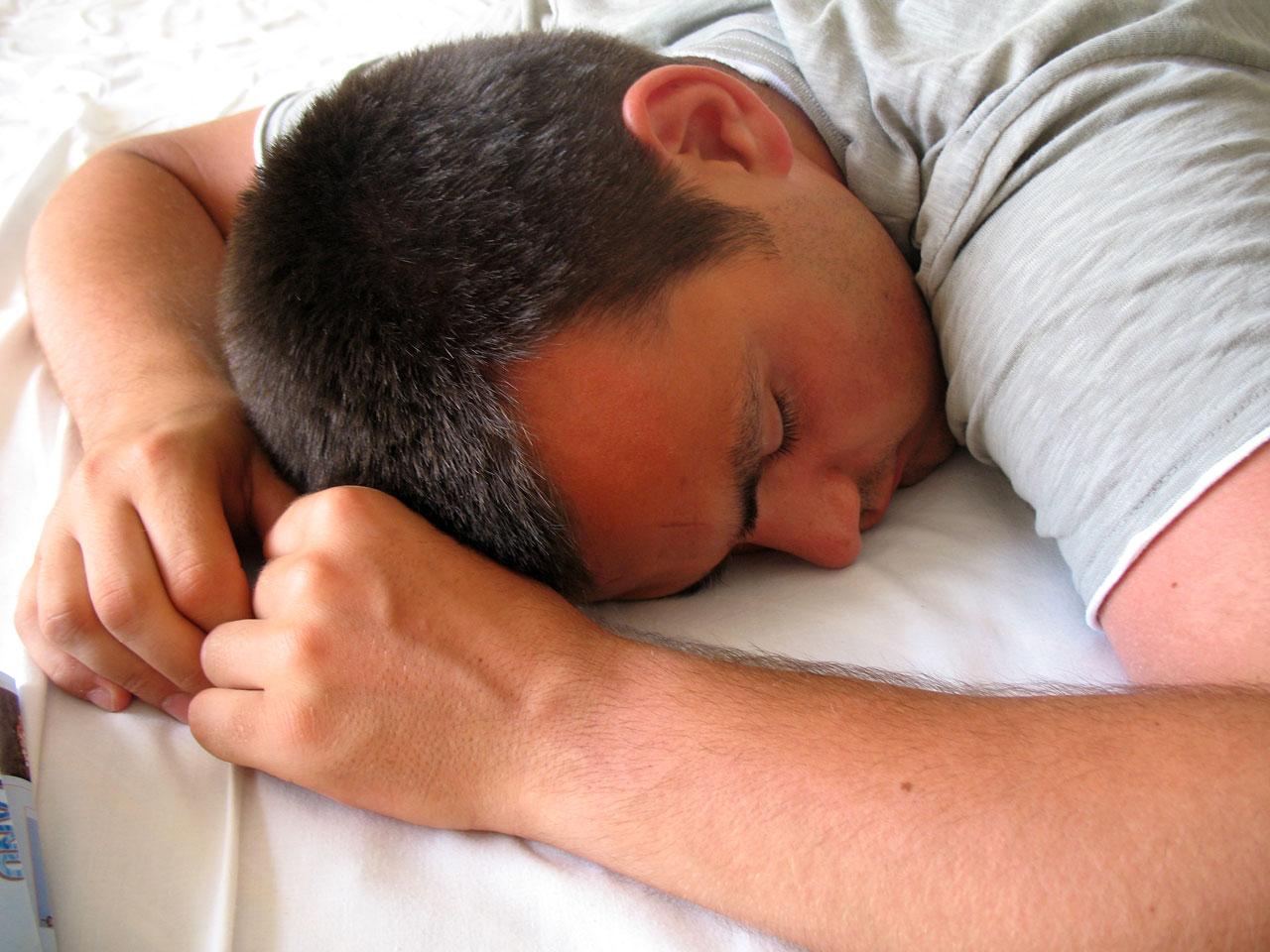
Asleep
Public Domain Pictures
Researchers acknowledge that regular, consistent sleep plays a major role in brain and body health

Despite growing support for the idea that adequate sleep, like adequate nutrition and physical activity, is vital to our well-being, people are sleeping less. The nonstop “24/7” nature of the world today encourages longer or nighttime work hours and offers continual access to entertainment and other activities. To keep up, people cut back on sleep. A common myth is that people can learn to get by on little sleep (such as less than 6 hours a night) with no adverse effects. Research suggests, however, that adults need at least 7–8 hours of sleep each night to be well rested. Indeed, in 1910, most people slept 9 hours a night. But recent surveys show the average adult now sleeps fewer than 7 hours a night.

Chronic sleep loss or sleep disorders may affect as many as 70 million Americans.

More than one-third of adults report daytime sleepiness so severe that it interferes with work, driving, and social functioning at least a few days each month. Evidence also shows that children’s and adolescents’ sleep is shorter than recommended. These trends have been linked to increased exposure to electronic media. Lack of sleep may have a direct effect on children’s health, behavior, and development. Chronic sleep loss or sleep disorders may affect as many as 70 million Americans. This may result in an annual cost of $16 billion in health care expenses and $50 billion in lost productivity.

What Makes You Sleep? Although you may put off going to sleep in order to squeeze more activities into your day, eventually your need for sleep becomes overwhelming. This need appears to be due, in part, to two substances your body produces. One substance, called adenosine, builds up in your blood while you’re awake. Then, while you sleep, your body breaks down the adenosine. Levels of this substance in your body may help trigger sleep when needed.

A buildup of adenosine and many other complex factors might explain why, after several nights of less than optimal amounts of sleep, you build up a sleep debt. This may cause you to sleep longer than normal or at unplanned times during the day. Because of your body’s internal processes, you can’t adapt to getting less sleep than your body needs. Eventually, a lack of sleep catches up with you. The other substance that helps make you sleep is a hormone called melatonin. This hormone makes you naturally feel sleepy at night. It is part of your internal “biological clock,” which controls when you feel sleepy and your sleep patterns. Your biological clock is a small bundle of cells in your brain that works throughout the day and night. Internal and external environmental cues, such as light signals received through your eyes, control these cells. Your biological clock triggers your body to produce melatonin, which helps prepare your brain and body for sleep. As melatonin is released, you’ll feel increasingly drowsy. 


Fi

Wednesday, September 5, 2018

When An American President "Loses It”

When A President "Loses It”


By: James F. Toole, M.D.
Cerebrum, Dana Foundation, 1998


Learn about the astonishing, complex brain.


It has happened, of course—and not infrequently. Just in this century, American presidents who continued to serve in office while seriously neurologically impaired include Woodrow Wilson, Franklin D. Roosevelt, and Dwight D. Eisenhower. In the first two, there is a credible historical case that the results were catastrophic on a world scale. But the real question is: Could it happen again?...

Once officials are elected or appointed, there is no legal requirement for periodic physical, mental, or behavioral examinations while they are serving in office. When the average life span was 60 years, senility was a less common problem. Now, with the graying of America (and soon the world), devastating neurological diseases and other conditions have a much greater likelihood of wreaking havoc on an individual’s mental functioning. Isn’t it time for the law to require health examinations, and public revelation of the results, before election and periodically thereafter while an individual is serving in office—just as there are legal protections of the public in other areas of society? After all, we have laws governing the packaging of foods, construction of automobiles, and periodic inspection for continuing registration and licensing of vehicles and drivers. Why don’t we have similar requirements for public officials (as we have already for aviators)? Unfortunately action is stalled, in part because it contravenes traditions of confidentiality in matters relating to health. Society desperately needs correction of this Achilles’ heel before it is too late.


THE TWENTY-FIFTH AMENDMENT
Why does our nation tolerate this appallingly dangerous flaw in our system? Can there be any brake on this unregulated system— or must we live in danger of catastrophe? A first step was taken in 1965, when Senator Birch Bayh proposed an amement to the U.S. Constitution. On February 10, 1967, Article 25 was ratified by a sufficient number of state legislatures. In it, succession is clearly defined in cases of removal of the president from office by death or resignation. The vice president shall become president, as happened when President Richard M. Nixon was replaced by Vice President Gerald R. Ford.

Section 2 is equally clear on succession to the office of the vice president, as occurred when Ford was appointed vice president after the resignation of Spiro T. Agnew.

Section 3 is straightforward. If the president voluntarily submits a written statement that he is unable to discharge the powers and duties of his office, they shall be discharged by the vice president as acting president until the president submits another document stating that he has recovered. This sequence occurred when President Reagan transferred power to Vice President George Bush in anticipation of undergoing general anesthesia for colon surgery and then resumed office immediately thereafter.

In Section 4, however, there seems the potential for a serious dilemma:

Whenever the vice-president and a majority of either the principal officers of the executive department or of such other body as Congress may by law provide, transmit to the president pro tempore of the Senate and the Speaker of the House of Representatives their written declaration that the president is unable to discharge the powers and duties of his office, the vice president shall immediately assume the powers and duties of the office as acting president.


What is the mechanism for determining that the president is unable to serve? How does one inform the president that he is not capable of performing in office? Judging from past experience, it would require the most extreme conditions for the vice president or members of the cabinet to remove their leader. They have a built-in political incentive to maintain the status quo because, if the president is removed, the cabinet that serves him may be replaced as well. Furthermore, these officials are not medical professionals and so cannot have full insight into the dangers of having a mentally impaired leader.

There is an even greater problem in implementation of the next part of Section 4. It states:

Thereafter, when the president transmits to the president pro tempore of the Senate and the Speaker of the House of Representatives his written declaration that no disability exists, he shall resume the powers and duties of his office unless the vice-president and a majority of either the principal officers of the executive department or of any such body as Congress may by law provide, transmit within four days to the president pro tempore of the Senate and the Speaker of the House of Representatives their written declaration that the president is unable to discharge the powers and duties of his office. Thereupon Congress shall decide the issue, assembling within 48 hours for that purpose if not in session.

These two clauses conceal potential stumbling blocks. Together, they could enable a cognitively impaired President who lacked insight into his mental deficiency to obstruct governmental procedures for removal from office (or to resume office), despite persistent deficits. Only a specially trained physician has the skills to determine the presence, treatment, and prognosis for neurologic and psychiatric disease.


Sunday, August 19, 2018

FREE Review Copy: Stress, Trauma and Gay Youth

New!
Healing the Brain: Stress, Trauma and LGBT/Q Youth

CONTACT: A Thousand Moms,
2367 Curry Road, Schenectady NY 12303
Available on Amazon.com
(Includes video), 172 pp, illustrated, 8 1/2 x 11

From the author of the acclaimed Dana Sourcebook
of Brain Science, an easy-to-read layman’s guide to understanding the brain and health.  Praise for Healing the Brain:

 https://goo.gl/3vucVn

Purchase directly (paperback or Kindle) at Amazon.com or www.HealingTheBrainBooks.com
“Well researched, fleshed out with relevant case histories, this book packs a lot of solid information into its 152 pages. Written in an engaging style for the layman, it covers a wide range of topics. One learns a great deal about the biology of stress, particularly the vulnerability of the brain in the pre-adult years. This book also provides a glossary of key brain science terms and a listing of organizations serving the LGBT /Q community and resources on the brain. Brief summaries of Erik Erickson's Stages of Development and Abraham Maslow's 12 Characteristics of a Self-Actualized Person lead into a detailed examination of the brain's structure and functions. Although the basic wiring structure is present at birth, there are several critical stages of brain development. Nurture, experience and stimulation are essential to proper brain growth and to the fine tuning of its communications structure. Notably, PTSD is not just an issue for veterans, but can also develop in children and teens who are going through a traumatic situation such as child abuse.”--Gary Bordzuk, Librarian, Rockville, NY

“David Balog takes a subject fraught with difficulty and makes it simple and accessible to everyone. The book goes a long way in helping one understand how and why and in what ways stress affects how we live and cope. Invaluable.”--Jessica Watson-Crosby, former president, National Association of Former Foster Children

“...[A] book for educators (or anyone working with youth) that explains the complicated workings of the brain in an easy-to-understand manner. The author goes on to discuss various types of trauma and how the adolescent brain responds to trauma such as depression, stress, addiction, risk taking, PTSD, etc. LGBT/Q youth may experience….I highly recommend this book!--Carol Dopp, M.Ed.

"An invaluable resource for those working in the trenches with LGBTQ youth in foster/adoptive care but equally important serves as a primer for those in the community at large who are largely unaware of this subset in our population who are in such desperate need!"--Dr. Ray Werking, professor, GLSEN educator and host, WRPI Radio

“David Balog understands the strain of alienation, so he tackles this subject with compassion and concern. Mr. Balog draws on his knowledge of brain science to give readers insight into what happens to young people under tremendous stress….”--Gary L. Cottle, author

“Easy to read. Difficult to put down.”--Micheal J. Colucciello, Jr., NY State pharmaceutical researcher, retired.

Also available in the series: Addiction; Development; Domestic Violence and TBI; Memory; Fetal Alcohol Spectrum Disorders; Stress & Money.

Purchase directly (paperback or Kindle) at Amazon.com or www.HealingTheBrainBooks.com