Showing posts with label behavior. Show all posts

Monday, May 11, 2026

Your Brain, Your Health

New!


The Alzheimer's Association reports that it believes the first person to be cured of this dreaded disease is walking around today .

The Human Rights Commission reports that violence and murder against trans people, especially trans people of color, is rising at an alarming pace. New research from Holland is quickly unraveling the mysteries of sexuality and sexual orientation to show that all sexuality takes place in the brain, in the uterus, and is out of the control of all parties, except to embrace it and love the baby and the child and the adult. 

Gene editing is being called the miracle of the future, which may be closer than we think. Imagine diagnosing and repairing some of our worst remaining diseases, which mostly have their basis in our brains. 

These examples show the importance of the brain for every person. Even from a budget perspective, brain-related diseases and disorders account for more than half of our health care bill each year. 

I think you might like this book – "A Thousand Moms' Sourcebook of Brain and Behavior: For Teachers, Parents and Students. Second Edition (Make America Smart Again)" by David Balog.

Start reading for free: https://a.co/05DIU6Sm

All of these facts make it important to be aware of the brain, it's capabilities, it's limitations, it's realities. Based on the widely used Dana Sourcebook of Brain Science, published from 1997 until 2006 and now updated, this sourcebook tells readers why the brain matters, outlines basic workings of this remarkable structure, and how self-inflicted wounds from substance abuse can produce an immediate euphoric feeling--at the cost of long-term, devastating addiction and damage. 

This source book office offers a panoramic overview of what has been called the most remarkable resource in the known, or even unknown, will world. 

Author David Balog created, wrote, and edited the Dana Sourcebook of Brain Science through its first four editions. He now is back editing this resource to help parents, teachers, and students understand more who they are and why they act the way they do. 

Available now at a reduced introductory price. Just some of the topics cover covered include: Alzheimer's disease, dyslexia, ADHD, stroke, speech disorders, eating disorders, autism, Parkinson's disease and more. David Mahoney, founder of the Brain Awareness Movement at the Charles a Dana Foundation, said, "One out of five people will have a brain disease or disorder. Five out of five will know or be a caregiver for someone with a brain disease or disorder."

I think you might like this book – "A Thousand Moms' Sourcebook of Brain and Behavior: For Teachers, Parents and Students. Second Edition (Make America Smart Again)" by David Balog.


Start reading it for free: https://a.co/05DIU6Sm


Friday, November 8, 2019

Stressed to the max? Deep sleep can rewire the anxious brain


Learn how the brain controls stress. 

A sleepless night can trigger up to a 30 percent rise in emotional

stress levels, new study shows

:
November 4, 2019:
University of California - Berkeley
Researchers have found that the type of sleep most apt to calm and reset the anxious brain
is deep sleep, also known as non-rapid eye movement (NREM) slow-wave sleep, a state in
which neural oscillations become highly synchronized, and heart rates and blood pressure drop.
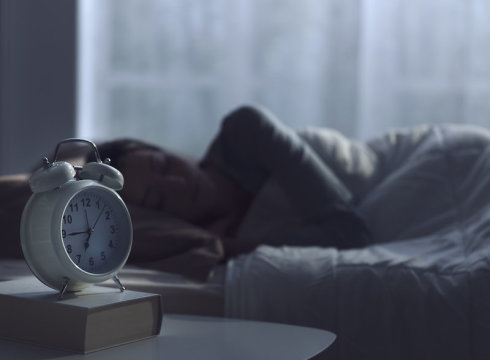
Deep sleep concept (stock image). | Credit: © stokkete / stock.adobe.com
Deep sleep concept (stock image).
Credit: © stokkete / Adobe Stock
When it comes to managing anxiety disorders, William Shakespeare's
Macbeth had it right when he referred to sleep as the "balm of hurt minds."
While a full night of slumber stabilizes emotions, a sleepless night can trigger
up to a 30% rise in anxiety levels, according to new research from the
University of California, Berkeley.
UC Berkeley researchers have found that the type of sleep most apt to calm and reset
the anxious brain is deep sleep, also known as non-rapid eye movement (NREM) slow-wave
sleep, a state in which neural oscillations become highly synchronized, and heart rates and
blood pressure drop.
"We have identified a new function of deep sleep, one that decreases anxiety overnight
by reorganizing connections in the brain," said study senior author Matthew Walker,
a UC Berkeley professor of neuroscience and psychology. "Deep sleep seems to be a
natural anxiolytic (anxiety inhibitor), so long as we get it each and every night."
The findings, published today, Nov. 4, in the journal Nature Human Behaviour,
provide one of the strongest neural links between sleep and anxiety to date. They
also point to sleep as a natural, non-pharmaceutical remedy for anxiety disorders,
which have been diagnosed in some 40 million American adults and are rising among
children and teens.
"Our study strongly suggests that insufficient sleep amplifies levels of anxiety and,
conversely, that deep sleep helps reduce such stress," said study lead author
Eti Ben Simon, a postdoctoral fellow in the Center for Human Sleep Science at UC Berkeley.
In a series of experiments using functional MRI and polysomnography, among other measures,
Simon and fellow researchers scanned the brains of 18 young adults as they viewed
emotionally stirring video clips after a full night of sleep, and again after a sleepless night.
Anxiety levels were measured following each session via a questionnaire known as the
state-trait anxiety inventory.
After a night of no sleep, brain scans showed a shutdown of the
medial prefrontal cortex, which normally helps keep our anxiety in check,
while the brain's deeper emotional centers were overactive.
"Without sleep, it's almost as if the brain is too heavy on the emotional accelerator
pedal, without enough brake," Walker said.
After a full night of sleep, during which participants' brain waves were
measured via electrodes placed on their heads, the results showed their anxiety
levels declined significantly, especially for those who experienced more slow-wave
NREM sleep.
"Deep sleep had restored the brain's prefrontal mechanism that regulates our emotions,
lowering emotional and physiological reactivity and preventing the escalation of anxiety,"
Simon said.
Beyond gauging the sleep-anxiety connection in the 18 original study participants,
the researchers replicated the results in a study of another 30 participants.

Across all the participants, the results again showed that those who got more
nighttime deep sleep experienced the lowest levels of anxiety the next day.
Moreover, in addition to the lab experiments, the researchers conducted an
online study in which they tracked 280 people of all ages about how both their sleep and
anxiety levels changed over four consecutive days.
The results showed that the amount and quality of sleep the participants got from
one night to the next predicted how anxious they would feel the next day. Even subtle
nightly changes in sleep affected their anxiety levels.
"People with anxiety disorders routinely report having disturbed sleep, but rarely is
sleep improvement considered as a clinical recommendation for lowering anxiety,"
Simon said.


Learn how the brain controls stress. 

"Our study not only establishes a causal connection between sleep and anxiety, but it
identifies the kind of deep NREM sleep we need to calm the overanxious brain."
On a societal level, "the findings suggest that the decimation of
sleep throughout most industrialized nations and the marked escalation in anxiety
disorders in these same countries is perhaps not coincidental, but causally related,"
Walker said. "The best bridge between despair and hope is a good night of sleep."
Co-authors of the study are Aubrey Rossi and Allison Harvey, both at UC Berkeley.


Story Source:
Materials provided by University of California - Berkeley. Original written by Yasmin Anwar.

Monday, October 28, 2019

At what age is it safe to leave a child home alone?


At what age is it considered child neglect to leave a child home alone?


October 25, 2019
American Academy of Pediatrics
A majority of social workers surveyed believe children should be at least 12 before being left home alone four hours or longer, and they are more likely to consider a home-alone scenario as neglect if a child is injured while left unsupervised.
The brain enables behavior. Learn more!

A majority of social workers surveyed believe children should be at least 12 before being left home alone four hours or longer, and they are more likely to consider a home-alone scenario as neglect if a child is injured while left unsupervised, according to research being presented at the American Academy of Pediatrics (AAP) 2019 National Conference & Exhibition.
The research abstract, "Social Workers' Determination of When a Child Being Left Home Alone Constitutes Child Neglect," will be presented on Monday, Oct. 28 at the Ernest N. Morial Convention Center.
"We found that social workers who participated in the study were significantly more likely to consider it child neglect when a child was left home alone if the child had suffered an injury, as compared to when they did not," said Charles Jennissen, MD, FAAP, clinical professor and pediatric emergency medicine staff physician for the University of Iowa Carver College of Medicine in Iowa City.
"The level of neglect is really the same whether a child knowingly left home alone is injured or not, and such situations should be handled the same by child protective investigators," he said.
For the study, researchers surveyed 485 members of the National Association of Social Workers (NASW) who designated their practice as "Child/Family Welfare" from October to December 2015. They provided scenario conditions through an emailed survey in which a child of varying age was left home alone for four hours. The scenarios also varied by whether the child had been injured or not when left at home alone, and if there were a relevant "home alone" laws.
In cases where a child was not injured, nearly every social worker determined that leaving a child home alone for four hours was child neglect when the child was 6 years old or younger. More than 80% of social workers stated that this was child neglect if the child was 8 years or younger; about 50% stated it was child neglect if the child was 10 or younger. A lower proportion described the scenario as child neglect when a child was age 12 or 14.
When the scenarios included the conditions where a law made it illegal to leave a child at home alone or a child was injured, social workers were significantly more likely to consider it a case of child neglect at 8, 10, 12 and 14 years of age. The social workers were also asked at what age should it be illegal to leave a child alone for four hours, over one-half stated it should be illegal for children under 12 years of age and four-fifths agreed it should be illegal for children under 10 years.
Studies have shown that the lack of adult supervision contributes to more than 40% of U.S. pediatric injury-related deaths, the authors note. They say that the results suggest the need for uniform guidelines and safety laws related to childhood supervision nationally, in order to direct social workers in their evaluation of potential cases of child neglect and to better protect children from harm.
"This study recognizes that there are critical connections between safety laws, advocates and professionals in child welfare, and families with small children," said Gerene Denning, PhD, emeritus research scientist at the University of Iowa Carver College of Medicine. "It takes partnership between all of these to prevent childhood injuries."

The brain enables behavior. Learn more!


        Learn more     about it!

Monday, July 17, 2017

Why do people take drugs?

Join us for our Network of Support!

Here's a preview:
 
Why do people take drugs?

In general, people begin taking drugs for a variety of reasons:

  • To feel good. Most abused drugs produce intense feelings of pleasure. This initial sensation of euphoria is followed by other effects, which differ with the type of drug used. For example, with stimulants such as cocaine, the “high” is followed by feelings of power, self-confidence, and increased energy. In contrast, the euphoria caused by opiates such as heroin is followed by feelings of relaxation and satisfaction.   
  • To feel better. Some people who suffer from social anxiety, stress-related disorders, and depression begin abusing drugs in an attempt to lessen feelings of distress. Stress can play a major role in beginning drug use, continuing drug abuse, or relapse in patients recovering from addiction.
  • To do better. Some people feel pressure to chemically enhance or improve their cognitive or athletic performance, which can play a role in initial experimentation and continued abuse of drugs such as prescription stimulants or anabolic/androgenic steroids.
  • Curiosity and “because others are doing it.” In this respect adolescents are particularly vulnerable because of the strong influence of peer pressure. Teens are more likely than adults to engage in risky or daring behaviors to impress their friends and express their independence from parental and social rules.


Over time, if drug use continues, other pleasurable activities become less pleasurable, and taking the drug becomes necessary for the user just to feel “normal.”