Showing posts with label harvey Weinstein. Show all posts

Monday, July 17, 2023

The Twenty Worst Americans: What History Can Teach Us

"Thoughtful and Thought-provoking"

Reviewed in the United States on July 18, 2023


PRAISE FOR THE BOOK


At first glance, David Balog’s The Twenty Worst Americans may seem to be a simple laundry list of villainy. But this is no tirade of personal grievances; nor is it a whining screed against those who think differently than the author.


Instead, Balog has called upon his background in history writing to present the citizens whose behavior he sees as particularly heinous (Harvey Weinstein, Paul Castellano), ignorant (Phyllis Schlafly, Eddie Cicotte, Betsy DeVos), vicious (Dan White, Rupert Murdoch) or simple grifters (Henry Ford, Charles Coughlin, James A. Baker and Donald Trump). There are twenty short essays in all. Each is easy to read, pleasantly brief, but never glib or lightweight. Balog has something to say and he says it plainly.


Balog calls upon an encyclopedic knowledge of history to make his points, which he does not hide behind manipulative propaganda. No, we know where the author stands and he is transparent in his views. What surprises us is his gentle tact while discussing subjects that could infuriate readers if presented by a lesser writer.

"All of which makes some of his choices that much more challenging. Balog has personal knowledge of William Safire. As a fellow history writer, I have certainly read many of Safire’s books. Some are quite good. But his affairs—business and personal—seem to veer far from his written work. It is eye opening, and this begs the question that many of us must face sooner or later: at what point do we toss out the better work of creation because its creator was repulsive? We enjoy the distance of centuries between us and, say, a Caravaggio or Michelangelo. Those who are closer to our time strike us where we live.

There is much to take exception to, of course.

In just one example, I have published enough about the Roosevelts to have different views on FDR than Balog. This is as it should be. The moment we accept every word of any individual as inviolable, we start on the dangerous path that Balog decries in this book. Heated discussions are part of what make this kind of text interesting.

Balog occasionally digresses into information that is only tangentially related. This is when the author is at his best.

In my favorite example, in the chapter on Bill Maher, Balog provides eight fascinating pages on the physical and neurological aspects of gender, well supported by medical experts. As with his section on FDR, Balog demonstrates a rare talent for engendering discussion without badgering or patronizing.

I agree here, I disagree there; but by the time I was done, I had learned something and want to learn more. I can think of no higher compliment.
--David Bannon, author, historian



Start reading today, for FREE.


Table of contents

Author’s Note………………..

Prologue……………………………

Chapter 1. Antonin Scalia – Supreme Court Justice Whose Personal Views Moved America Back to 1787…….

Chapter 2. Bill Maher – Quickly Moving from Progressive to Regressive……

Chapter 3. Elizabeth Holmes – Blood money and a Monumental Scam……

Chapter 4. Donald Trump – Enabling the Catastrophe of Covid-19……..

Chapter 5. Trump, The Early Years in New York City: Wilding Among the Powerful…..

Chapter 6. Rupert Murdoch – Power for Power’s Sake…….

Chapter 7. James A. Baker, III – Republican Fixer and Mastermind of Bush v Gore…….

Chapter 8. Phyllis Schlafly– Baking Cookies to Stop Equal Rights……

Chapter 9. Paul Castellano – Real-life Godfather…..

Chapter 10. Franklin D. Roosevelt – Allowed Incarceration Camps for Americans of Japanese Descent……….

Chapter 11. Betsy DeVos – The Education Secretary Clueless About Education…..

Chapter 12. Eddie Cicotte – Throwing Baseballs, Games and the National Pastime………

Chapter 13. Chief Justice Roger B. Taney – Author of the Worst Decision in Supreme Court History that Ignited the Civil War…….

Chapter 14. Herbert Hoover – The Great Humanitarian with Political Hands of Stone…….

Chapter 15. William Safire and the Death of Political Civility…….

Chapter 16. Walter O'Malley – Changed America's Pastime into a Cold Business…….

Chapter 17. Father Charles Coughlin – Pastor, Media King and Dangerous Anti-semite……

Chapter 18. Henry Ford – Pioneer of the Automobile and Hitler Ally……

Chapter 19. Harvey Weinstein – As a Movie, Rate Him X…….

Chapter 20. Dan White – The Politician Who Killed Two Political Icons –,,,…


Start reading today.


Saturday, October 14, 2017

Harvey Weinstein and the Biology of Trauma

Hollywood movie executive Harvey Weinstein has been accused of and alleged to have committed sexual assault over a number of years on a number of actresses. Such a story strikes an all-too-common nerve in America, perhaps revealing the depth and widespread nature of such abuse. In this excerpt from Healing the Brain: Depression, we look at the biology of stress and trauma experienced by the victims and why it is a pernicious wound.


Now just $9.95 for a limited time. Click here!

Wounds that Time Alone Won’t Heal
The Biology of Stress


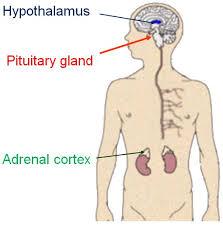
How do the brain and the body react to stress? Stress, such as the threat of attack, forces various changes in the body. First, adrenaline causes an increase in heart rate and blood pressure so that blood can be sent to muscles faster. Second, the brain’s hypothalamus signals the pituitary gland to stimulate the adrenal gland (specifically the adrenal cortex) to produce cortisol.

This stress hormone, a longer-acting steroid, helps the body to mobilize energy. However, prolonged exposure to cortisol can damage virtually every part of the body. Chronic high blood pressure can cause blood vessel damage and the long-term shutdown of digestion can lead to ulcers.


SimplyPsychology.org
Stress, such as the threat of attack, forces changes in the body carried out by the hypothalamus-pituitary-adrenal axis (HPA).

Why do some people experience more stress than others? Individuals who feel they have control over their lives appear to experience less stress. It also depends on personality and temperament. Aggressive, competitive types are more likely to define a situation as stressful than a passive, accommodating personality. A universal stress producer seems to be social isolation.

PTSD: A Breakthrough in Diagnosis
In 1980 the mental health community established the diagnosis of Post Traumatic Stress Disorder, PTSD, and revolutionized the way the field views the effects of stress. This change acknowledged that many of the symptoms people experience after exposure to trauma can be long-lasting, if not permanent. Before that shift, the field tended to view stress-related symptoms as a transient, normal response to an adverse life event, not requiring intensive treatment.

Furthermore, before 1980, people who did develop long-term symptoms following trauma were viewed as implicitly vulnerable; the role of the actual event in precipitating their symptoms was minimized. For a while, in a reversal of previous thinking, experts expected most trauma survivors to develop PTSD. More recent research has confirmed that only about 25 per cent of individuals who are exposed to trauma develop PTSD.

So who is likely to develop PTSD following a traumatic experience, and why? The answer is not yet clear, but it now appears that PTSD represents a failure of the body to extinguish or contain the normal nervous system response to stress. This failure is associated with many factors:

  • the nature and severity of the traumatic event
  • preexisting risk factors related to previous exposure to stress or trauma, particularly in childhood
  • the individual’s history of psychological and behavioral problems, if any
  • the person’s level of education, and other cognitive factors
  • family history—whether parents or other relatives had anxiety, depression, or PTSD


People who develop PTSD are also more likely to develop other psychiatric disorders involving mood (depression, anxiety and panic, bipolar disorder), personality, eating, and substance dependence.


People also seek medical help for problems that may develop after the trauma that can mask or intensify PTSD symptoms. These symptoms include chronic pain, fatigue, headaches, muscle cramps, and self-destructive behavior, including alcohol or drug abuse and suicidal gestures. Often, survivors are not aware that their physical symptoms are related to their traumatic experiences. They may even fail to mention those disturbing events to their physicians, which can make PTSD difficult to diagnose accurately.


Some PTSD symptoms in teens may begin to look like those of adults. One difference is that teens are more likely than younger children or adults to show impulsive and aggressive behaviors.


School-aged children (ages 5-12)
These children may not have flashbacks or problems remembering parts of the trauma, the way adults with PTSD often do. Children, though, might put the events of the trauma in the wrong order. They might also think there were signs that the trauma was going to happen. As a result, they think that they will see these signs again before another trauma happens. They think that if they pay attention, they can avoid future traumas.


Children of this age might also show signs of PTSD in their play. They might keep repeating a part of the trauma. These games do not make their worry and distress go away. For example, a child might always want to play shooting games after he sees a school shooting. Children may also fit parts of the trauma into their daily lives. For example, a child might carry a gun to school after seeing a school shooting.


Teens (ages 12-18)
Some PTSD symptoms in teens may begin to look like those of adults. One difference is that teens are more likely than younger children or adults to show impulsive and aggressive behaviors.

Wikimedia Commons
Teen experience of PTSD can mimic those of adults and include re-experiencing a traumatic event, flashbacks, and nightmares.


Adult symptoms may include:
  • Re-experiencing the traumatic event
  • Increased anxiety and emotional arousal
  • Intrusive, upsetting memories of the event
  • Flashbacks (acting or feeling like the event is happening again)
  • Nightmares (either of the event or of other frightening things)
  • Feelings of intense distress when reminded of the trauma
  • Loss of interest in activities and life in general
  • Sense of a limited future (not expecting to live a normal lifespan, get married, have a career)

Below the surface, some children from deprived surroundings, have vastly different hormone levels than their parent-raised peers even beyond the baby years. Studies have shown that children who experienced early deprivation also had different levels of oxytocin and vasopressin (hormones that have been linked to emotion and social bonding), despite having had an average of three years in a family home.

It has been thought that these changes in hormones and neurotransmitters impair development of vulnerable brain regions. If we observe an association between a history of abuse and the presence of a physical abnormality, the abuse may have caused that abnormality. But it is also possible that the abnormality occurred first and elevated the likelihood of abuse, or that the abnormality ran in the family and led to more frequent abusive behavior by family members or other relatives.

People with PTSD actively avoid situations that might bring back memories of the trauma.