Showing posts with label pot. Show all posts

Monday, January 1, 2018

Marijuana 101 for 2018


As of 2018, California joins the growing list of states to allow recreational use of marijuana. What hasn't changed is the drug and how it works.

When marijuana is smoked or vaporized, THC quickly passes from the lungs into the bloodstream, which carries it to organs throughout the body, including the brain. Its effects begin almost immediately and can last from 1 to 3 hours. Decision making, concentration, and memory can be affected for days after use, especially in regular users. If marijuana is consumed in foods or beverages, the effects of THC appear later—usually in 30 minutes to 1 hour—and may last for many hours.
Learn about the brain and behavior in clear language. Click here.
As it enters the brain, THC attaches to cells, or neurons, with specific kinds of receptors called cannabinoid receptors. Normally, these receptors are activated by chemicals similar to THC that occur naturally in the body. They are part of a communication network in the brain called the endocannabinoid system. This system is important in normal brain development and function.
Marijuana's Effects on the Brain
Most of the cannabinoid receptors are found in parts of the brain that influence pleasure, memory, thinking, concentration, sensory and time perception, and coordinated movement. Marijuana activates the endocannabinoid system, which causes the pleasurable feelings or "high" and stimulates the release of dopamine in the brain's reward centers, reinforcing the behavior. Other effects include changes in perceptions and mood, lack of coordination, difficulty with thinking and problem solving, and disrupted learning and memory.
Certain parts of the brain have a lot of cannabinoid receptors. These areas are the hippocampus, the cerebellum, the basal ganglia, and the cerebral cortex. As a result, marijuana affects these functions: 
  • Learning and memory. The hippocampus plays a critical role in certain types of learning. Disrupting its normal functioning can lead to problems studying, learning new things, and recalling recent events. Chronic marijuaua use disorder, that begins in adolescence, is associated with a loss of IQ points, as compared with people who don't use marijuana during their teen years. However, two recent twin studies suggest that this decline is related to other risk factors (e.g., genetics, family, and environment), not by marijuana use itself.
  • Coordination. THC affects the cerebellum, the area of our brain that controls balance and coordination, and the basal ganglia, another part of the brain that helps control movement. These effects can influence performance in such activities as sports, driving, and video games.
  • Judgment. Since THC affects areas of the frontal cortex involved in decision making, using it can make you more likely to engage in risky behavior, such as unprotected sex or getting in a car with someone who’s been drinking or is high on marijuana.
Learn more about how the brain works and what happens when a person uses drugs. And, check out how the brain responds to marijuana.

Source: NIDA/NIH

Wednesday, November 1, 2017

Regular marijuana use linked to more sex, study finds

Sex...it happens in the brain first.
Despite concerns among physicians and scientists that frequent marijuana use may impair sexual desire or performance, the opposite appears more likely to be the case, new research indicates.

FULL STORY


The jury's still out on rock 'n' roll. But the link between sex and at least one drug, marijuana, has been confirmed.
A study by investigators at the Stanford University School of Medicine indicates that, despite concerns among physicians and scientists that frequent marijuana use may impair sexual desire or performance, the opposite appears more likely to be the case.

The findings, to be published online Oct. 27 in the Journal of Sexual Medicine, are based on an analysis of more than 50,000 Americans ages 25-45. And they're unambiguous.

"Frequent marijuana use doesn't seem to impair sexual motivation or performance. If anything, it's associated with increased coital frequency," said the study's senior author, Michael Eisenberg, MD, assistant professor of urology. The lead author is Andrew Sun, MD, a resident in urology.

Hint of a causal connection
The study does not establish a causal connection between marijuana use and sexual activity, Eisenberg noted. But the results hint at it, he added. "The overall trend we saw applied to people of both sexes and all races, ages, education levels, income groups and religions, every health status, whether they were married or single and whether or not they had kids."

The study is the first to examine the relationship between marijuana use and frequency of sexual intercourse at the population level in the United States.

"Marijuana use is very common, but its large-scale use and association with sexual frequency hasn't been studied much in a scientific way," Eisenberg said.
According to the National Institute on Drug Abuse, more than 20 million adult Americans are current marijuana users. With the drug's legalization for medical or recreational use in 29 states, that number is climbing. But despite marijuana's growing status as a recreational drug, its status as a procreational drug remains ambiguous: On one hand, there are reports of erectile dysfunction in heavy users, and rigorous studies have found reduced sperm counts in men who smoke it; on the other hand, experiments conducted in animal models and humans indicate that marijuana stimulates activity in brain regions involved in sexual arousal and activity.

Looking at survey responses
To arrive at an accurate determination of marijuana's effect on intercourse frequency, Eisenberg and Sun turned to the National Survey of Family Growth, sponsored by the federal Centers for Disease Control and Prevention. The survey, which provides data pertaining to family structures, sexual practices and childbearing, reflects the overall demographic features of the U.S. population.

Originally conducted at regular intervals, the survey is now carried out on an annual basis. It explicitly queries respondents on how many times they've had intercourse with a member of the opposite sex in the past four weeks, and how frequently they've smoked marijuana over the past 12 months.

The investigators compiled answers to those questions for all years since 2002, when the survey first began collecting data on men as well as women. They included data from respondents ages 25-45 and excluded a small percentage (fewer than 3 percent) of respondents who had failed to answer one or more relevant questions.
In all, Eisenberg and Sun obtained data on 28,176 women averaging 29.9 years of age and 22,943 men whose average age was 29.5. They assessed these individuals' self-reported patterns of marijuana use over the previous year and their self-reported frequency of heterosexual intercourse over the previous four weeks.

Some 24.5 percent of men and 14.5 percent of women in the analysis reported having used marijuana, and there was a positive association between the frequency of marijuana use and the frequency of sexual intercourse. This relationship applied to both sexes: Women denying marijuana use in the past year, for example, had sex on average 6.0 times during the previous four weeks, whereas that number was 7.1 for daily pot users. Among men, the corresponding figure was 5.6 for nonusers and 6.9 for daily users.

In other words, pot users are having about 20 percent more sex than pot abstainers, Eisenberg noted.

Positive association is universal
Moreover, Eisenberg said, the positive association between marijuana use and coital frequency was independent of demographic, health, marital or parental status.

In addition, the trend remained even after accounting for subjects' use of other drugs, such as cocaine or alcohol. This, Eisenberg said, suggests that marijuana's positive correlation with sexual activity doesn't merely reflect some general tendency of less-inhibited types, who may be more inclined to use drugs, to also be more likely to have sex. In addition, coital frequency rose steadily with increasing marijuana use, a dose-dependent relationship supporting a possible active role for marijuana in fostering sexual activity.

Nevertheless, Eisenberg cautioned, the study shouldn't be misinterpreted as having proven a causal link. "It doesn't say if you smoke more marijuana, you'll have more sex," he said.

Source:
Stanford University Medical Center

Tuesday, July 18, 2017

Depression among young teens linked to cannabis use at 18

Seattle-focused study suggests earlier intervention with depressed youths could reduce rate of cannabis-use disorder

Summary:
Young people with chronic or severe forms of depression were at elevated risk for developing a problem with cannabis in later adolescence, found a study looking at the cumulative effects of depression in youth.
Share:
FULL STORY

A study looking at the cumulative effects of depression in youth, found that young people with chronic or severe forms of depression were at elevated risk for developing a problem with cannabis in later adolescence.

Researchers used data from annual assessments when students were ages 12-15 and then again when they were 18. The results were published in the journal Addiction.

"The findings suggest that if we can prevent or reduce chronic depression during early adolescence, we may reduce the prevalence of cannabis use disorder," said lead author Isaac Rhew, research assistant professor of psychiatry and behavioral sciences at the University of Washington School of Medicine.

According to researchers, during the past decade cannabis has surpassed tobacco with respect to prevalence of use among adolescents. Cannabis and alcohol are the two most commonly used substances among youth in the United States. They pointed to one national study showing increases in prevalence of cannabis use disorder and alcohol use disorder in the United States, especially among young adults.

Longitudinal studies looking at the link between depression and later use of alcohol and cannabis, however, have been mixed. Some show a link. Others don't. But most studies have assessed adolescent depression at a single point in time -- not cumulatively, said the researchers. Further, there have been differences in how substance use has been measured ranging from the initiation of any use to heavier problematic forms of use.

The study oversampled for students with depressive and/or conduct problems. The researchers were surprised to see that the prevalence of cannabis and alcohol use disorder in this study was notably higher than national estimates with 21 percent meeting criteria for cannabis use disorder and 20 percent meeting criteria for alcohol use disorder at age 18.

What effect the easing of marijuana laws in Washington state had on the youth is unclear. Researchers said it would be informative to conduct a similar study in a state with more strict marijuana laws to understand whether the relationship between depression and cannabis misuse would still hold in areas where marijuana may be less accessible.


Story Source:
Materials provided by University of Washington Health Sciences/UW Medicine. Original written by Bobbi Nodell.

Sunday, July 2, 2017

Mixing booze, pot is a serious threat to traffic safety

Drivers testing positive for alcohol and marijuana are five times more likely to be responsible for causing fatal two-vehicle crashes than sober drivers involved in the same crashes

Summary:
Use of marijuana in combination with alcohol by drivers is especially dangerous, according to a study. Drivers who used alcohol, marijuana, or both were significantly more likely to be responsible for causing fatal two-vehicle crashes compared to drivers who were involved in the same crashes but used neither of the substances.
FULL STORY

Drivers who used alcohol, marijuana, or both were significantly more likely to be responsible for causing fatal two-vehicle crashes compared to drivers who were involved in the same crashes but used neither of the substances.
 
Credit: © chalabala / Fotolia

Use of marijuana in combination with alcohol by drivers is especially dangerous, according to a latest study conducted at Columbia University's Mailman School of Public Health. Drivers who used alcohol, marijuana, or both were significantly more likely to be responsible for causing fatal two-vehicle crashes compared to drivers who were involved in the same crashes but used neither of the substances. The findings are published in the journal, Annals of Epidemiology.

"The risk of crash initiation from concurrent use of alcohol and marijuana among drivers increases by more than fivefold when compared with drivers who used neither of the substances," said Guohua Li, MD, DrPH, professor of Epidemiology at the Mailman School of Public Health. The study also indicates that when used in isolation, alcohol and marijuana increase crash culpability by 437 percent and 62 percent, respectively.
SPECIAL EVENT: The Drug Crisis--for Parents, Teachers--all concerned individuals.
https://goo.gl/xkt6Jd


The three most common driving errors that led to these fatal crashes were failure to keep in proper lane (43 percent), failure to yield right of way (22 percent), and speeding (21 percent).
Since the mid-1990s, the prevalence of marijuana detected in fatally injured drivers has increased markedly. During the same time period, 28 states and the District of Columbia have enacted legislation to decriminalize marijuana for medical use, including eight states that have further decriminalized possession of small amounts for adult recreational use. Although toxicological testing data indicate a continuing increase in marijuana use among drivers, a positive test does not necessarily infer marijuana-induced impairment.

"While alcohol-impaired driving remains a leading cause of traffic fatalities in the United States, driving under the influence of marijuana and other drugs has become more prevalent in the past two decades," said Dr. Li, who is also the founding director of Columbia University's Center for Injury Epidemiology and Prevention. "Countermeasures targeting both drunk driving and drugged driving are needed to improve traffic safety."

Story Source:
Materials provided by Columbia University's Mailman School of Public Health.

Sunday, June 11, 2017

2. Marijuana: The debate continues. How Everyday Drugs Affect Our Health.

The Effects of 5 Popular Drugs on Your Body and Brain


Source: National Institute on Drug Abuse

Photo of dried marijuana and joints.

Marijuana

Marijuana refers to the dried leaves, flowers, stems, and seeds from the hemp plant,Cannabis sativa. The plant contains the mind-altering chemical delta-9-tetrahydrocannabinol (THC) and other related compounds. Extracts can also be made from the cannabis plant.
Marijuana is the most commonly used illicit drug in the United States. Its use is widespread among young people. In 2015, more than 11 million young adults ages 18 to 25 used marijuana in the past year. Rates of marijuana use among middle and high school students have dropped or levelled off in the past few years after several years of increase. However, the number of young people who believe marijuana use is risky is decreasing. 

Legalization of marijuana for medical use or adult recreational use in a growing number of states may affect these views.

How do people use marijuana?

People smoke marijuana in hand-rolled cigarettes (joints) or in pipes or water pipes (bongs). They also smoke it in blunts—emptied cigars that have been partly or completely refilled with marijuana. To avoid inhaling smoke, some people are using vaporizers. These devices pull the active ingredients (including THC) from the marijuana and collect their vapor in a storage unit. A person then inhales the vapor, not the smoke. Some vaporizers use a marijuana liquid extract. 
People can mix marijuana in food (edibles), such as brownies, cookies, or candy, or brew it as a tea. A newly popular method of use is smoking or eating different forms of THC-rich resins (see "Marijuana Extracts").

How does marijuana affect the brain?

Image of a cross section of the brain with marked areas that are affected by THC.THC acts on numerous areas in the brain (in yellow).
Image by NIDA

Short-Term Effects

When a person smokes marijuana, THC quickly passes from the lungs into the bloodstream. The blood carries the chemical to the brain and other organs throughout the body. The body absorbs THC more slowly when the person eats or drinks it. In that case, he or she generally feels the effects after 30 minutes to 1 hour. 
THC acts on specific brain cell receptors that ordinarily react to natural THC-like chemicals. These natural chemicals play a role in normal brain development and function. 
Marijuana overactivates parts of the brain that contain the highest number of these receptors. This causes the "high" that people feel. Other effects include:
  • altered senses (for example, seeing brighter colors)
  • altered sense of time
  • changes in mood
  • impaired body movement
  • difficulty with thinking and problem-solving
  • impaired memory

Long-Term Effects

Marijuana also affects brain development. When people begin using marijuana as teenagers, the drug may reduce thinking, memory, and learning functions and affect how the brain builds connections between the areas necessary for these functions. Marijuana's effects on these abilities may last a long time or even be permanent. 
What are the other health effects of marijuana?
Physical Effects
  • Breathing problems. 
  • Increased heart rate. 
  • Problems with child development during and after pregnancy. 
Silhouette of a seated young male, hunched over with his head resting in his hand.Photo by ©iStock/Adrian Hillman

Mental Effects

Long-term marijuana use has been linked to mental illness in some users, such as:
  • temporaryhallucinations—sensations and images that seem real though they are not
  • temporary paranoia—extreme and unreasonable distrust of others
  • worsening symptoms in patients with schizophrenia.
Marijuana use has also been linked to other mental health problems, such as depression, anxiety, and suicidal thoughts among teens. However, study findings have been mixed. 
Upcoming: Opioids, Cocaine, Ecstasy.

Learn More About Your Brain


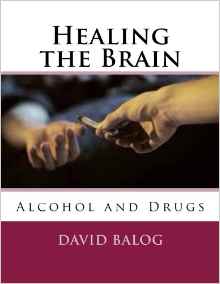
Blogger sale: Just $9.95. Order on Amazon by clicking below. 
Learn more about your brain!

Praise for Healing the Brain
"A book that can help medical professionals as well as the general public, Mr. Balog has tackled a subject that is complex and he makes it quite approachable. It has added and enriched my own practice of medicine by making me more aware of issues not often discussed in medical circles."--Peter Paganussi, MD, Virginia

"Author David Balog has done an excellent job of creating a book for educators (or anyone working with youth) that explains the complicated workings of the brain in an easy to understand manner. Balog goes on to discuss various types of trauma and how the adolescent brain responds to trauma such as depression, stress, addiction, risk taking, PTSD, etc. LGBT/Q youth may experience trauma in ways majority youth often do not. The author shares important coping strategies....I highly recommend this book!"--Carol Dopp, M.Ed. 

"David Balog understands the strain of alienation, so he tackles this subject with compassion and concern. Mr. Balog draws on his knowledge of brain science to give readers insight into what happens to young people under tremendous stress, and he offers practical advice on how to help and cope."--Gary Cottle, author

"Provides comfort and learning to the reader. Flows easily from one topic to the next and knits tidbits of information together in a unifying mosaic. Easy to read. Difficult to put down." --Michael J. Colucciello, Jr., New York State Dept. of Mental Health researcher, retired.

"Well researched, fleshed out with relevant case histories, this book packs a lot of solid information into its 152 pages. Written in an engaging style for the layman, it covers a wide range of topics. One learns a great deal about the biology of stress, particularly the vulnerability of the brain in the pre-adult years. This book also provides a glossary of key brain science terms and a listing of organizations serving the LGBT /Q community and resources on the brain."--Gary Bordzuk, librarian

Sunday, November 6, 2016

Just What Do Drugs Specifically Do to Your Brain?

The old image was of eggs on a frying pan. But drugs, from alcohol to nicotine to meth and heroin target specific areas of the brain, and thus have varying effects on us and our behavior, short- and long-term.From our new book: Healing the Brain:
 
The brain, this three-pound mass of gray and white matter, sits at the center of all human activity—you need it to drive a car, to enjoy a meal, to breathe, to create an artistic masterpiece, and to enjoy everyday activities. In brief, the brain regulates your body’s basic functions; enables you to interpret and respond to everything you experience; and shapes your thoughts, emotions, and behavior.

The brain is made up of many parts that all work together as a team. Different parts of the brain are responsible for coordinating and performing specific functions. Drugs can alter important brain areas that are necessary for life-sustaining functions and can drive the compulsive drug abuse that marks addiction.

Key brain areas affected by drug abuse include:
The brain stem, which controls basic functions critical to life, such as heart rate, breathing, and sleeping.

The cerebral cortex, which is divided into areas that control specific functions.

Different areas process information from our senses, enabling us to see, feel, hear, and taste. The front part of the cortex, the frontal cortex or forebrain, is the thinking center of the brain; it powers our ability to think, plan, solve problems, and make decisions.

The limbic system, which contains the brain’s reward circuit. It links together a number of brain structures that control and regulate our ability to feel pleasure. Feeling pleasure motivates us to repeat behaviors that are critical to our existence. The limbic system is activated by healthy, life-sustaining activities such as eating and socializing— but it is also activated by drugs of abuse. In addition, the limbic system is responsible for our perception of other emotions, both positive and negative, which explains the mood-altering properties of many drugs.

How do drugs work in the brain?
Drugs are chemicals that affect the brain by tapping into its communication system and interfering with the way neurons normally send, receive, and process information. Some drugs, such as marijuana and heroin, can activate neurons because their chemical structure mimics that of a natural neurotransmitter. This similarity in structure “fools” receptors and allows the drugs to attach onto and activate the neurons. Although these drugs mimic the brain’s own chemicals, they don’t activate neurons in the same way as a natural neurotransmitter, and they lead to abnormal messages being transmitted through the network.

Get the book!


Saturday, November 5, 2016

When are we MOST at-risk for getting addicted?

A friend said to me that the only way he'll get through watching election returns is to have a few drinks of wine. Seems benign, but what times in our lives make us most vulnerable for drug use? Here's an excerpt from our new book, Healing the Brain:


Risk of drug abuse increases greatly during times of transition.

For an adult, a divorce or loss of a job may lead to drug abuse; for a teenager, risky times include moving or changing schools. In early adolescence, when children advance from elementary through middle school, they face new and challenging social and academic situations. Often during this period, children are exposed to abusable substances such as cigarettes and alcohol for the first time. When they enter high school, teens may encounter greater availability of drugs, drug use by older teens, and social activities where drugs are used.

At the same time, many behaviors that are a normal aspect of their development, such as the desire to try new things or take greater risks, may increase teen tendencies to experiment with drugs.

Some teens may give in to the urging of drug-using friends to share the experience with them. Others may think that taking drugs (such as steroids) will improve their appearance or their athletic performance or that abusing substances such as alcohol or MDMA (ecstasy or “Molly”) will ease their anxiety in social situations. A growing number of teens are abusing prescription ADHD stimulants such as Adderall® to help them study or lose weight. Teens’ still-developing judgment and decision-making skills may limit their ability to accurately assess the risks of all of these forms of drug use. Using abusable substances at this age can disrupt brain function in areas critical to motivation, memory, learning, judgment, and behavior control.  

So, it is not surprising that teens who use alcohol and other drugs often have family and social problems, poor academic performance, health-related problems (including mental health), and involvement with the juvenile justice system.