New!
Start Reading this Book Now, FOR FREE
Sample pages:




(Start reading for FREE right now.)


"Thoughtful and Thought-provoking"
Reviewed in the United States on July 18, 2023PRAISE FOR THE BOOK


The research, published in PLOS Medicine, analysed the impact of sleep duration on the health of more than 7,000 men and women at the ages of 50, 60 and 70, from the Whitehall II cohort study.
Researchers examined the relationship between how long each participant slept for, mortality and whether they had been diagnosed with two or more chronic diseases (multimorbidity) -- such as heart disease, cancer or diabetes -- over the course of 25 years.
People who reported getting five hours of sleep or less at age 50 were 20% more likely to have been diagnosed with a chronic disease and 40% more likely to be diagnosed with two or more chronic diseases over 25 years, compared to people who slept for up to seven hours.
Additionally, sleeping for five hours or less at the age of 50, 60, and 70 was linked to a 30% to 40% increased risk of multimorbidity when compared with those who slept for up to seven hours.
Researchers also found that sleep duration of five hours or less at age 50 was associated with 25% increased risk of mortality over the 25 years of follow-up -- which can mainly be explained by the fact that short sleep duration increases the risk of chronic disease(s) that in turn increase the risk of death.
Lead author, Dr Severine Sabia (UCL Institute of Epidemiology & Health, and Inserm, Université Paris Cité) said: "Multimorbidity is on the rise in high income countries and more than half of older adults now have at least two chronic diseases. This is proving to be a major challenge for public health, as multimorbidity is associated with high healthcare service use, hospitalisations and disability.
"As people get older, their sleep habits and sleep structure change. However, it is recommended to sleep for 7 to 8 hours a night -- as sleep durations above or below this have previously been associated with individual chronic diseases.
"Our findings show that short sleep duration is also associated with multimorbidity.
"To ensure a better night's sleep, it is important to promote good sleep hygiene, such as making sure the bedroom is quiet, dark and a comfortable temperature before sleeping. It's also advised to remove electronic devices and avoid large meals before bedtime. Physical activity and exposure to light during the day might also promote good sleep."
As part of the study, researchers also assessed whether sleeping for a long duration, of nine hours or more, affected health outcomes. There was no clear association between long sleep durations at age 50 and multimorbidity in healthy people.

"Remember the turtle," a boss once said to me. I had to ask him to explain. "We're like turtles," he replied. "The turtle can't move forward without sticking its head out of its shell."
Pride Nights have been Major League Baseball's slow motion effort to move forward in support of Lesbian, Gay, Bisexual and Transgender rights. The first event was held 16 years ago by the Tampa Bay Rays. In 2022 two of baseball's thirty professional teams are not hosting Pride Nights. Sadly, the iconic New York Yankees being one.
The Yankees crosstown rivals, the Mets, however, just held their largest and most successful Pride Night, their sixth annual event. Members of the gay community were pleased with the full support of the team's management for a program that was well organized and supported by comments of several players and their manager, Buck Showalter. One player, Mark Canha, tweeted that he welcomed "his beautiful LGBTQ fans" to the Mets Pride Night.

Elsewhere, the Los Angeles Dodgers and the San Francisco Giants jointly celebrated a Pride Night at in the same game in San Francisco. The Dodgers previously held their pride night in Los Angeles, in which they honored the legacy of Glenn Burke, the first openly gay major league player. The Oakland Athletics honored Burke, as well. The team honored their alumnus by naming their event in his memory. The online magazine, The Athletic, reported during the week that one major league free agent, pitcher Liam Hendriks, based off-season signing decision at least partly on whether a prospective team was planning to hold a Pride Night.
All did not go well, however, in Tampa Bay. Five of the team's players refused to participate, citing religious objections, and declined to wear rainbow colored caps and arm patches. Symbolically, they ripped the patches off their uniforms and wore the team's traditional cap. Ironically, two of the five players, all pitchers, participated in the evening's game and were responsible for the team's loss.
They laughed at us.
William Safire, the self-described "scandal monger" of Trump's early years and my boss.
In major ways, William Safire was the godfather of today's right wing, backstabbing Republican party. Along with Roy Cohn, Safire was an early an avid supporter of Donald Trump. Safire help Trump's sister get an undeserving Federal judgeship. Introduced him early to Richard Nixon, for whom Safire had worked as speech writer (ever hear of the "nattering nabobs of negativism?"). Taught him to dominate by intimidation.
Safire undoubtedly taught Trump never to apologize, never to take responsibility. And run things as an autocrat. Employ nepotism and cronyism. And be mean.
How Trump learned his political lessons early and other topics on democracy.
And I had a front-row seat for 12 years as an editor to Safire at the Dana Foundation in New York City. The Foundation was at 745 5th Avenue. Trump Tower was right next door at 725 5th.
On a hunch, years after I left Dana, I asked a high-up former employee if Safire had a close relationship with Trump. "Oh yes, absolutely." she said.
At the New York Times, where Safire wrote his political column, he was known as the creator of "hatchet journalism." Find a person, usually a Democrat, and go after him or her, and put the fear of God in them. People such as Hillary Clinton (remember "She's a congenital liar?").
If the facts didn't hold up, hold your tongue, find a new target and move on. In the style of today's Fox News. Safire called himself, with only a touch of irony, "the vituperative right-wing scandalmonger." He did all he could to polarize the political parties into deep and lasting ideological corners.
There was a time in this country, roughly before Nixon and Safire, where we did have a bipartisan government, one where Democrats and Republicans could work together and did. Roughly about the time he's to arrive in Washington, that all began to change. It took someone like Trump to drive Americans on the right to such extremism that it threatens the core of our Democracy.
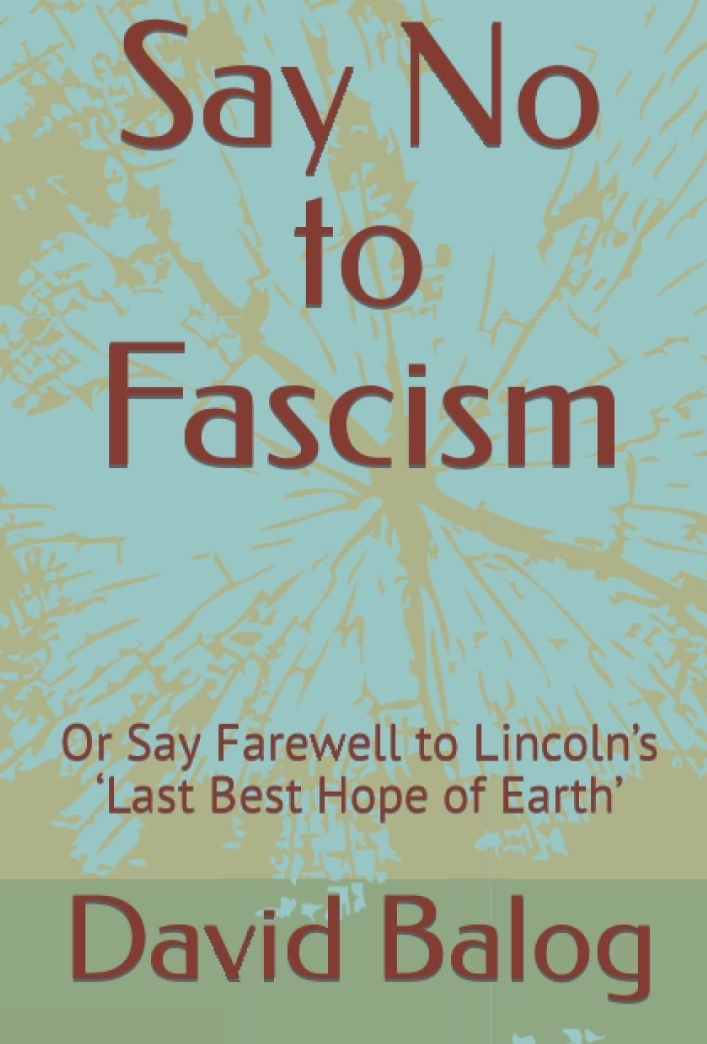
Now our great democracy, as Lincoln called it the "last best hope of Earth," literally stands on the brink of destruction. I saw the beginning of the end and I think you might want to hear what are I witnessed. Take a look at my new book, Say No to Fascism or Say Farewell to Lincoln’s Last Best Hope of Earth. Start reading it for free by clicking this link.
How Trump learned his political lessons early and other topics on democracy. CLICK HERE!
Even moderate light exposure during sleep harms heart health and increases insulin resistance

Bedroom with full moon | Credit: © Brilliant Eye / stock.adobe.com
Summary:
Exposure to even moderate ambient lighting during nighttime sleep, compared to sleeping in a dimly lit room, harms your cardiovascular function during sleep and increases your insulin resistance the following morning, reports a new study. Just a single night of exposure to moderate room lighting during sleep can impair glucose and cardiovascular regulation, which are risk factors for heart disease, diabetes and metabolic syndrome.
Close the blinds, draw the curtains and turn off all the lights before bed. Exposure to even moderate ambient lighting during nighttime sleep, compared to sleeping in a dimly lit room, harms your cardiovascular function during sleep and increases your insulin resistance the following morning, reports a new Northwestern Medicine study
"The results from this study demonstrate that just a single night of exposure to moderate room lighting during sleep can impair glucose and cardiovascular regulation, which are risk factors for heart disease, diabetes and metabolic syndrome," said senior study author Dr. Phyllis Zee, chief of sleep medicine at Northwestern University Feinberg School of Medicine and a Northwestern Medicine physician. "It's important for people to avoid or minimize the amount of light exposure during sleep."
There is already evidence that light exposure during daytime increases heart rate via activation of the sympathetic nervous system, which kicks your heart into high gear and heightens alertness to meet the challenges of the day.
"Our results indicate that a similar effect is also present when exposure to light occurs during nighttime sleep," Zee said.
Heart rate increases in light room, and body can't rest properly
"We showed your heart rate increases when you sleep in a moderately lit room," said Dr. Daniela Grimaldi, a co-first author and research assistant professor of neurology at Northwestern. "Even though you are asleep, your autonomic nervous system is activated. That's bad. Usually, your heart rate together with other cardiovascular parameters are lower at night and higher during the day."
There are sympathetic and parasympathetic nervous systems to regulate our physiology during the day and night. Sympathetic takes charge during the day and parasympathetic is supposed to at night, when it conveys restoration to the entire body.
How nighttime light during sleep can lead to diabetes and obesity
Investigators found insulin resistance occurred the morning after people slept in a light room. Insulin resistance is when cells in your muscles, fat and liver don't respond well to insulin and can't use glucose from your blood for energy. To make up for it, your pancreas makes more insulin. Over time, your blood sugar goes up.
An earlier study published in JAMA Internal Medicine looked at a large population of healthy people who had exposure to light during sleep. They were more overweight and obese, Zee said.
"Now we are showing a mechanism that might be fundamental to explain why this happens," Zee said. "We show it's affecting your ability to regulate glucose."
The participants in the study weren't aware of the biological changes in their bodies at night.
"But the brain senses it," Grimaldi said. "It acts like the brain of somebody whose sleep is light and fragmented. The sleep physiology is not resting the way it's supposed to."
Exposure to artificial light at night during sleep is common
Exposure to artificial light at night during sleep is common, either from indoor light emitting devices or from sources outside the home, particularly in large urban areas. A significant proportion of individuals (up to 40%) sleep with a bedside lamp on or with a light on in the bedroom and/or keep the television on.
Light and its relationship to health is double edged.
"In addition to sleep, nutrition and exercise, light exposure during the daytime is an important factor for health, but during the night we show that even modest intensity of light can impair measures of heart and endocrine health," Zee said.
The study tested the effect of sleeping with 100 lux (moderate light) compared to 3 lux (dim light) in participants over a single night. The investigators discovered that moderate light exposure caused the body to go into a higher alert state. In this state, the heart rate increases as well as the force with which the heart contracts and the rate of how fast the blood is conducted to your blood vessels for oxygenated blood flow.
"These findings are important particularly for those living in modern societies where exposure to indoor and outdoor nighttime light is increasingly widespread," Zee said.
Zee's top tips for reducing light during sleep
(1) Don't turn lights on. If you need to have a light on (which older adults may want for safety), make it a dim light that is closer to the floor.
(2) Color is important. Amber or a red/orange light is less stimulating for the brain. Don't use white or blue light and keep it far away from the sleeping person.
(3) Blackout shades or eye masks are good if you can't control the outdoor light. Move your bed so the outdoor light isn't shining on your face.
Is my room too light?
"If you're able to see things really well, it's probably too light," Zee said.
Story Source:
Materials provided by Northwestern University. Original written by Marla Paul. Note: Content may be edited for style and length.