Saturday, November 3, 2018

A national sleep crisis: Pt. 1

Poor sleep impairs work and productivity, raises risks of car crashes, and may play a key role in risk for developing Alzheimer's disease.

It's serious stuff.

In this excerpt from Healing the Brain: Stress, Trauma and Development, we take a close look at sleep.


Fighting a National Sleep Crisis


Many people view sleep as merely a “down time” when their brains shut off and their bodies rest. People may cut back on sleep, thinking it won’t be a problem, because other responsibilities seem much more important. But research shows that a number of vital tasks carried out during sleep help people stay healthy and function at their best. While you sleep, your brain is hard at work forming the pathways necessary for learning and creating memories and new insights. Without enough sleep, you can’t focus and pay attention or respond quickly. A lack of sleep may even cause mood problems. Also, growing evidence shows that a chronic lack of sleep increases your risk of obesity, diabetes, cardiovascular disease, and infections.
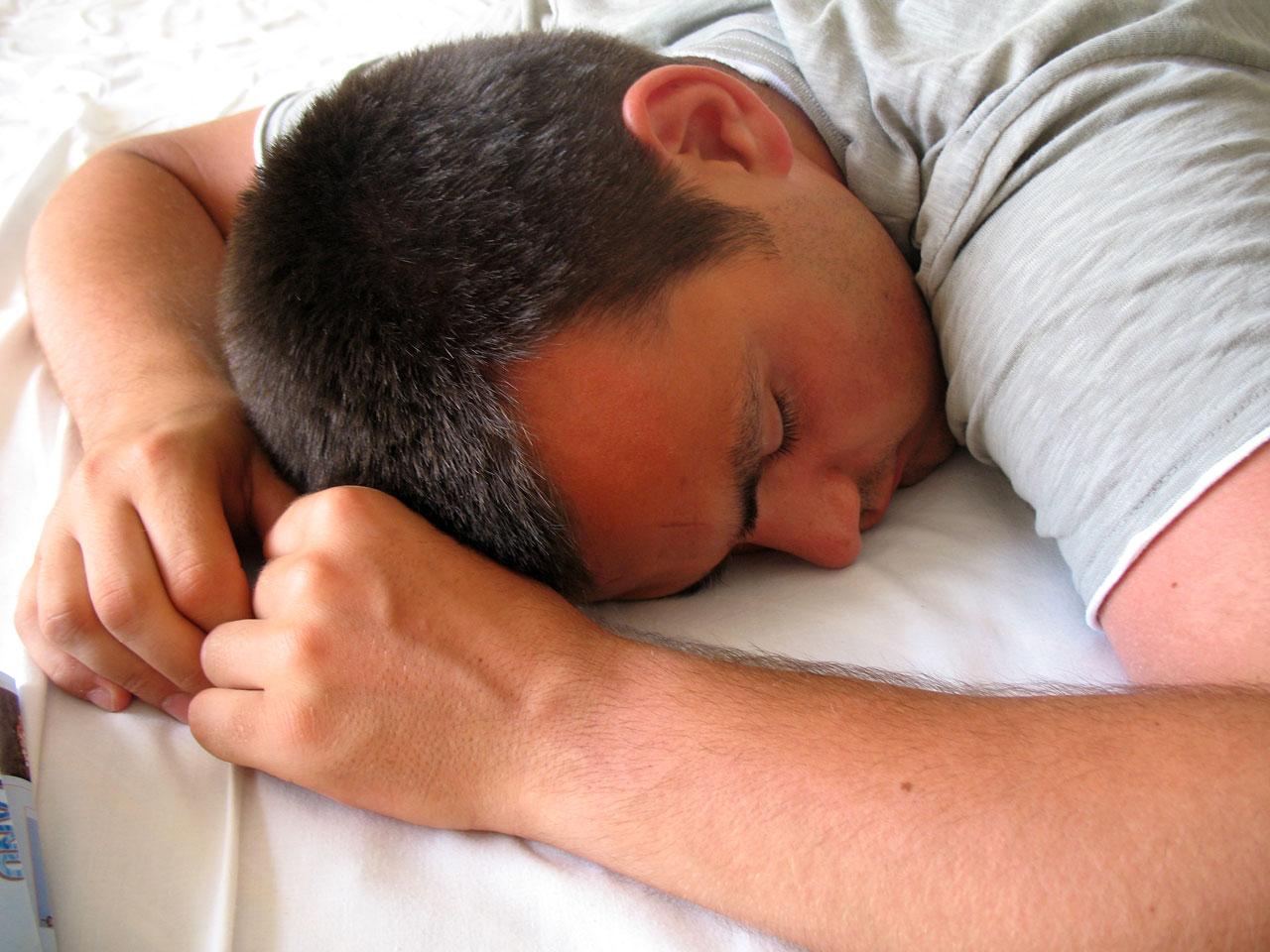
Asleep
Public Domain Pictures
Researchers acknowledge that regular, consistent sleep plays a major role in brain and body health

Despite growing support for the idea that adequate sleep, like adequate nutrition and physical activity, is vital to our well-being, people are sleeping less. The nonstop “24/7” nature of the world today encourages longer or nighttime work hours and offers continual access to entertainment and other activities. To keep up, people cut back on sleep. A common myth is that people can learn to get by on little sleep (such as less than 6 hours a night) with no adverse effects. Research suggests, however, that adults need at least 7–8 hours of sleep each night to be well rested. Indeed, in 1910, most people slept 9 hours a night. But recent surveys show the average adult now sleeps fewer than 7 hours a night.

Chronic sleep loss or sleep disorders may affect as many as 70 million Americans.

More than one-third of adults report daytime sleepiness so severe that it interferes with work, driving, and social functioning at least a few days each month. Evidence also shows that children’s and adolescents’ sleep is shorter than recommended. These trends have been linked to increased exposure to electronic media. Lack of sleep may have a direct effect on children’s health, behavior, and development. Chronic sleep loss or sleep disorders may affect as many as 70 million Americans. This may result in an annual cost of $16 billion in health care expenses and $50 billion in lost productivity.

What Makes You Sleep? Although you may put off going to sleep in order to squeeze more activities into your day, eventually your need for sleep becomes overwhelming. This need appears to be due, in part, to two substances your body produces. One substance, called adenosine, builds up in your blood while you’re awake. Then, while you sleep, your body breaks down the adenosine. Levels of this substance in your body may help trigger sleep when needed.

A buildup of adenosine and many other complex factors might explain why, after several nights of less than optimal amounts of sleep, you build up a sleep debt. This may cause you to sleep longer than normal or at unplanned times during the day. Because of your body’s internal processes, you can’t adapt to getting less sleep than your body needs. Eventually, a lack of sleep catches up with you. The other substance that helps make you sleep is a hormone called melatonin. This hormone makes you naturally feel sleepy at night. It is part of your internal “biological clock,” which controls when you feel sleepy and your sleep patterns. Your biological clock is a small bundle of cells in your brain that works throughout the day and night. Internal and external environmental cues, such as light signals received through your eyes, control these cells. Your biological clock triggers your body to produce melatonin, which helps prepare your brain and body for sleep. As melatonin is released, you’ll feel increasingly drowsy. 


Fi

Wednesday, September 5, 2018

When An American President "Loses It”

When A President "Loses It”


By: James F. Toole, M.D.
Cerebrum, Dana Foundation, 1998


Learn about the astonishing, complex brain.


It has happened, of course—and not infrequently. Just in this century, American presidents who continued to serve in office while seriously neurologically impaired include Woodrow Wilson, Franklin D. Roosevelt, and Dwight D. Eisenhower. In the first two, there is a credible historical case that the results were catastrophic on a world scale. But the real question is: Could it happen again?...

Once officials are elected or appointed, there is no legal requirement for periodic physical, mental, or behavioral examinations while they are serving in office. When the average life span was 60 years, senility was a less common problem. Now, with the graying of America (and soon the world), devastating neurological diseases and other conditions have a much greater likelihood of wreaking havoc on an individual’s mental functioning. Isn’t it time for the law to require health examinations, and public revelation of the results, before election and periodically thereafter while an individual is serving in office—just as there are legal protections of the public in other areas of society? After all, we have laws governing the packaging of foods, construction of automobiles, and periodic inspection for continuing registration and licensing of vehicles and drivers. Why don’t we have similar requirements for public officials (as we have already for aviators)? Unfortunately action is stalled, in part because it contravenes traditions of confidentiality in matters relating to health. Society desperately needs correction of this Achilles’ heel before it is too late.


THE TWENTY-FIFTH AMENDMENT
Why does our nation tolerate this appallingly dangerous flaw in our system? Can there be any brake on this unregulated system— or must we live in danger of catastrophe? A first step was taken in 1965, when Senator Birch Bayh proposed an amement to the U.S. Constitution. On February 10, 1967, Article 25 was ratified by a sufficient number of state legislatures. In it, succession is clearly defined in cases of removal of the president from office by death or resignation. The vice president shall become president, as happened when President Richard M. Nixon was replaced by Vice President Gerald R. Ford.

Section 2 is equally clear on succession to the office of the vice president, as occurred when Ford was appointed vice president after the resignation of Spiro T. Agnew.

Section 3 is straightforward. If the president voluntarily submits a written statement that he is unable to discharge the powers and duties of his office, they shall be discharged by the vice president as acting president until the president submits another document stating that he has recovered. This sequence occurred when President Reagan transferred power to Vice President George Bush in anticipation of undergoing general anesthesia for colon surgery and then resumed office immediately thereafter.

In Section 4, however, there seems the potential for a serious dilemma:

Whenever the vice-president and a majority of either the principal officers of the executive department or of such other body as Congress may by law provide, transmit to the president pro tempore of the Senate and the Speaker of the House of Representatives their written declaration that the president is unable to discharge the powers and duties of his office, the vice president shall immediately assume the powers and duties of the office as acting president.


What is the mechanism for determining that the president is unable to serve? How does one inform the president that he is not capable of performing in office? Judging from past experience, it would require the most extreme conditions for the vice president or members of the cabinet to remove their leader. They have a built-in political incentive to maintain the status quo because, if the president is removed, the cabinet that serves him may be replaced as well. Furthermore, these officials are not medical professionals and so cannot have full insight into the dangers of having a mentally impaired leader.

There is an even greater problem in implementation of the next part of Section 4. It states:

Thereafter, when the president transmits to the president pro tempore of the Senate and the Speaker of the House of Representatives his written declaration that no disability exists, he shall resume the powers and duties of his office unless the vice-president and a majority of either the principal officers of the executive department or of any such body as Congress may by law provide, transmit within four days to the president pro tempore of the Senate and the Speaker of the House of Representatives their written declaration that the president is unable to discharge the powers and duties of his office. Thereupon Congress shall decide the issue, assembling within 48 hours for that purpose if not in session.

These two clauses conceal potential stumbling blocks. Together, they could enable a cognitively impaired President who lacked insight into his mental deficiency to obstruct governmental procedures for removal from office (or to resume office), despite persistent deficits. Only a specially trained physician has the skills to determine the presence, treatment, and prognosis for neurologic and psychiatric disease.


Sunday, August 19, 2018

FREE Review Copy: Stress, Trauma and Gay Youth

New!
Healing the Brain: Stress, Trauma and LGBT/Q Youth

CONTACT: A Thousand Moms,
2367 Curry Road, Schenectady NY 12303
Available on Amazon.com
(Includes video), 172 pp, illustrated, 8 1/2 x 11

From the author of the acclaimed Dana Sourcebook
of Brain Science, an easy-to-read layman’s guide to understanding the brain and health.  Praise for Healing the Brain:

 https://goo.gl/3vucVn

Purchase directly (paperback or Kindle) at Amazon.com or www.HealingTheBrainBooks.com
“Well researched, fleshed out with relevant case histories, this book packs a lot of solid information into its 152 pages. Written in an engaging style for the layman, it covers a wide range of topics. One learns a great deal about the biology of stress, particularly the vulnerability of the brain in the pre-adult years. This book also provides a glossary of key brain science terms and a listing of organizations serving the LGBT /Q community and resources on the brain. Brief summaries of Erik Erickson's Stages of Development and Abraham Maslow's 12 Characteristics of a Self-Actualized Person lead into a detailed examination of the brain's structure and functions. Although the basic wiring structure is present at birth, there are several critical stages of brain development. Nurture, experience and stimulation are essential to proper brain growth and to the fine tuning of its communications structure. Notably, PTSD is not just an issue for veterans, but can also develop in children and teens who are going through a traumatic situation such as child abuse.”--Gary Bordzuk, Librarian, Rockville, NY

“David Balog takes a subject fraught with difficulty and makes it simple and accessible to everyone. The book goes a long way in helping one understand how and why and in what ways stress affects how we live and cope. Invaluable.”--Jessica Watson-Crosby, former president, National Association of Former Foster Children

“...[A] book for educators (or anyone working with youth) that explains the complicated workings of the brain in an easy-to-understand manner. The author goes on to discuss various types of trauma and how the adolescent brain responds to trauma such as depression, stress, addiction, risk taking, PTSD, etc. LGBT/Q youth may experience….I highly recommend this book!--Carol Dopp, M.Ed.

"An invaluable resource for those working in the trenches with LGBTQ youth in foster/adoptive care but equally important serves as a primer for those in the community at large who are largely unaware of this subset in our population who are in such desperate need!"--Dr. Ray Werking, professor, GLSEN educator and host, WRPI Radio

“David Balog understands the strain of alienation, so he tackles this subject with compassion and concern. Mr. Balog draws on his knowledge of brain science to give readers insight into what happens to young people under tremendous stress….”--Gary L. Cottle, author

“Easy to read. Difficult to put down.”--Micheal J. Colucciello, Jr., NY State pharmaceutical researcher, retired.

Also available in the series: Addiction; Development; Domestic Violence and TBI; Memory; Fetal Alcohol Spectrum Disorders; Stress & Money.

Purchase directly (paperback or Kindle) at Amazon.com or www.HealingTheBrainBooks.com


Thursday, August 16, 2018

Free e-book: Concussions, CTE and Football

From the Introduction:
When You Watch Your Next Football Game...

Men in White and Black Playing Football · Free Stock Photo
Free Stock Photo
From high school to college to professional levels, football dominates American sports and exposes millions to head traumas on practically every play.

It is a paradox of wide proportions. From opening day in September to the Super Bowl in February, the National Football League (NFL) dominates American sports and wins television ratings far beyond any other program--sports or otherwise.

(Also available on Amazon and Kindle.)
Click here for FREE PDF Flipbook.

Increasingly, though, discussions of football (and other sports) include the medical terms concussion and chronic traumatic encephalopathy (CTE), a long-term degenerative and incurable brain disease. Although military personnel and others are vulnerable to the disease, the highest risk is among athletes involved in contact sports in which hits to the head are considered “part of the game.”

Ten years ago, few would have predicted that the movie “Concussion” starring Will Smith would be made. Fewer would have predicted that brain injuries would one day dominate the sports headlines. When former NFL star Junior Seau committed suicide in May 2012, the media focused almost entirely on whether the thousands of head blows he endured during his 19-year career as a middle linebacker were a contributing factor.

More than 3,000 former NFL players sued the league for allegedly misleading them about the risks of brain injury. The players and the league settled for more than $1 billion in damages. New policies and studies aimed at protecting the brains of athletes seem to be announced every week. But it’s not just professional athletes who are the focus of attention. No fewer than 40 states have passed laws requiring athletes in schools and recreational programs to schedule a doctor’s appointment when a concussion is suspected.

A progressive, degenerative brain disease, CTE can present itself  in athletes and others with a history of repetitive brain trauma months, years, or even decades after injury. Memory loss, confusion, depression, aggression, impaired judgment or impulse control, and, eventually, progressive dementia may result.

With this increasing awareness about the dangers of concussion, parents face tough choices about which sports their children should be allowed to play. Some of the more

New rules have since been designed to lessen brain trauma; but with every new horror story that emerges on the sports pages, parents worry even more.

dangerous sports for the brain, such as football, soccer, ice hockey, and lacrosse, are also the most popular. Although everyone agrees that brain trauma may have lasting and debilitating effects, and science continues to make slow progress toward understanding the disease, we cannot yet entirely quantify those effects. As a result, parents and even medical professionals are left to search their hearts and scour Web sites for answers. But a decade’s worth of research has made one thing clear: We need to find better ways to protect the brains of athletes.

Difficult to Measure

Concussions suffer from a perception problem. On the surface, they might not seem to have a lasting, serious impact. (In fact, sports programs and commentators continue to celebrate the most impactful “hits,” using euphemisms such as “getting your bell rung.”) They are an invisible injury: There is no blood, there are no displaced bones, and the patient rarely complains. Even when an athlete is knocked unconscious and observers react with panic, the concern quickly fades. Ninety-nine percent of concussed athletes wake up in seconds or minutes and then seem fine. When symptoms persist beyond the day of injury, in the vast majority of cases they dissipate within a month. The injury seems as if it is gone forever, leaving no scars or overt indication that it ever happened.

Children at Risk

Most brain trauma in the industrialized world occurs in children playing sports. Since participation is voluntary, and the rules of recreational sports are malleable, it seems reasonable to make every effort to reform each individual sport....


Monday, August 6, 2018

Foods to prevent obesity, Alzheimer's, stroke

Source: Penn State

Summary:
The reason why some people find it so hard to resist finishing an entire bag of chips or bowl of candy may lie with how their brain responds to food rewards, according to researchers who found that when certain regions of the brain reacted more strongly to being rewarded with food than being rewarded with money, those people were more likely to overeat.
 Learn about your brain and food.    

FULL STORY

The reason why some people find it so hard to resist finishing an entire bag of chips or bowl of candy may lie with how their brain responds to food rewards, leaving them more vulnerable to overeating.
In a study with children, researchers found that when certain regions of the brain reacted more strongly to being rewarded with food than being rewarded with money, those children were more likely to overeat, even when the child wasn't hungry and regardless of if they were overweight or not.
Shana Adise, a postdoctoral fellow at the University of Vermont who led the study while earning her doctorate at Penn State, said the results give insight into why some people may be more prone to overeating than others. The findings may also give clues on how to help prevent obesity at a younger age.
"If we can learn more about how the brain responds to food and how that relates to what you eat, maybe we can learn how to change those responses and behavior," Adise said. "This also makes children an interesting population to work with, because if we can stop overeating and obesity at an earlier age, that could be really beneficial."
"Until we know the root cause of overeating and other food-related behaviors, it's hard to give good advice on fixing those behaviors," Keller said. "Once patterns take over and you overeat for a long time, it becomes more difficult to break those habits. Ideally, we'd like to prevent them from becoming habits in the first place."

Story Source:
Materials provided by Penn State

Saturday, July 7, 2018

How Quitting Smoking Improves Your Health


 Brain

Broken Addiction Cycle

Quitting smoking can re-wire your brain and help break the cycle of addiction. The large number of nicotine receptors in your brain will return to normal levels after about a month of being quit.

Head and Face

Sharp Hearing

Quitting smoking will keep your hearing sharp. Remember, even mild hearing loss can cause problems (like not hearing directions correctly and doing a task wrong).

Better Vision

Quitting smoking will improve your night vision and help preserve your overall vision by stopping the damage that smoking does to your eyes.

Clean Mouth

Nobody likes a dirty mouth. After a few days without cigarettes, your smile will be brighter. Quitting smoking now will keep your mouth healthy for years to come.

Clear Skin

Quitting smoking is better than anti-aging lotion. Quitting can help clear up blemishes and protect your skin from premature aging and wrinkling.

Heart

Decreased Heart Risks

Smoking is the leading cause of heart attacks and heart disease. But many of these heart risks can be reversed simply by quitting smoking. Quitting can lower your blood pressure and heart rate almost immediately. Your risk of a heart attack declines within 24 hours.

Thin Blood

When you quit smoking, your blood will become thinner and less likely to form dangerous blood clots. Your heart will also have less work to do, because it will be able to move the blood around your body more easily.

Lower Cholesterol

Quitting smoking will not get rid of the fatty deposits that are already there. But it will lower the levels of cholesterol and fats circulating in your blood, which will help to slow the buildup of new fatty deposits in your arteries.

Lungs

Stop Lung Damage

Scarring of the lungs is not reversible. That is why it is important to quit smoking before you do permanent damage to your lungs. Within two weeks of quitting, you might notice it’s easier to walk up the stairs because you may be less short of breath. Don’t wait until later; quit today!

Prevent Emphysema

There is no cure for emphysema. But quitting when you are young, before you have done years of damage to the delicate air sacs in your lungs, will help protect you from developing emphysema later.

Return of Cilia

Cilia (The fine hairlike projections from certain cells such as those in the respiratory tract that sweep in unison and help to sweep away fluids and particles) start to regrow and regain normal function very quickly after you quit smoking. They are one of the first things in your body to heal. People sometimes notice that they cough more than usual when they first quit smoking. This is a sign that the cilia are coming back to life. But you’re more likely to fight off colds and infections when you’re cilia are working properly.

DNA

Lower Cancer Risk

Quitting smoking will prevent new DNA damage from happening and can even help repair the damage that has already been done. Quitting smoking immediately is the best way to lower your risk of getting cancer.

Stomach and Hormones

Smaller Belly

Quitting smoking will reduce your belly fat and lower your risk of diabetes. If you already have diabetes, quitting can help you keep your blood sugar levels in check.

Normal Estrogen Levels

If you’re a woman, your estrogen levels will gradually return to normal after you quit smoking. And if you hope to have children someday, quitting smoking right now will increase your chances of a healthy pregnancy in the future.

Erectile Dysfunction

Sexual Healing

If you quit smoking now, you can lower your chances of erectile dysfunction and improve your chances of having a healthy sexual life.
"The nicotine was making me dead, inside and out. Now I feel free, vibrant, energetic, focused, and so alive!"
-Smokefree Arwen

Blood and the Immune System

Normal White Blood Cell Count

When you quit smoking, your body will begin to heal from the injuries that smoking caused. Eventually, your white blood cell counts will return to normal and will no longer be on the defensive.

Proper Healing

Quitting smoking will improve blood flow to wounds, allowing important nutrients, minerals, and oxygen to reach the wound and help it heal properly.

Stronger Immune System

When you quit smoking, your immune system is no longer exposed to tar and nicotine. It will become stronger, and you will be less likely to get sick.

Muscles and Bones

Strong Muscles

Quitting smoking will help increase the availability of oxygen in your blood, and your muscles will become stronger and healthier.

Stronger Bones

Quitting smoking can reduce your risk of fractures, both now and later in life. Keep your bones strong and healthy by quitting now.

SmokeFree.gov