Showing posts with label stroke. Show all posts

Thursday, July 23, 2020

Covid-19 and the Brain

July 8, 2020

Source:

University of Liverpool


Summary:

Cases of brain complications linked to COVID-19 are occurring across the globe, a new review has shown. The research found that strokes, delirium and other neurological complications are reported from most countries where there have been large outbreaks of the disease.


FULL STORY

Cases of brain complications linked to COVID-19 are occurring across the globe, a new review by University of Liverpool researchers has shown.


Published in The Lancet Neurology, the study found that strokes, delirium and other neurological complications are reported from most countries where there have been large outbreaks of the disease.


COVID-19 has been associated mostly with problems like difficulty breathing, fever and cough. However, as the pandemic has continued, it has become increasingly clear that other problems can occur in patients. These include confusion, stroke, inflammation of the brain, spinal cord, and other kinds of nerve disease.


A recent Liverpool-led study of COVID-19 patients hospitalised in the UK found a range of neurological and psychiatric complications that may be linked to the disease.


To get a sense of the wider picture, the researchers brought together and analysed findings from COVID-19 studies across the globe that reported on neurological complications. The review, which included studies from China, Italy and the USA among others, found almost 1000 patients with COVID-19-associated brain, spinal cord and nerve disease.


Research Fellow, Dr Suzannah Lant, who was working on the project, said: "While these complications are relatively uncommon, the huge numbers of COVID-19 cases globally mean the overall number of patients with neurological problems is likely to be quite large."


One of the complications found to be linked to COVID-19 is encephalitis, which is inflammation and swelling of the brain.


Dr Ava Easton, CEO of the Encephalitis Society, and co-author on the paper said: "It is really important that doctors around the world recognise that COVID-19 can cause encephalitis and other brain problems, which often have potentially devastating, life-changing consequences for patients."


Professor Tom Solomon, senior author on the paper and Director of the Global COVID-Neuro Network, added: "Although such patients are being seen everywhere the virus occurs, many of the reports are lacking in detail. We are currently pooling data from individual patients all around the world, so that we can get a more complete picture. Doctors who would like to contribute patients to this analysis can contact us via the Global COVID-Neuro Network

website."


Saturday, October 12, 2019

Your doggie may just extend your life

"Man's best friend" now has even more meaning.


        Date:
October 8, 2019
Source:
American Heart Association
Summary:
Dog ownership was associated with a 33% lower risk of early death for heart attack survivors living alone and 27% reduced risk of early death for stroke survivors living alone, compared to people who did not own a dog. Dog ownership was associated with a 24% reduced risk of all-cause mortality and a 31% lower risk of death by heart attack or stroke compared to non-owners.

Dog ownership may be associated with longer life and better cardiovascular outcomes, especially for heart attack and stroke survivors who live alone, according to a new study and a separate meta-analysis published in Circulation: Cardiovascular Quality and Outcomes, a journal of the American Heart Association.
"The findings in these two well-done studies and analyses build upon prior studies and the conclusions of the 2013 AHA Scientific Statement 'Pet Ownership and Cardiovascular Risk' that dog ownership is associated with reductions in factors that contribute to cardiac risk and to cardiovascular events," said Glenn N. Levine, M.D., chair of the writing group of the American Heart Association's scientific statement on pet ownership. "Further, these two studies provide good, quality data indicating dog ownership is associated with reduced cardiac and all-cause mortality. While these non-randomized studies cannot 'prove' that adopting or owning a dog directly leads to reduced mortality, these robust findings are certainly at least suggestive of this."
Full story: Here.

Monday, August 6, 2018

Foods to prevent obesity, Alzheimer's, stroke

Source: Penn State

Summary:
The reason why some people find it so hard to resist finishing an entire bag of chips or bowl of candy may lie with how their brain responds to food rewards, according to researchers who found that when certain regions of the brain reacted more strongly to being rewarded with food than being rewarded with money, those people were more likely to overeat.
 Learn about your brain and food.    

FULL STORY

The reason why some people find it so hard to resist finishing an entire bag of chips or bowl of candy may lie with how their brain responds to food rewards, leaving them more vulnerable to overeating.
In a study with children, researchers found that when certain regions of the brain reacted more strongly to being rewarded with food than being rewarded with money, those children were more likely to overeat, even when the child wasn't hungry and regardless of if they were overweight or not.
Shana Adise, a postdoctoral fellow at the University of Vermont who led the study while earning her doctorate at Penn State, said the results give insight into why some people may be more prone to overeating than others. The findings may also give clues on how to help prevent obesity at a younger age.
"If we can learn more about how the brain responds to food and how that relates to what you eat, maybe we can learn how to change those responses and behavior," Adise said. "This also makes children an interesting population to work with, because if we can stop overeating and obesity at an earlier age, that could be really beneficial."
"Until we know the root cause of overeating and other food-related behaviors, it's hard to give good advice on fixing those behaviors," Keller said. "Once patterns take over and you overeat for a long time, it becomes more difficult to break those habits. Ideally, we'd like to prevent them from becoming habits in the first place."

Story Source:
Materials provided by Penn State

Wednesday, May 30, 2018

Stroke essentials. Save a life--yours.

May ends and so does Stroke Awareness Month. Get these basics from our book, and learn more about this leading killer of Americans.

Order your copy today!

Wednesday, November 29, 2017

Stroke: Why Blood Pressure and Stress Matter

Dr. Guy McKhann, famous neurologist, once wrote that back in his early practice, his response to a stroke patient was, "Take two aspirin and call me to set up your rehabilitation program."

Now health professionals are taking a more aggressive, proactive approach to stroke prevention.
Learn about stroke and the brain in easy-to-read language. Look here!

  • Blood pressure is a major determinant of stroke risk, and a current large-scale NIH study is examining whether recommending more aggressive blood pressure control than is suggested by current guidelines would further reduce risk of major stroke or incidence of cognitive decline related to vascular dementia.  Results from this study have the potential to impact clinical practice significantly.

Download PDF Version
Stroke

YESTERDAY

  • Until the 1950s, little was known about stroke and virtually nothing could be done for stroke victims.
  • Death from stroke was 4 times what it is today.
  • By 1960, the incidence and mortality from stroke began to gradually decline as treatable risk factors such as hypertension and smoking were identified.
  • During the 1970s, further decline in stroke mortality was achieved through management of risk factors and significant clinical advances such as computer tomography for early diagnosis of ischemic or hemorrhagic stroke, the demonstration of the effectiveness of aspirin for ischemic stroke and prevention, and assessment of brain metabolism using Position Emission Tomography (PET) scanning.

TODAY

  • Fewer people are dying of stroke today—age-adjusted stroke mortality rate has decreased 70 percent since 1950, and has decreased 33 percent since 1996, which indicates the trend persists.  As the population ages, further advances are needed to keep pace.
  • Over 6 million people in the United States have survived a stroke but live with its impact every day.
  • In 1995, an NIH-funded clinical trial established the first (and only) FDA-approved treatment for acute ischemic stroke. The drug tPA (tissue plasminogen activator), currently approved for delivery within 3 hours of stroke symptoms, reduces the risk of disability and maximizes the potential for patient recovery.
  • A recent analysis estimated that tPA can provide considerable cost savings if used in just 20 percent of all ischemic stroke patients in the US — nearly $74 million for the first post-stroke year alone.  Improving utilization through current stroke awareness campaigns will lead to better outcomes for stroke patients and substantial cost savings.
  • Blood pressure is a major determinant of stroke risk, and a current large-scale NIH study is examining whether recommending more aggressive blood pressure control than is suggested by current guidelines would further reduce risk of major stroke or incidence of cognitive decline related to vascular dementia.  Results from this study have the potential to impact clinical practice significantly.
  • A large, NIH-funded clinical trial compared the effectiveness of a common surgical procedure, carotid endarterectomy, with carotid stenting, which is a newer intervention, to determine which resulted in the best outcomes for stroke patients. This provided clinicians with valuable risk-benefit information when considering optimal treatment courses with their patients.
  • A number of devices can be deployed within the blood stream to remove clots from brain arteries and to dilate narrowed brain arteries.  NIH clinical trials are ongoing to learn whether these devices will improve functional outcome in stroke patients.
  • Observational cohort studies have improved our understanding of cultural and ethnic disparities that continue to exist in stroke occurrence, risk factors and mortality.  Geographic variation has been thought to contribute to the high stroke mortality in the southeastern United States Stroke Belt.  However, a NIH-funded national population-based cohort study (REasons for Geographic And Racial Differences in Stroke) (http://www.regardsstudy.org) found that exposure to the Stroke Belt during adolescence or early adulthood was more predictive of hypertension than was current residence in the Stroke Belt.  This study clearly indicates that preventive measures must begin early in life.

TOMORROW

  • A major objective is the control of blood pressure. The assessment of antihypertensive therapies will result in the identification of specific treatments to lower blood pressure and preempt primary and secondary stroke.
  • NIH clinical trials will continue to generate evidence to help clinicians and patients decide on the best prevention, treatment, and rehabilitation strategies by comparing the effectiveness of different approaches.
  • New therapies will emerge as investigators continue to explore and develop new approaches to treat acute stroke and minimize ischemic damage, providing patients and physicians with more therapy options and a better chance of survival and recovery.
  • As results from large NIH cohort studies continue to improve our understanding of genetic and behavioral influences on stroke risk and occurrence, informed development of more tailored primary and secondary prevention strategies will improve stroke awareness and risk factor management, and will help reduce disparities in stroke incidence and outcomes.
  • Results from a European study suggested that tPA is effective in a subset of patients beyond the currently approved 3-hour time-to-treatment window, providing an opportunity to offer the therapy to more patients.  Advances in neuroimaging may allow clinicians to identify eligible patients at all time points, and to use stroke profiles to better predict outcomes and response to therapy.
  • New approaches are currently being tested for the treatment of brain hemorrhage.  If successful, this would lead to the first clinically directive intervention available for the most fatal type of stroke.
Contact: NINDS Brain Resource and Information Network, PO Box 5801 Bethesda, MD 20824, (800) 352-9424

National Institute of Neurological Disorders and Stroke (NINDS):http://www.ninds.nih.gov/


Download Readers:Download Adobe PDF Reader   Download Microsoft PowerPoint Viewer   Download Microsoft Word Viewer   Download Microsoft Excel Viewer  

Tuesday, July 4, 2017

Summer reading: Arm yourself with knowledge for Trumpcare fight

  • The brain controls much of our health. In the healthcare fight, arm yourself with the latest information on brain health. Whether it is drug addiction, stress and trauma, the common headache, memory loss and Alzheimer's, or stroke, there's an e-book for you, for only $2.00 per book for a limited time only. 

    These books are made possible by A Thousand Moms, a 501(c)3 in New York State (officially the National Association of Former Foster Children). Please help us support LGBTQ youth with your donation. Leave a message in your donation message regarding the e-book you wish. Thank you.

    Click here to donate and pick your ebook.


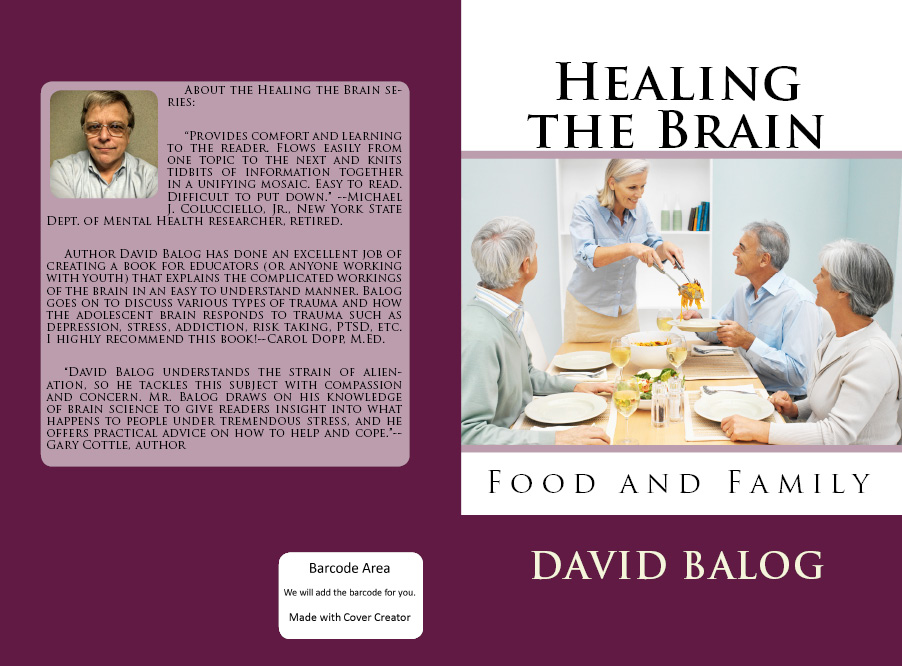
Healing the Brain Series

  • Books for parents, teachers, counselors, clergy and concerned individuals.
  • Presents easy-to-understand coverage of the brain's role in stress and health.

    • Titles also cover Fetal Alcohol Spectrum Disorders, Money & Stress, Concussions & TBI


Praise for Healing the Brain


Author David Balog has done an excellent job of creating a book for educators (or anyone working with youth) that explains the complicated workings of the brain in an easy to understand manner. Balog goes on to discuss various types of trauma and how the adolescent brain responds to trauma such as depression, stress, addiction, risk taking, PTSD, etc. LGBT/Q youth may experience trauma in ways majority youth often do not. The author shares important coping strategies....I highly recommend this book!--Carol Dopp, M.Ed. 


"David Balog understands the strain of alienation, so he tackles this subject with compassion and concern. Mr. Balog draws on his knowledge of brain science to give readers insight into what happens to young people under tremendous stress, and he offers practical advice on how to help and cope."--Gary Cottle, author


"Provides comfort and learning to the reader. Flows easily from one topic to the next and knits tidbits of information together in a unifying mosaic. Easy to read. Difficult to put down." --Michael J. Colucciello, Jr., New York State Dept. of Mental Health researcher, retired.

​

"Wonderfully written by Mr. Balog. A book that can help medical professionals as well as the general public, Mr Balog has tackled a subject that is complex and he makes it quite approachable. It has added and enriched my own practice of medicine by making me more aware of issues not often discussed in medical circles."--Peter Paganussi, MD, Virginia

Click here to donate and pick your ebook.