Showing posts with label brain and sugar. Show all posts

Wednesday, October 27, 2021

The health benefits of your PB&J


Peanut butter jelly time: How healthy is the American classic? 

First published in USA Today
The peanut butter and jelly sandwich dates back to a 1901 recipe. A PB&J can have 12 grams of protein, 18 grams of sugar and 390 calories. Experts say the sandwich can be part of a healthy meal, depending on how it's made.
Peanut butter and jelly sandwiches do it all. The sandwich has maintained its popularity for decades. It's spurred on the creation of products like Uncrustables, a circular, freezable version of the sandwich without – you guessed it – the crust.


Healing the Brain: Stress, Trauma and Development


“Easy to read. Difficult to put down.”--Micheal J. Colucciello, Jr., NY State pharmaceutical researcher, retired.

“David Balog takes a subject fraught with difficulty and makes it simple and accessible to everyone. The book goes a long way in helping one understand how and why and in what ways stress affects how we live and cope. Invaluable.”--Jessica Hudson, former president, National Association of Former Foster Children

According to "Peanuts: The Illustrious History of the Goober Pea," written by Andrew F. Smith, the first reference to the sandwich was a recipe written by a woman named Julia Davis Chandler in 1901. 
Since then, peanut butter and jelly sandwiches have maintained their place as an iconic part of many American school lunches. The protein-rich peanut butter makes it a parent go-to, and kids love the sweet taste of jelly.
But just how healthy is this American classic? We asked experts. 
Let's talk nutrition
The three ingredient sandwich seems fairly straight forward, but great debate surrounds the PB&J. Crunchy peanut butter or smooth? Grape jelly or strawberry? Crust on or crust off?
Because of this, the exact nutritional details will depend on how you make your PB&J. 
For argument's sake, let's breakdown the typical sandwich.
Two slices of white bread have about 5 grams of protein and 3 grams of sugar. Two tablespoons of peanut butter contain about 7 grams of protein and 3 grams of sugar, according to the U.S. Department of Agriculture. One tablespoon of grape jelly has 12 grams of sugar. In total, a run-of-the-mill PB&J has about 12 grams of protein and 18 grams of sugar, coming out to around 390 calories. 
How to make your PB&J healthier 
Making this signature snack better for you can happen with just a few substitutions, especially when it comes to the most sugary part. 
"Healthy would be a small amount of a low sugar jelly or better yet not jelly at all but perhaps a banana instead," said Dr. Natalie Muth, a pediatrician, registered dietitian and spokesperson for the American Academy of Pediatrics. 
Making smart choices when it comes to which bread is used is important, too.
Choosing a whole grain bread can contribute more protein and fiber. 
As for the "PB," choosing a natural peanut butter is just as important as the amount you put on the sandwich.
And for those allergic to peanuts or other types of nuts, sunflower seed butter can be a healthy and safe alternative. 


Healing the Brain: Stress, Trauma and Development


“Easy to read. Difficult to put down.”--Micheal J. Colucciello, Jr., NY State pharmaceutical researcher, retired.

“David Balog takes a subject fraught with difficulty and makes it simple and accessible to everyone. The book goes a long way in helping one understand how and why and in what ways stress affects how we live and cope. Invaluable.”--Jessica Hudson, former president, National Association of Former Foster Children


Monday, October 7, 2019

No need to cut down red and processed meat for health reasons, controversial findings suggest


Source: McMaster University

Summary:
Contrary to previous advice, five new systematic reviews suggest that most people can continue to eat red and processed meat as they do now. The major studies have found cutting back has little impact on health.


Meats and vegetables on a grill (stock image). | Credit: © Alexander Raths / stock.adobe.com
Meats and vegetables on a grill (stock image).
Credit: © Alexander Raths / Adobe Stock
Most people can continue to eat red and processed meat as they do now. A major study led by researchers at McMaster and Dalhousie universities has found cutting back has little impact on health.
A panel of international scientists systematically reviewed the evidence and have recommended that most adults should continue to eat their current levels of red and processed meat.
The researchers performed four systematic reviews focused on randomized controlled trials and observational studies looking at the impact of red meat and processed meat consumption on cardiometabolic and cancer outcomes.
In one review of 12 trials with 54,000 people, the researchers did not find statistically significant or an important association between meat consumption and the risk of heart disease, diabetes or cancer.


The brain is an energy-hungry organ. Despite comprising only 2 percent of the body’s weight, the brain gobbles up more than 20 percent of daily energy intake. Because the brain demands such high amounts of energy, the foods we consume greatly affect brain function, including everything from learning and memory to emotions. Click HERE TO LEARN MORE ABOUT THE BRAIN!


Friday, October 6, 2017

Diabetics (and everyone): America runs on sugar...and poorly


Image by Catherine MacBride via Getty Images
We know that too much sugar is bad for our waistlines and our heart health, but now there’s mounting evidence that high levels of sugar consumption can also have a negative effect on brain health — from cognitive function to psychological wellbeing.

While sugar is nothing to be too concerned about in small quantities, most of us are simply eating too much of it. The sweet stuff — which also goes by names like glucose, fructose, honey and corn syrup — is found in 74 percent of packaged foods in our supermarkets. And while the Word Health Organization recommends that only 5 percent of daily caloric intake come from sugar, the typical American diet is comprised of 13 percent calories from sugar.


It begins and ends in the brain. Get brain-smart! Order on Amazon.
“Many Americans eat about five times the amount of sugar they should consume,” Natasa Janicic-Kahric, an associate professor of medicine at Georgetown University Hospital, told The Washington Post.

It’s easy to see how we can get hooked on sugar. However, we should be aware of the risks that a high-sugar diet poses for brain function and mental well-being.

Here’s what you need to know about how overconsumption of sugar could wreak havoc on your brain.

It creates a vicious cycle of intense cravings.
When a person consumes sugar, just like any food, it activates the tongue’s taste receptors. Then, signals are sent to the brain, lighting up reward pathways and causing a surge of feel-good hormones, like dopamine, to be released. Sugar “hijacks the brain’s reward pathway,” neuroscientist Jordan Gaines Lewis explained. And while stimulating the brain’s reward system with a piece of chocolate now and then is pleasurable and probably harmless, when the reward system is activated too much and too frequently, we start to run into problems.

“Over-activating this reward system kickstarts a series of unfortunate events — loss of control, craving, and increased tolerance to sugar,” neuroscientist Nicole Avena explained in a TED-Ed video.

In fact, research has shown that the brains of obese children actually light up differently when they taste sugar, reflecting an elevated “food reward” response. This suggests that their brain circuitry may predispose these children to a lifetime of intense sugar cravings.

It impairs memory and learning skills.
A 2012 study on rats, conducted by researchers at UCLA, found that a diet high in fructose (that’s just another word for sugar) hinders learning and memory by literally slowing down the brain. The researchers found that rats who over-consumed fructose had damaged synaptic activity in the brain, meaning that communication among brain cells was impaired.

Heavy sugar intake caused the rats to develop a resistance to insulin — a hormone that controls blood sugar levels and also regulates the function of brain cells. Insulin strengthens the synaptic connections between brain cells, helping them to communicate better and thereby form stronger memories. So when insulin levels in the brain are lowered as the result of excess sugar consumption, cognition can be impaired.

“Insulin is important in the body for controlling blood sugar, but it may play a different role in the brain,” Dr. Fernando Gomez-Pinilla, the study’s lead author, said in a statement. “Our study shows that a high-fructose diet harms the brain as well as the body. This is something new.”

It may cause or contribute to depression and anxiety.
If you’ve ever experienced a sugar crash, then you know that sudden peaks and drops in blood sugar levels can cause you to experience symptoms like irritability, mood swings, brain fog and fatigue. That’s because eating a sugar-laden donut or drinking a soda causes blood sugar levels to spike upon consumption and then plummet. When your blood sugar inevitably dips back down (hence the “crash”), you may find yourself feeling anxious, moody or depressed.

...

Chronically high blood sugar levels have also been linked to inflammation in the brain. And as some research has suggested, neuroinflammation may be one possible cause of depression.
Teenagers may be particularly vulnerable to the effects of sugar on mood. A recent study on adolescent mice, conducted by researchers at Emory University School of Medicine, found a diet high in sugar to contribute to depression and anxiety-like behavior.

Research has also found that people who eat a standard American diet that’s high in processed foods — which typically contain high amounts of saturated fat, sugar and salt — are at an increased risk for developing depression, compared to those who eat a whole foods diet that’s lower in sugar.

It’s a risk factor for age-related cognitive decline and dementia.
A growing body of research suggests that a sugar-heavy diet could increase risk for developing Alzheimer’s disease. A 2013 study found that insulin resistance and blood glucose levels — which are hallmarks of diabetes — are linked with a greater risk for developing neurodegenerative disorders like Alzheimer’s. The research “offers more evidence that the brain is a target organ for damage by high blood sugar,” endocrinologist Dr. Medha Munshi told the New York Times.
Some researchers, in fact, have even referred to Alzheimer’s as “Type 3 Diabetes” — which suggests that diet may have some role in an individual’s risk for developing the disease.

  • Arizona Raspberry Iced Tea
    Amazon.com
    These recognizable-anywhere cans are bad news: They contain 23.5 ounces, nearly three times the suggested serving size for the tea inside. With 90 calories per 8 ounces, finishing an entire can adds up to almost 270.

    Photo from Amazon.com

  • Starbucks Bottled Mocha Frappuccino
    Amazon.com
    The 9.5-ounce Starbucks to go contains 180 calories.

    Photo from Amazon.com

  • Jamba Juice Smoothies
    Granted, Jamba Juice All Fruit smoothies are made with much better-for-you ingredients than a can of cola. However, it’s still easy to mindlessly sip your calories when a 16-ounce size clocks in at least 210 calories.

    Flickr photo by libookperson

  • Minute Maid Lemonade
    Amazon.com
    A 12-ounce can of the summer favorite clocks in at 150 calories, more than a can of Coke and the same as a can of Pepsi.

    Photo from Amazon.com

  • Snapple Apple Fruit Drink
    Amazon.com
    There are 100 calories in every 8 ounces of this fruity pick, but the bottle is deceiving, since it packs 16 ounces.

    Photo from Amazon.com

  • Sunkist Orange Soda
    Amazon.com
    There are 170 calories per 12-ounce can of this sweet drink.

    Photo from Amazon.com

  • Dr. Pepper
    Amazon.com
    A 12-ounce can clocks in at 150 calories, more than a can of Coke and the same as a can of Pepsi.

    Photo from Amazon.com

  • Dunkin’ Donuts Strawberry Coolatta
    Even the small size of this frozen concoction from the coffee chain is a diet danger, with 230 calories in 16 ounces.

    Flickr photo by ReneS

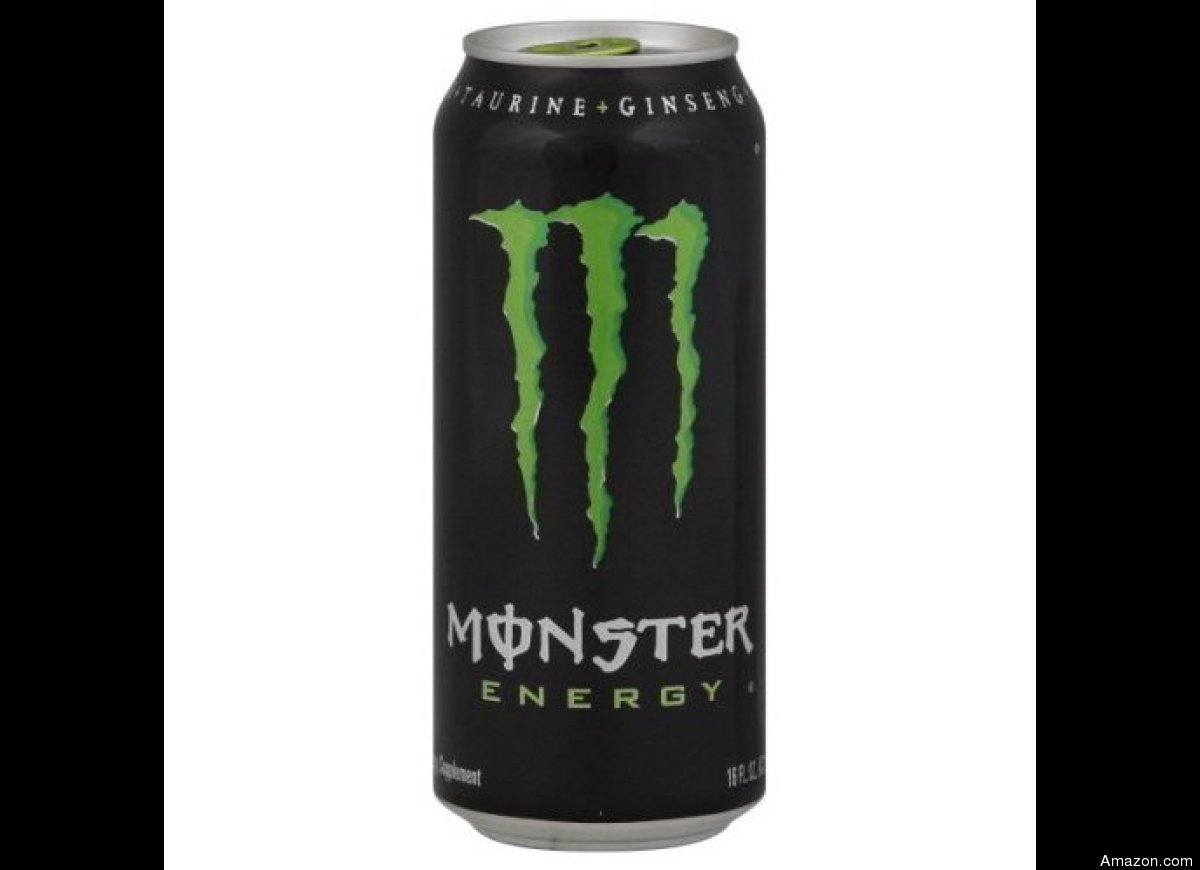
  • Monster Energy Drink
    Amazon.com
    There are only 100 calories in 8 ounces of this pick-me-up, but who only drinks half a can? The whole thing will set you back 200 calories.

    Photo from Amazon.com

  • Nesquik Lowfat Chocolate Milk
    Amazon.com
    An 8-ounce bottle of this sweet sip adds up to 170 calories. Beware of larger sizes that encourage bigger portions.

    Photo from Amazon.com

  • Barq’s Root Beer
    Amazon.com
    Each 12-ounce can contains 160 calories.

    Courtesy, Huffington Post