Saturday, January 14, 2017

Where were you on 9/11?

Here's an excerpt from Healing the Brain: Memory. Learn more about the brain in this special offer: 6 brain books for a buck.


Emotions and “flashbulb” memories.
Your emotional state when an event occurs can greatly influence your memory of it. Thus, if an event is very upsetting, you will form an especially vivid memory of it. For example, many people remember where they were when they learned about President Kennedy’s assassination, or about the attacks of September 11, 2001. The processing of emotionally-charged events in memory involves norepinephrine, a neurotransmitter that is released in larger amounts when we are excited or tense. As Voltaire put it, that which touches the heart is engraved in the memory.

Location, light, sounds, smells...in short, the entire context in which the memorizing takes place is recorded along with the information being memorized. Our memory systems are thus contextual. Consequently, when you have trouble remembering a particular fact, you may be able to retrieve it by recollecting where you learned it or the book from which you learned it. Was there a picture on that page? Was the information toward the top of the page, or the bottom? Such items are called “recall indexes”. And because you always memorize the context along with the information that you are learning, by recalling this context you can very often, by a series of associations, recall the information itself.

Friday, January 13, 2017

Memory Slips: It Was on the Tip of My Tongue


In Making Memories, Change Is Good

Learning depends on the plasticity of the circuits in the brain--the ability of the neurons to make lasting changes in the efficiency of their synaptic transmission.

The brain can thus be said to store information in networks of modified synapses (the arrangement of which constitutes the information) and to retrieve this information by activating these networks.


Our understanding of the rules that govern association and the networking of neurons goes back to the groundbreaking work done by Donald Hebb more than 50 years ago. Hebb had an intuition that if two neurons are active at the same time, the synapses between them are strengthened. This hypothesis inspired many researchers, and the first mechanism supporting it, long-term potentiation (LTP), was discovered in the early 1970s.

Memory Slips

The neurons involved in establishing a network must already be connected by synapses in order for these synapses to be strengthened or weakened. Networks are thus fashioned out of pre-existing “wiring.” Some of these pre-wired networks, such as those in the hippocampus, play a key role in the formation of memories.

 Montreal Neurological Institute

“I Have It at the Tip of My Tongue!”


Having a word “at the tip of your tongue” is a familiar but frustrating sensation. There it is, not very far, you know it, you can feel it, but you can’t find it! To make matters worse, very often another word keeps popping into your mind—you know it’s not the right one, but it keeps getting in the way so that you can’t find the one you’re looking for. 


Thursday, January 12, 2017

6 brain books for a buck

Our well-received series on the brain is now available as e-books (like Kindle). For only a $1.00 donation to www.AThousandMoms.org

Help us help gay youth and get some great information on your health. Thank you!

Donate and click the book to download the e-pub.


Healing the Brain: Stress, Trauma and LGBT/Q Youth

Healing the Brain: Stress, Trauma and Development


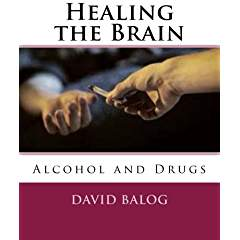
Healing the Brain: Alcohol and Drugs

Healing the Brain: Domestic Violence and TBI
Understanding  the Brain: Fetal Alcohol Spectrum Disorders
Healing the Brain: Memory
     For only a $1.00 donation to www.AThousandMoms.org    Thank you!

Saturday, January 7, 2017

Should I let my son play football?


Should I let my son play football? That's the question being asked by millions of American parents as they tune in to the big NFL playoff season that starts today. League of Denial, the name of a PBS show, outlined the frighteningly large numbers of former and retired football players who suffer dementia, depression, and suicide from decades of brain trauma. Here is an excerpt from our new book on Brain Trauma, Healing the Brain.

Other Factors that Influence Recovery 
Genes Evidence suggests that genetics play a role in how quickly and completely a person  recovers from a TBI. For example, researchers have found that apolipoprotein E ε4 (ApoE4) — a genetic variant associated with higher risks for Alzheimer’s disease — is associated with worse health outcomes following a TBI. Much work remains to be done to understand how genetic factors, as well as how specific types of head injuries in particular locations, affect recovery processes. It is hoped that this research will lead to new treatment strategies and improved outcomes for people with TBI. 
Age Studies suggest that age and the number of head injuries a person has suffered over his or her lifetime are two critical factors that impact recovery. For example, TBI-related brain swelling in children can be very different from the same condition in adults, even when the primary injuries are similar. Brain swelling in newborns, young infants, and teenagers often occurs much more quickly than it does in older individuals. Evidence from very limited CTE studies suggest that younger people (ages 20 to 40) tend to have behavioral and mood changes associated with CTE, while those who are older (ages 50+) have more cognitive difficulties. 
Compared with younger adults with the same TBI severity, older adults are likely to have less complete recovery. Older people also have more medical issues and are often taking multiple medications that may complicate treatment (e.g., blood-thinning agents when there is a risk of bleeding into the head). Further research is needed to determine if and how treatment strategies may need to be adjusted based on a person’s age. 
Researchers are continuing to look for additional factors that may help predict a person’s course of recovery. 

Can TBI Be Prevented? The best treatment for TBI is prevention. Unlike most neurological disorders, head injuries can be prevented. According to the CDC, doing the following can help prevent TBIs: ● Wear a seatbelt when you drive or ride in a motor vehicle. ● Wear the correct helmet and make sure it fits properly when riding a bicycle, skateboarding, and playing sports like hockey and football. ● Install window guards and stair safety gates at home for young children. ● Never drive under the influence of drugs or alcohol. ● Improve lighting and remove rugs, clutter, and other trip hazards in the hallway. ● Use nonslip mats and install grab bars next to the toilet and in the tub or shower for older adults. ● Install handrails on stairways. ● Improve balance and strength with a regular physical activity program.

Thursday, January 5, 2017

Traumatic Brain Injury: Not Just Football Anymore


It's not just football anymore. Concussions and traumatic brain injury are being investigated and treated as such in victims of domestic violence. Read about this sad breakthrough in our new Healing the Brain book.

According to an article in Science Daily, physicians and researchers at Barrow Neurological Institute have identified a link between domestic violence and traumatic brain injury. The findings could have important implications in the treatment of domestic violence survivors, both in medical and social service communities. The research, led by Dr. Glynnis Zieman, was published in the July 2016 issue of the Journal of Neurotrauma.
"Head injuries are among the most common type suffered in domestic violence, which can lead to repetitive brain injuries that often have chronic, life-changing effects, much like what we see in athletes. We found that 88 percent of these victims suffered more than one head injury as a result of their abuse and 81 percent reported too many injuries to count," said Dr. Zieman.
Abuse - Free images on Pixabay
Pixabay
Researchers are uncovering the link between domestic violence and TBI.
The research was conducted at Barrow Concussion and Brain Injury Center in Arizona, where a specialty program has been established to address traumatic brain injury (TBI) in the domestic violence survivor. The program is believed to be the first of its kind in the nation. Dr. Zieman and her team performed a retrospective chart review of more than one hundred patients seen through the program to obtain data for this research.

While concussions have been a significant topic in sports, Barrow has taken special interest in concussions and domestic violence. Barrow experts say that women who previously suffered silently are becoming more aware of the real issue of concussions from their abuse.

The Barrow program provides both medical care and social service assistance for homeless victims who have sustained a TBI as a result of domestic violence. It was created after Barrow social worker Ashley Bridwell and physicians identified a three-way link between homelessness, domestic violence and TBI. The medical team has found many victims are suffering from a full spectrum of side effects that can lead to the loss of a job, income, and eventually homelessness.

"This is the third chapter in the concussion story," says Dr. Zieman. "First it was veterans, then it evolved into professional athletes, and now we're identifying brain injuries in victims of domestic violence. And, unlike well-paid football players, these patients rarely have the support, money and other resources needed to get help."


Monday, January 2, 2017

Coping with Chaos in the White House

We all have to cope with a new reality, or surreal-ity. We cover brain essentials in our new book, Healing the Brain. But this article gives a unique psychological perspective. 

N Ziehl

Coping with Chaos in the White House

A few days ago, I wrote a post for my Facebook friends about my personal experience with narcissistic personality disorder and how I view the president elect as a result. Unexpectedly, the post traveled widely, and it became clear that many people are struggling with how to understand and deal with this kind of behavior in a position of power. Although several writers, including a few professionals, have publicly offered their thoughts on a diagnosis, I am not a professional and this is not a diagnosis. My post is not intended to persuade anyone or provide a comprehensive description of NPD. I am speaking purely from decades of dealing with NPD and sharing strategies that were helpful for me in coping and predicting behavior. The text below is adapted from my original Facebook post.

I want to talk a little about narcissistic personality disorder. I’ve unfortunately had a great deal of experience with it, and I’m feeling badly for those of you who are trying to grapple with it for the first time because of our president-elect, who almost certainly suffers from it or a similar disorder. If I am correct, it has some very particular implications for the office. Here are a few things to keep in mind:
1) It’s not curable and it’s barely treatable. He is who he is. There is no getting better, or learning, or adapting. He’s not going to “rise to the occasion” for more than maybe a couple hours. So just put that out of your mind.
2) He will say whatever feels most comfortable or good to him at any given time. He will lie a lot, and say totally different things to different people. Stop being surprised by this. While it’s important to pretend “good faith” and remind him of promises, as Bernie Sanders and others are doing, that’s for his supporters, so *they* can see the inconsistency as it comes. He won’t care. So if you’re trying to reconcile or analyze his words, don’t. It’s 100% not worth your time. Only pay attention to and address his actions.
3) You can influence him by making him feel good. There are already people like Bannon who appear ready to use him for their own ends. The GOP is excited to try. Watch them, not him. President Obama, in his wisdom, may be treating him well in hopes of influencing him and averting the worst. If he gets enough accolades for better behavior, he might continue to try it. But don’t count on it.
4) Entitlement is a key aspect of the disorder. As we are already seeing, he will likely not observe traditional boundaries of the office. He has already stated that rules don’t apply to him. This particular attribute has huge implications for the presidency and it will be important for everyone who can to hold him to the same standards as previous presidents.
5) We should expect that he only cares about himself and those he views as extensions of himself, like his children. (People with NPD often can’t understand others as fully human or distinct.) He desires accumulation of wealth and power because it fills a hole. (Melania is probably an acquired item, not an extension.) He will have no qualms *at all* about stealing everything he can from the country, and he’ll be happy to help others do so, if they make him feel good. He won’t view it as stealing but rather as something he’s entitled to do. This is likely the only thing he will intentionally accomplish.
6) It’s very, very confusing for non-disordered people to experience a disordered person with NPD. While often intelligent, charismatic and charming, they do not reliably observe social conventions or demonstrate basic human empathy. It’s very common for non-disordered people to lower their own expectations and try to normalize the behavior. DO NOT DO THIS AND DO NOT ALLOW OTHERS, ESPECIALLY THE MEDIA, TO DO THIS. If you start to feel foggy or unclear about this, step away until you recalibrate.
7) People with NPD often recruit helpers, referred to in the literature as “enablers” when they allow or cover for bad behavior and “flying monkeys” when they perpetrate bad behavior on behalf of the narcissist. Although it’s easiest to prey on malicious people, good and vulnerable people can be unwittingly recruited. It will be important to support good people around him if and when they attempt to stay clear or break away.
8) People with NPD often foster competition for sport in people they control. Expect lots of chaos, firings and recriminations. He will probably behave worst toward those closest to him, but that doesn’t mean (obviously) that his actions won’t have consequences for the rest of us. He will punish enemies. He may start out, as he has with the NYT, with a confusing combination of punishing/rewarding, which is a classic abuse tactic for control. If you see your media cooperating or facilitating this behavior for rewards, call them on it.
9) Gaslighting — where someone tries to convince you that the reality you’ve experienced isn’t true — is real and torturous. He will gaslight, his followers will gaslight. Many of our politicians and media figures already gaslight, so it will be hard to distinguish his amplified version from what has already been normalized. Learn the signs and find ways to stay focused on what you know to be true. Note: it is typically not helpful to argue with people who are attempting to gaslight. You will only confuse yourself. Just walk away.
10) Whenever possible, do not focus on the narcissist or give him attention. Unfortunately we can’t and shouldn’t ignore the president, but don’t circulate his tweets or laugh at him — you are enabling him and getting his word out. (I’ve done this, of course, we all have… just try to be aware.) Pay attention to your own emotions: do you sort of enjoy his clowning? do you enjoy the outrage? is this kind of fun and dramatic, in a sick way? You are adding to his energy. Focus on what you can change and how you can resist, where you are. We are all called to be leaders now, in the absence of leadership.


Friday, December 23, 2016

Even Ronald Reagan was depressed after he saw this movie.


Even Ronald Reagan was depressed after he saw the television movie, The Day After, which terrified Americans when it was show in November 1983.

More than 100 million people watched the program during its initial broadcast. It is currently the highest-rated television film in history. Now Putin and Trump want to increase nuclear arsenals.

From Wikipedia: The Trauma

The film postulates a fictional war between NATO forces and the Warsaw Pact that rapidly escalates into a full-scale nuclear exchange between the United States and the Soviet Union. However, the action itself focuses on the residents of Lawrence, Kansas and Kansas City, Missouri, as well as several family farms situated near nuclear missile silos.

On its original broadcast (Sunday, November 20, 1983), John Cullum warned viewers before the film was premiered that the film contains graphic and disturbing scenes, and encourages parents who have young children watching, to watch together and discuss the issues of nuclear warfare.[9] ABC and local TV affiliates opened 1-800 hotlines with counselors standing by. There weren't any commercial breaks after the nuclear attack. ABC then aired a live debate, hosted by Nightline's Ted Koppel, featuring scientist Carl Sagan, former Secretary of State Henry Kissinger, Elie Wiesel, former Secretary of Defense Robert McNamara, General Brent Scowcroft and conservative commentator William F. Buckley, Jr.. Sagan argued against nuclear proliferation, while Buckley promoted the concept of nuclear deterrence. Sagan described the arms race in the following terms: "Imagine a room awash in gasoline, and there are two implacable enemies in that room. One of them has nine thousand matches, the other seven thousand matches. Each of them is concerned about who's ahead, who's stronger."

One psychotherapist counseled viewers at Shawnee Mission East High School in the Kansas City suburbs, and 1,000 others held candles at a peace vigil in Penn Valley Park. A discussion group called Let Lawrence Live was formed by the English Department at the university and dozens from the Humanities Department gathered on the campus in front of the Memorial Campanile and lit candles in a peace vigil. At Baker University, a private school in Baldwin City, Kansas, roughly 10 miles south of Lawrence, a number of students drove around the city, looking at sites depicted in the film as having been destroyed


LEARN ABOUT PAST AND FUTURE TRAUMAS AND THEIR EFFECT OUR OUR HEALTH.
GET THE BOOK TODAY!