Showing posts with label concussion. Show all posts

Monday, May 11, 2026

Your Brain, Your Health

New!


The Alzheimer's Association reports that it believes the first person to be cured of this dreaded disease is walking around today .

The Human Rights Commission reports that violence and murder against trans people, especially trans people of color, is rising at an alarming pace. New research from Holland is quickly unraveling the mysteries of sexuality and sexual orientation to show that all sexuality takes place in the brain, in the uterus, and is out of the control of all parties, except to embrace it and love the baby and the child and the adult. 

Gene editing is being called the miracle of the future, which may be closer than we think. Imagine diagnosing and repairing some of our worst remaining diseases, which mostly have their basis in our brains. 

These examples show the importance of the brain for every person. Even from a budget perspective, brain-related diseases and disorders account for more than half of our health care bill each year. 

I think you might like this book – "A Thousand Moms' Sourcebook of Brain and Behavior: For Teachers, Parents and Students. Second Edition (Make America Smart Again)" by David Balog.

Start reading for free: https://a.co/05DIU6Sm

All of these facts make it important to be aware of the brain, it's capabilities, it's limitations, it's realities. Based on the widely used Dana Sourcebook of Brain Science, published from 1997 until 2006 and now updated, this sourcebook tells readers why the brain matters, outlines basic workings of this remarkable structure, and how self-inflicted wounds from substance abuse can produce an immediate euphoric feeling--at the cost of long-term, devastating addiction and damage. 

This source book office offers a panoramic overview of what has been called the most remarkable resource in the known, or even unknown, will world. 

Author David Balog created, wrote, and edited the Dana Sourcebook of Brain Science through its first four editions. He now is back editing this resource to help parents, teachers, and students understand more who they are and why they act the way they do. 

Available now at a reduced introductory price. Just some of the topics cover covered include: Alzheimer's disease, dyslexia, ADHD, stroke, speech disorders, eating disorders, autism, Parkinson's disease and more. David Mahoney, founder of the Brain Awareness Movement at the Charles a Dana Foundation, said, "One out of five people will have a brain disease or disorder. Five out of five will know or be a caregiver for someone with a brain disease or disorder."

I think you might like this book – "A Thousand Moms' Sourcebook of Brain and Behavior: For Teachers, Parents and Students. Second Edition (Make America Smart Again)" by David Balog.


Start reading it for free: https://a.co/05DIU6Sm


Saturday, January 27, 2018

Hits, not concussions, cause CTE

It's Super Bowl week and America turns its eyes to the biggest event of the year. America loves its football. But will the game survive the concussion/CTE crisis affecting those who play the game?


New insights into the disease show head impact, not concussion, triggers CTE and pave way for early detection, prevention and treatment January 18, 2018 Boston University School of Medicine Researchers have identified evidence of early Chronic Traumatic Encephalopathy (CTE) brain pathology after head impact ­­ even in the absence of signs of concussion.


Early indicators of CTE pathology not only persisted long after injury but also spread through the brain, providing the best evidence to date that head impact, not concussion, causes CTE.

Researchers have identified evidence of early Chronic Traumatic Encephalopathy (CTE) brain pathology after head impact ­­ even in the absence of signs of concussion. Early indicators of CTE pathology not only persisted long after injury but also spread through the brain, providing the best evidence to date that head impact, not concussion, causes CTE.

www.healingthebrainbooks.com
Learn about the brain in simple language.

The findings, published online in the journal Brain, are based on analysis of human brains from teenagers with recent head injury and mouse models that recreate sports­related head impact and military­related blast exposure. The investigators also performed laboratory experiments and computer modeling. Study results shed light on the origins of CTE and relationship to traumatic brain injury (TBI), concussion and subconcussive head injury. CTE is a neurodegenerative disease characterized by abnormal accumulation of tau protein around small blood vessels in the brain. CTE causes brain cell death, cognitive deficits, and dementia. The brain pathology of CTE has been observed in brains of teenagers and adults with exposure to repeated head injury, both concussive and subconcussive episodes. However, the mechanisms that cause CTE and relationship to concussion, subconcussive injury and TBI remain poorly understood. In the first part of their study, the researchers examined four postmortem brains from teenage athletes who had sustained closed­head impact injuries 1, 2, 10 and 128 days prior to death. Neuropathological analysis of these brains showed a spectrum of post­traumatic pathology, including one case of earlystage CTE and two cases with abnormal accumulation of tau protein. Brains from four age­matched athletes without recent head injury did not show the pathological changes observed in the head­injury group.

To investigate causal mechanisms underlying these changes, the researchers conducted laboratory experiments using mouse models of two different injury mechanisms ­­ repeat closed­head impact and blast exposure ­­ both linked to CTE. The investigators compared brain responses to the experimental injuries and relationship to CTE pathology over time. Based on pathological findings in human cases, the researchers hypothesized that early CTE may result from damaged blood vessels in the brain that become leaky, resulting in blood proteins spilling into brain tissue and triggering brain inflammation. The researchers utilized a brain scan called dynamic contrastenhanced magnetic resonance imaging (DCE­MRI) to detect leaky blood vessels in the brains of mice subjected to head impact.


The investigators also found that head impact caused persistent changes in brain electrical functions, which may explain cognitive difficulties experienced by some people after these injuries. "The same brain pathology that we observed in teenagers after head injury was also present in headinjured mice. We were surprised that the brain pathology was unrelated to signs of concussion, including altered arousal and impaired balance, among others. Our findings provide strong causal evidence linking head impact to TBI and early CTE, independent of concussion," explained corresponding author Lee E. Goldstein, MD, PhD, an associate professor at Boston University School of Medicine and College of Engineering. "The results may explain why approximately 20 percent of athletes with CTE never suffered a diagnosed concussion."

Source: ScienceDaily, Boston University

Thursday, September 21, 2017

Aaron Hernandez' CTE diagnosis 'devastating' news for NFL

From Yahoo News (Sept. 21, 2017):

"Based on his violent outbursts, mood swings and self-medicating ways, it comes as little surprise that Aaron Hernandez suffered from chronic traumatic encephalopathy (CTE), as his lawyer alleges in a new lawsuit against the NFL and the New England Patriots.

The degenerative brain disease has been most commonly found in football players, soldiers and others who have suffered from repeated concussions.

“Aaron had Stage III CTE usually seen in players with a median age of death of 67 years,” reads a lawsuit attorney, Jose Baez, filed in the name of Hernandez’s daughter, Avielle.

Learn more about concussions, CTE, and football.


It may explain, yet hardly excuse, Hernandez of murdering Odin Lloyd in 2013 or being charged for the 2012 slaying of Daniel de Abreu and Safiro Furtado. He beat the double murder because while there was no disputing he was in the car the night of the drive-by shooting, prosecutors couldn’t conclusively prove he was the triggerman. It may also provide insight into his prison suicide last spring while serving a life sentence for the Lloyd killing.

Based on his age, however, a CTE diagnosis this significant comes as not just a surprise, but a chilling moment for a sport that is trying everything to both make the game safer and convince young athletes, and their parents, that it is worth playing.

Sixty-seven years old? Advanced stages? That is the opinion of researchers at Boston University, who have been the leaders on CTE research.

Hernandez played just three seasons in the NFL, 44 games total for the Patriots, before being arrested at the age of 23 for the Lloyd murder. He was 27 when he took his life...."


Tuesday, September 12, 2017

Free e-book: Youth football practice drills and the brain

Exposure to head impacts in youth football practice drills


Source:
Journal of Neurosurgery Publishing Group
Summary:
Researchers have examined differences in the number, location, and magnitude of head impacts sustained by young athletes during various youth football practice drills. Such information could lead to recommendations for football practices, including modification of some high-intensity drills in order to reduce players' exposure to head impacts and, consequently, lessen the risks of injury.

Free E-book. Click here.

Click here! https://goo.gl/qwicJe

Researchers at Wake Forest Baptist Medical Center examined differences in the number, location, and magnitude of head impacts sustained by young athletes during various youth football practice drills. Such information could lead to recommendations for football practices, including modification of some high-intensity drills in order to reduce players' exposure to head impacts and, consequently, lessen the risks of injury. Detailed information on the findings of this study can be found in the article, "Head impact exposure measured in a single youth football team during practice drills," by Mireille E. Kelley, MS (a graduate student in Biomedical Engineering at Wake Forest Baptist), et al., published in the Journal of Neurosurgery: Pediatrics.
Much has been written about concussions sustained by youths engaged in football. However, other less severe head impacts are frequently experienced by young athletes throughout the football season. And, important to note, studies have shown that far more head impacts occur during football practice drills than during games.
Kelley and her colleagues collected biomechanical data and videos to evaluate the number, location, and magnitude of head impacts sustained by nine youths during football practice drills. All youths were members of the same team and were on average about 11 years of age. Inside each athlete's helmet was a Head Impact Telemetry (HIT) System™, which measures head acceleration. This apparatus was worn for all football practices over an entire season of play, including preseason, regular season, and playoff practice drills. Every time the HIT System™ recorded a head impact greater than 10g, data collection was triggered and biomechanical data were transmitted to a sideline base unit for later analysis. Videos were recorded to ensure that helmets were worn at the time of impact and to pair videos of the drills with associated biomechanical data collected by the HIT System™.
There were eleven types of practice drills: dummy/sled tackling, install, special teams, multiplayer tackle, Oklahoma, one-on-one, open-field tackling, passing, position skill work, scrimmage, and tackling drill stations. 

Head impacts occurred most frequently during contact drills involving multiple players, and higher-magnitude head impacts took place during tackling drills. Not all drills were practiced in each session. Open field tackling, for example, was only practiced in five of the 30 practice sessions. Although this drill was associated with relatively few head impacts (compared with other drills), the impacts tended to be of high magnitude. The authors point out that the high magnitude of head impacts associated with open field tackling is most likely caused by the fact that athletes build up speed as they move toward each other across distances greater than 3 yards. In one-on-one tackling, on the other hand, youth athletes cover less ground before reaching each other. The authors suggest that this may have contributed to the fact that the magnitude of head impacts for one-on-one tackling was lower than those for open field tackling.
The multiplayer tackle drill was associated with the highest rate of head impacts, but these impacts were relatively low-magnitude ones (compared with impacts in other tackling drills). The authors suggest that this may be due to the emphasis on blocking rather than tackling during this drill.
In describing the study, lead investigator Jillian E. Urban, Ph.D. Assistant Professor of Biomedical Engineering at Wake Forest Baptist, said, "This study, along with future research, will help inform relevant evidence-based recommendations for youth football leagues to reduce head impact exposure and ultimately improve the safety of sport for our young athletes."
Story Source:

Saturday, February 4, 2017

CTE and real cost of football on Super Bowl Sunday

Tonight at 10: A life cut short by CTE

It's the biggest sports day of the year, Super Bowl Sunday, a festival of football. But a sport so celebrated is taking a toll on our youth and adults. Our book, Healing the Brain, gives a in-depth view of the science of concussions and CTE.

From KCCI.com

Another Iowa family is donating their son's brain in the name of CTE research, but they are doing so at the request of their son. Zac Easter's devotion to football started in third grade, one of those kids in the middle of the action hitting and getting hit.

"He's a young man who loved the sport, who like any other athlete didn't want to take himself out of a game -- unless somebody made him," said Brenda Easter, Zac's mother.

Zac played 10 years until he was forced to stop in the middle of his senior year at Indianola.
"He had three confirmed concussions and he had to quit," said Myles Easter, Zac's father.

During his final game, Zac was not backing down from an Ankeny lineman towering over him.
"I knew that last one was not good, at Ankeny, I could just see the look," said Myles Easter.
Zac's father was Indianola's defensive coach.

"I knew he was done. I knew that was it for football," said Myles Easer.

"'I'm good,' those were the words, 'I'm good to go,'," said Sue Wilson, Indianola athletic trainer of her conversation with Zac.

Wilson was on the sidelines in 2009 for each of Zac's concussions.

"Back then, they could return to the field 24 hours later -- sometimes they were back sooner than an ankle sprain," said Wilson.

In the fall of 2014, Zac complained of severe headaches, problems with balance and with his vision. His family remembers him commenting about memory loss problems -- having a hard time remembering things and some slurred speech.

It was a Des Moines doctor who first mentioned CTE, chronic traumatic encephalopathy.
"I remember looking at Zac and said 'What exactly is CTE' and he goes, 'It's like brain dementia mom,'," said Brenda Easter.

Several professional football players were among the first diagnosed with CTE after they died and the issue is the subject of the Hollywood movie "Concussion."

"I was in denial, you know we're tough guys in this family. We'll get through this you know heal up over time is what I thought," said Myles Easter.

Of course, mom went looking for help in research, and she discovered what her son already understood.

"He just looked at me and said mom, 'There's no hope for me. There are no treatment programs. I know more than most of the medical professionals I've talked to and there's no hope,'" said Brenda Easter.

Zac moved back home last fall as his condition got worse.

The family said it was very difficult to see a strong young man -- very intelligent -- really go downhill so quickly.

Zac knew CTE could only be diagnosed by direct tissue examination of the brain, after death.
"And he said to me, 'Mom, I want my brain donated to science,' and I said, 'Nope, someday Zac we'll do that but I don't think you're done with it yet so let me find the right help for us -- don't give up on me," said Brenda Easter.

Just after midnight on Dec. 19, Zac drove to Lake Ahquabi and shot himself. He left a note in his car apologizing to the first responders and called the sheriff's dispatch to tell them where he was.
"They heard the gunshot go off on the phone," said Myles Easter.

"We drove out there as fast as we could, and it was too late," said Brenda Easter.

Zac took care not to damage his brain preserving it for research. He left two notebooks in the family room including a journal that documented his daily battle with whatever had taken over his body, his thoughts and his life.

Mike Hadden is a professor in sports sciences at Simpson and just finished a sabbatical studying CTE.

"Through his journaling, we have so much material and information from this that it's almost as if, I mean, it's a firsthand experience and so we can tell that story," said Hadden.

Zac writes in detail about each concussion and other blows to the head his parents and coaches didn't know about.

"His buddies had to carry him off the field because he could hardly walk, he was that dazed but he wasn't going to tell anybody and his buddies were buddies so they didn't either," said Brenda Easter.
Concussion protocol has changed dramatically since Zac played his last game at Indianola six years ago. Wilson said these days any symptom, even a headache means the player is done for the game and won't come back until doctors clear them.

"I feel a little responsible because he was in our care. As an athletic trainer, our ultimate goal is to keep kids safe. That's why you go into athletic training," said Wilson.

In Zac's writings, he expresses his desire to tell young athletes it's OK to tell coaches if you're dizzy or have a headache, OK to take yourself off the field wanting to tell everyone that all those concussions changed him that helmets need to be safer that more research needs to be done on CTE.

LEARN MORE ABOUT IT....

Thursday, January 26, 2017

6 Books for A Buck to Fight Trump

Project Hope is sponsored by A Thousand Moms, which supports gay youth in foster care. Our campaign is to enlighten politicians, teachers, clergy, parents--any decision maker with facts and compassion about those in our country enduring extreme stress--now more than ever.

Health is controlled in large part by our brain. Think of addiction, immune diseases, birth defects.

Buy a e-version of our books and share them. Or take a look then buy the printed book on Amazon and give it to someone you think should be informed.

6 brain books for a buck

Our well-received series on the brain is now available as e-books (like Kindle). For only a $1.00 donation to www.AThousandMoms.org

Each book is 172-192 pages, illustrated with an informative glossary. AND, each book is written at a layman's level for easy understanding. Inquire about our 60-minute documentary.

Thank you!

Donate and click the book to download the e-pub.


Healing the Brain: Stress, Trauma and LGBT/Q Youth

Healing the Brain: Stress, Trauma and Development


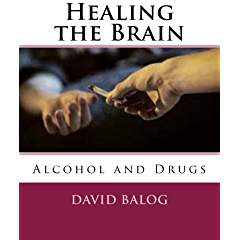
Healing the Brain: Alcohol and Drugs

Healing the Brain: Domestic Violence and TBI
Understanding  the Brain: Fetal Alcohol Spectrum Disorders
Healing the Brain: Memory
     For only a $1.00 donation to www.AThousandMoms.org    Thank you!