Showing posts with label lgbt health. Show all posts

Thursday, January 26, 2017

6 Books for A Buck to Fight Trump

Project Hope is sponsored by A Thousand Moms, which supports gay youth in foster care. Our campaign is to enlighten politicians, teachers, clergy, parents--any decision maker with facts and compassion about those in our country enduring extreme stress--now more than ever.

Health is controlled in large part by our brain. Think of addiction, immune diseases, birth defects.

Buy a e-version of our books and share them. Or take a look then buy the printed book on Amazon and give it to someone you think should be informed.

6 brain books for a buck

Our well-received series on the brain is now available as e-books (like Kindle). For only a $1.00 donation to www.AThousandMoms.org

Each book is 172-192 pages, illustrated with an informative glossary. AND, each book is written at a layman's level for easy understanding. Inquire about our 60-minute documentary.

Thank you!

Donate and click the book to download the e-pub.


Healing the Brain: Stress, Trauma and LGBT/Q Youth

Healing the Brain: Stress, Trauma and Development


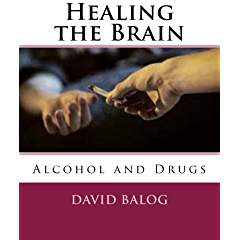
Healing the Brain: Alcohol and Drugs

Healing the Brain: Domestic Violence and TBI
Understanding  the Brain: Fetal Alcohol Spectrum Disorders
Healing the Brain: Memory
     For only a $1.00 donation to www.AThousandMoms.org    Thank you!

Sunday, November 27, 2016

Gay youth, health, and Trump


President Lyndon Johnson set up the Kerner Commission in the late 1960s to investigate the underlying causes of nationwide riots (Newark, Washington, DC, Los Angeles, Detroit, etc.). The commission's stunning conclusion was that America was two societies, separate and unequal, increasingly moving apart. As I began to talk to varied audiences with A Thousand Moms, I realized that a similar gap existed today with the gay community. Despite important successes, e.g., marriage equality, mainstream America didn't know about the LGBT community and rather than learning from an increased public awareness of LGBT issues, they remained profoundly unaware of gay life and the severe and unique stresses that can attend it--except in extraordinary circumstances. 

A Thousand Moms' mission is to educate parents, teachers, social workers, counselors, clergy, and the concerned layperson so that in an optimum world, they can support LGBT youth with a deeper understanding of a group of people seemingly from a completely different world. I wrote Healing the Brain: Stress, Trauma and LGBT/Q Youth because I had the training to do it--15 years as an editor to the world's top neuroscientists at the Dana Foundation--and access to my partner Fred's experience in child development. I was also peeved that my previous employer, in its massive reference on the brain, mentioned gay people only once. The reference blithely said that people attracted to the same sex seem to commit suicide in larger numbers and we don't know why. (Or care.) 

So this book is about the brain, but really about surviving extraordinary stress and trauma and protecting our heath. I have been given many accolades for the book, the best one calling it pioneering. But kind words have not translated into wide interest and in this world of self-publishing, the task of getting the word out has been very difficult. Therefore I am now circulating sample chapters so people can get a feel for the book and make an informed decision about getting a copy. Many books on LGBT life get called reference books or "a contribution to the literature," which means being put on a book shelf to die quietly. I am determined not to let that soft bigotry stop this important information from reaching people who can help LGBT youth--and adults--and make a real difference in our lives. We have a public health crisis in the gay community, still and perhaps worsening. And come a new administration that promises rollbacks, not progress, we are going to need education, awareness, and support more than ever. Please take a look at this sample e-book and share it. 

CLICK HERE!


Monday, November 21, 2016

Heterosexism and the holidays

Thanksgiving marks the start of the trifecta of holidays that spike anxiety in LGBT youth and adults of all ages. In this excerpt from Healing the Brain, we look at the invisible but all-too-real phenomenon of heterosexism, the feeling of gay people that they must give deference to a straight-majority culture.

Despite, or in some cases because of social progress in marriage equality and other matters, pervasiveness of alienation in the lives of the current generation of gay youth is well established. Nevertheless, little is definitively known about the strategies these youth use to cope with stigma and discrimination based on their sexual minority status. Lesbian, gay, bisexual and transgender youth face an array of daunting challenges in addition to many of the developmental stressors facing straight teens.

One of the most difficult stressors gay youth face is heterosexism. This term describes the acculturated and pervasive (intentional or non-intentional) concept that denies, denigrates, and stigmatizes any non-heterosexual form of behavior, identity, relationship, or community. The experience of being stigmatized is at the root of a range of health problems faced by sexual minority adolescents including increased depression, suicide risk, and other mental health disorders. Few researchers have examined the emotional consequences of day-to-day encounters with heterosexism, but many have noted the challenge of maintaining a positive sense of self in the face of chronic negative feedback based in heterosexist attitudes. Recent research has revealed elevated levels of social anxiety in sexual minority adolescents, as well as associations between social anxiety and increased risky sexual behavior.

Forms of heterosexist experiences vary widely, ranging from casual anti-gay remarks to severe physical violence or total social exclusion. Youth encounter heterosexism in diverse settings, including home, school, church, parks, and on the street. Sources of heterosexism were equally wide-ranging, including family members, schoolmates, friends, and religious leaders.

Few researchers have examined the emotional consequences of day-to-day encounters with heterosexism.

Heteroterosexist attitudes by family appeared to be especially stressful for gay youth, in part due to these youths’ emotional and financial dependence on their families. The holiday season, the period between Thanksgiving and New Year’s Day, accounts for many family disruptions over the issue of a child’s sexulity. Youth see this period and the typical gatherings of their nuclear family as an opportunity to begin talking about their true selves. Not coincidentally, this time of year is when the highest incidents of family disruptions occur. Large cities such as San Francisco and New York see an influx of gay youth fleeing their homes and ultimately seeking social services. Relatedly, when television covers an LGBT matter, be it marriage equality or the trauma of the Orlando, FL mass killing at a gay bar, conflicts ensue in families. In 2011, when New York State passed marriage equality, the Ali Forney Center of New York reported a 40 per cent increase in drop-in rates at its youth shelter in New York.


Saturday, November 19, 2016

Radio Free Europe...oops, America

Growing up, many of us heard of Radio Free Europe, an attempt to reach those behind the "Iron Curtain." Here's some information about Radio Free Europe, still operating, and our podcast, designed to be a Radio Free America. Listen to our latest show, LGBT 911.

From Wikipedia:  Radio Free Europe/Radio Liberty (RFE/RL) is a United States government-funded broadcasting organization that provides news, information, and analysis to countries in Eastern Europe, Central Asia and the Middle East "where the free flow of information is either banned by government authorities or not fully developed".[3] RFE/RL is a 501(c)(3) corporation that receives U.S. government funding and is supervised by the Broadcasting Board of Governors, an agency overseeing all U.S. federal government international broadcasting services.[4]
During the Cold War, Radio Free Europe (RFE) was broadcast to Soviet satellite countries and Radio Liberty (RL) targeted the Soviet Union. RFE was founded as an anti-communist propaganda source in 1949 by the National Committee for a Free Europe. RL was founded two years later and the two organizations merged in 1976. Communist governments frequently sent agents to infiltrate RFE's headquarters. Radio transmissions into the Soviet Union were regularly jammed by the KGB. RFE/RL received funds from the Central Intelligence Agency (CIA) until 1972.[5] During RFE's earliest years of existence, the CIA and U.S. Department of State issued broad policy directives, and a system evolved where broadcast policy was determined through negotiation between them and RFE staff.[6]
  
Listen to our latest show, LGBT 911.
 

Sunday, November 13, 2016

Trump and LGBT Youth (and Adult) Depression

So it's been a few days since the astonishing annointing of Mr. Trump. Calls to suicide hotlines have spiked among our most vulnerable and that includes gay youth. We look closer in this excerpt from our new book Healing the Brain.

Risk Factors for Depression in Gay Teenagers
Gay teenagers not only face the normal physical and emotional stresses of adolescence, but must also contend with developing their sexual identities in a potentially hostile environment.

While straight teenagers also work to develop sexual identities, their peers are generally more accepting of their choices. But gay teenagers often must deal with rejection and teasing because of their sexual orientations.

While society has generally grown more tolerant of homosexuality, gay teenagers still face frequent discrimination and bullying, according to “Victimization of Lesbian, Gay, and Bisexual Youth in a Community Setting.”

The article, published in The Journal of Community Psychology, examined how frequently gay teenagers experienced rejection, victimization, and other stressors in their lives.

Results from the study showed 80 per cent of the gay teens experienced verbal insults while 44 per cent experienced physical assault.

Researchers Anthony R. D'Augelli and Neil W. Pilkington sampled 194 gay teenagers and surveyed how often they were verbally insulted, physically assaulted, and how their homosexuality affected their family and peer relationships. Results from the study showed 80 per cent of the teens experienced verbal insults because peers knew or thought the teens were gay, while a further 44 per cent experienced physical assault. Additionally, 43 per cent of males and 54 per cent of females said they had lost at least one friend after disclosing their sexuality
.
Even though these teens are victimized, they are often fearful to seek help or report bullying because it would reveal their sexual orientations. Their parents might not accept being gay and feel unsympathetic and even might blame the teenager for the bullying. Consider a 14-year-old boy who is a freshman in high school. The boy experiences the same stresses about tests and homework as the other students, but he keeps his biggest source of his stress hidden from his peers, family members, and teachers.

From a young age, the teen knew he was attracted to other boys. Until high school though, he never experienced the kind of bullying he now faces. Now, walking the halls, he's often called a “sissy,” “girly-boy,” and other more vulgar anti-gay slurs. Soon, the boy wonders if something is wrong with him. He wonders why the other boys in class won't accept him, and if he'll ever be “normal” in their eyes.

He literally has no one to turn to. He hasn't told his parents or close friends his secret, and is afraid that they'll reject him just as his other peers have. The worst part is that the harassment is getting worse, and he isn't sure how to handle the situation anymore. Fearing stigmatization, the boy in the example felt forced to conceal his homosexuality from potential support groups like friends, counselors, and family members. But sometimes, by “coming out” to these groups, some gay teenagers find the help they need to combat negative experiences in high school.

The American Academy of Child and Adolescent Psychiatry lists several concerns of gay teenagers as they develop sexual identities.
Some of these concerns include: