New Podcast (~11 min.)
Showing posts with label gay. Show all posts
Showing posts with label gay. Show all posts
Sunday, September 14, 2025

Sunday, August 17, 2025
The War on Trans
What is a woman? And other inane questions of the Magas.
Video: 7:00 minutes.
https://youtu.be/fGnNp8BXdaw?si=HlAevWxK4Am0po8o
Thursday, January 23, 2025




Thursday, April 14, 2022
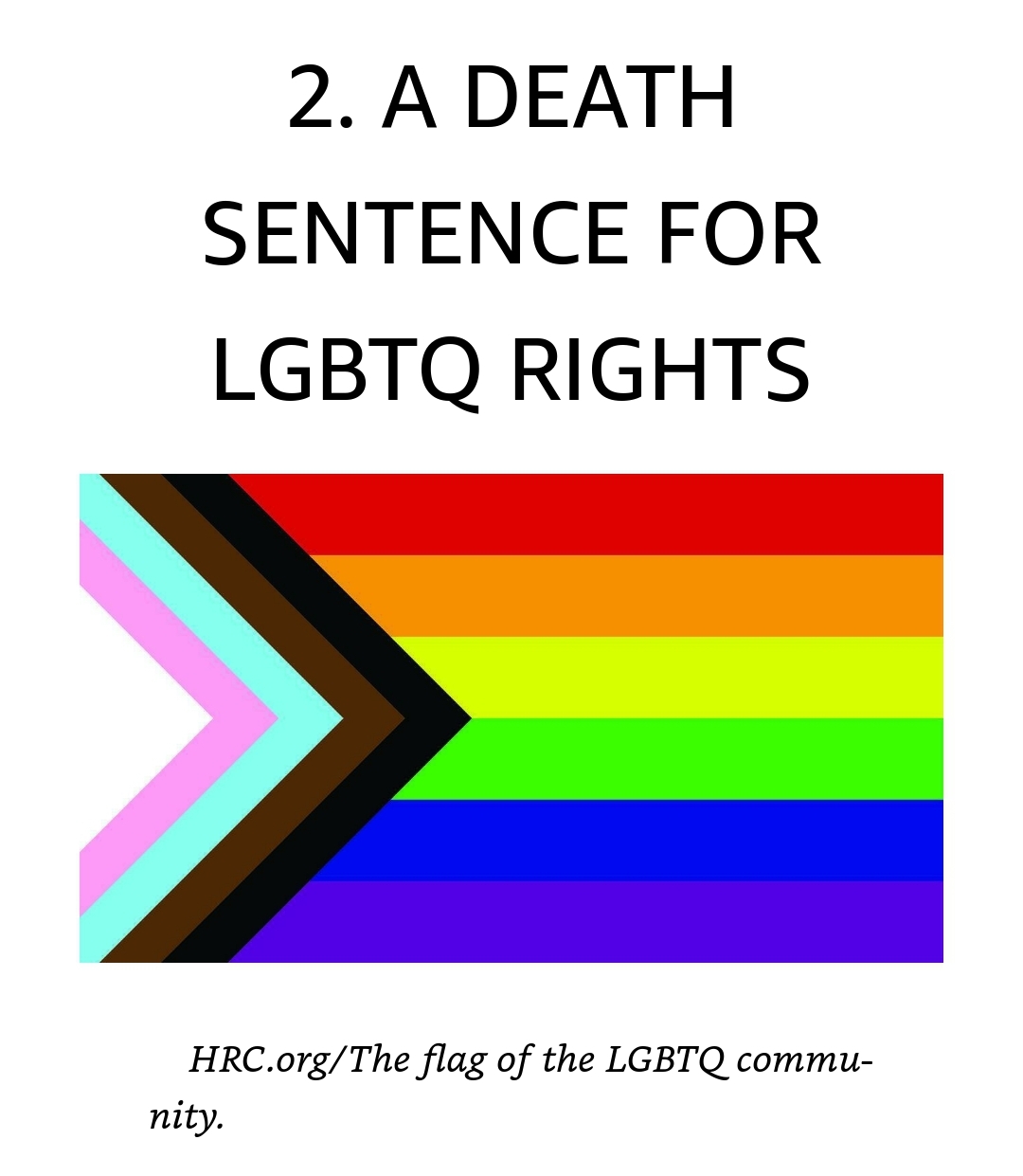
The increased right-wing assault on the LGBTQ community
LGBTQ youth and families face an onslaught of hostility to their health and long-term wellbeing. Here are the headlines. Get more information in these books.


Order here!
Tuesday, March 1, 2022
Are Gay Men Smarter than Straight Men?

"I love gay people," said activist and playwright Larry Kramer in a 2004 speech in New York City. "I think we're smarter and more talented and more aware."
A new study in the American Sociological Review (Feb. 20) poses a provocative theory that gay men are markedly for inclined to excel academically than their straight male peers.

A new study in the American Sociological Review (Feb. 20) poses a provocative theory that gay men are markedly for inclined to excel academically than their straight male peers.
In the paper, sociologist Joel Mittleman found that on an array of academic measures, gay males outperform all other groups on average, across all major racial groups. Conversely, he concluded that lesbians perform more poorly in school overall and that Black gay women have a much lower college graduation rate than their white counterparts.
“This article is focusing a lens on what we do to all kids,” Lisa Diamond, a psychology professor at the University of Utah, said of the societal pressures that appear to impede lesbians in school even as these stressors possibly unnerve gay males into compensating for homophobia through academic striving. “And the most vulnerable kids are going to show it first.”
In recent years, academics, lawmakers and journalists alike have sounded an increasingly urgent alarm that on balance, American males are stuck in a scholastic funk. As the economic gap between those with and without a college degree has widened, women’s college graduation rate has risen in tandem, but men’s rate has remained largely stagnant for decades. Today, women comprise 59.2 percent of college students, according to the National Student Clearinghouse.
Mittleman’s research indicates that this characterization of the educational gender gap is critically lacking in specificity. It is, in fact, straight males who tend to be mired in a scholastic morass. And the considerable academic progress that young women have charted since the advent of second-wave feminism has been largely restricted to the heterosexuals among them.
Wednesday, December 8, 2021
New book helps parents and youth in "coming out" process
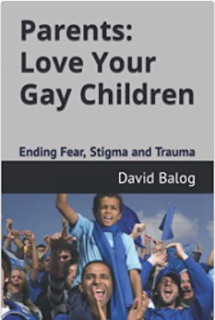
204 pages, illustrated with art and photos, 2021
Independently published through Kindle Direct Publishing
$5.95 introductory price. (Also available as Kindle book, $2.95)
Available directly on Amazon.com by CLICKING HERE
In the author's words: "This is a book that I wish I could have given to my parents. We never could have the conversation that I was gay...and years of needless stress and hiding followed."
Sadly, parents and youth still struggle with the issue of coming out. It is like crossing the Rubicon, a moment of endless anxiety with potentially traumatic aftermaths.
The author, r, with his father.
As Nobel prize-winning neuroscientist Eric Kandel, M.D., has said, "the problem is urgent, particularly for transgender people of color who suffer horrifically high rates of depression, substance abuse, suicide, and murder.” Speaking on a PBS special series, Dr. Eric Kandel also said, “Brain science can be a liberating influence in our lives. As we understand the biology of our own gender identity and sexual orientation better and become more comfortable with ourselves, we must become more empathic to somebody else's identity and orientation.”
The book begins with a look at how all parents influence their children’s lives. This is especially important for gay youth, who struggle mightily with self-esteem and confidence. In Chapter Two we share the stories of LGBTQ people, and their parents, told in their own voices. Gay people and parents share their experiences, positive and negative:
- Matt, from New Jersey calmly talks his mother out of crashing the car as he answers yes to he question whether he is gay...at least until he can get out of the car.
- Ben, a researcher, gives his first presentation after transitioning from woman to man and hears a comment that the "presentation was good, but I like his sister's work better."
- Mary, the mother of a suicide victim, discovers that she was wrong to condemn her son on regligious grounds and comes to say that he was "perfect, just as he was."
- Pastor Jackie from Kansas, mother of two gay youth, urges parents to search deep inside you and ask why you are troubled so much.
Next, the book addresses the progress and the previous shortcomings of research into understanding how the brain develops and controls human sexuality. It is an important field, and one watched closely, because many lay people think there should be a simple answer and brain science is about clarity and explaining complexity and nuance.
Resources for parents and gay youth and adults include support organizations, other books, and movies dedicated to portraying the lives of family member who work to overcome stigma and trauma.
David Balog created, wrote, and edited The Dana Sourcebook of Brain Science through four editions. More than 50,000 copies were distributed to elementary schools, middle schools, colleges, and to professionals and the general public. He worked with leading brain scientists and doctors, including Nobel laureates, throughout 12 years at the Dana Foundation.

This book is a publication of A Thousand Moms, a Schenectady, NY-based organization devoted to supporting the emotional and developmental needs of LGBTQ youth in foster/adoptive care. athousandmoms@yahoo.com
Friday, November 19, 2021
LGBTQ+ Health Disparities Part 1

(First published on Cigna.com)
Health disparities are differences in health between different groups of people. LGBTQ+ people experience a number of health disparities. They're at higher risk of certain conditions, have less access to health care, and have worse health outcomes. These disparities are seen in the areas of behavioral health, physical health, and access to care.
Behavioral health. Behavioral health includes mental health, substance abuse, and addiction. LGBTQ+ people are at greater risk of:
- Suicide and suicidal thoughts
- Mood disorders and anxiety
- Eating disorders
- Alcohol and substance abuse
- Tobacco use
Physical health. LGBTQ+ people are at greater risk for certain conditions, diseases, and infections:
- Gay and bisexual men are more likely to have HIV/AIDS.
- Transgender Women, Black/African American and Hispanic/Latino men have the highest risk for HIV infection.
- Older LGBTQ+ adults are more likely to rate their health as poor and report more chronic conditions while having less social support.
- Lesbian and bisexual women are more likely to be obese.
- LGBTQ+ people are less likely to have a regular health care provider.
- Lesbian and bisexual women have higher rates of breast cancer, and transgender men and women are at greater risk.
- LGBTQ+ people have higher rates of HPV infection and related cervical or anal cancers.
Tuesday, December 26, 2017
Drug Abuse and LGBT Community: Social Anxiety on Steroids

People who identify as lesbian, gay, bisexual, or transgender (LGBT) often face social stigma, discrimination, and other challenges not encountered by people who identify as heterosexual. They also face a greater risk of harassment and violence. As a result of these and other stressors, sexual minorities are at increased risk for various behavioral health issues.
Substance Use and Misuse
 |
| Understand social anxiety and stress in the LGBT community. |
A 2013 survey conducted by the U.S. Census Bureau found that a higher percentage of LGBT adults between 18 and 64 reported past-year binge drinking (five or more drinks on a single occasion) than heterosexual adults. LGBT people in treatment for SUDs initiated alcohol consumption earlier than their heterosexual counterparts.
Lesbian, gay, and bisexual (LGB) adolescents also reported higher rates of substance use compared to heterosexual adolescents. In one meta-analysis, LGB adolescents were 90 percent more likely to use substances than heterosexual adolescents, and the difference was particularly pronounced in some subpopulations; bisexual adolescents used substances at 3.4 times the rate of heterosexual adolescents, and lesbian and bisexual females used at four times the rate of their heterosexual counterparts.
Substance Use Disorders and Comorbidities
LGBT persons also have a greater likelihood than non-LGBT persons of experiencing a substance use disorder (SUD) in their lifetime, and they often enter treatment with more severe SUDs. Some common SUD treatment modalities have been shown to be effective for gay or bisexual men including motivational interviewing, social support therapy, contingency management, and cognitive-behavioral therapy (CBT).Addiction treatment programs offering specialized groups for gay and bisexual men showed better outcomes for those clients compared to gay and bisexual men in non-specialized programs; but in one study, only 7.4 percent of programs offered specialized services for LGBT patients. Research is currently limited on rates of SUD among transgender populations, although research shows that transgender individuals are more likely to seek SUD treatment than the non-transgender population. Current research suggests that treatment should address unique factors in these patients' lives that may include homophobia/transphobia, family problems, violence, and social isolation.
Sexual minorities with SUDs are more likely to have additional (comorbid or co-occurring) psychiatric disorders. For example, gay and bisexual men and lesbian and bisexual women report greater odds of frequent mental distress and depression than their heterosexual counterparts. Transgender children and adolescents have higher levels of depression, suicidality, self-harm, and eating disorders than their non-transgender counterparts.Thus it is particularly important that LGBT people in SUD treatment be screened for other psychiatric problems (as well as vice versa) and all identifiable conditions should be treated concurrently.
LGBT people are also at increased risks for human immunodeficiency virus (HIV) due to both intravenous drug use and risky sexual behaviors. HIV infection is particularly prevalent among gay and bisexual men (men who have sex with men, or MSM) and transgender women who have sex with men. SUD treatment can also help prevent HIV transmission among those at high risk. For example, addiction treatment is associated not only with reduced drug use but also with less risky sexual behavior among MSM, and those with HIV report improvements in viral load.
Source: National Institute on Drug Abuse
Sunday, November 19, 2017
#MeToo, part 3. Top 10 Things a Gay Rapist Accomplishes
Top 10 Things a Gay Rapist Accomplishes:
1. Seals a temporary lack of self-confidence of the victim to permanence.
2. Ruins routine sleep, making you need meds for the most natural of body functions.
3. Makes victim reach for comfort on the most elemental level, including eating.
4. So victim is susceptible to drugs, sex, overeating.
5. Having reached stage 4, diabetes can be achieved.
6. Once diagnosed with diabetes, victim, now adult watches in horror that Affordable Care Act will be killed by Trump.
7. Depression, diabetes, and sleep meds make partner deeply uncomfortable, completing the stress cycle to perpetuate more stress.
8. Having no self-esteem, said victim does not attend to financial matters and faces bleak financial future, further eroding relationship with partner, who, for clarity, has contributed to support of household beyond his share.
9. Further eroding of self-confidence when victim cannot talk to anyone, particularly LGBT, about a major part of his life.
10. Victim thinks, constantly, of man's inhumanity to man and where does his situation fit. Little feedback received convinces him that, well, take a place in line. Others have it much worse. And keep setting those useless therapy appointments, for which you've paid $ thousands over decades.
1. Seals a temporary lack of self-confidence of the victim to permanence.
2. Ruins routine sleep, making you need meds for the most natural of body functions.
3. Makes victim reach for comfort on the most elemental level, including eating.
4. So victim is susceptible to drugs, sex, overeating.
5. Having reached stage 4, diabetes can be achieved.
6. Once diagnosed with diabetes, victim, now adult watches in horror that Affordable Care Act will be killed by Trump.
7. Depression, diabetes, and sleep meds make partner deeply uncomfortable, completing the stress cycle to perpetuate more stress.
8. Having no self-esteem, said victim does not attend to financial matters and faces bleak financial future, further eroding relationship with partner, who, for clarity, has contributed to support of household beyond his share.
9. Further eroding of self-confidence when victim cannot talk to anyone, particularly LGBT, about a major part of his life.
10. Victim thinks, constantly, of man's inhumanity to man and where does his situation fit. Little feedback received convinces him that, well, take a place in line. Others have it much worse. And keep setting those useless therapy appointments, for which you've paid $ thousands over decades.
#MeToo 2. When You're Gay, You Blame the Victim
I so want to tell my story, but even today, 34 years later, it haunts me and depresses me. A gay rape follows you ceaselessly.
My perp was a former high school teacher. It staggered me when it happened and stings my self-confidence today.
My friend Art, who committed suicide in 1992, was eccentric and wise at the same time. He knew that being gay in America was difficult, "whether or not you choose to deal it or not." Adding one of the most demeaning violations of body and soul brings about a special inner silencing. It is your soul dying, like a tree, from the inside out.
I find it still nearly impossible to be coherent about what happened.
I had broken up with my first boyfriend. The hurt lasted all summer of 1982, when I choose to go out on a Saturday night to the bar in North Jersey where we had met. I was tired of the trips to NYC and Westchester and Connecticut, even, to socialize.
I got to the bar in Jersey that night and there was my ex's car in the parking lot. I panicked and drove home. Lonely and scared, I called my old teacher with whom I'd remained in contact over the years. I was comfortable enough to come out to him while still in school, but he never returned in kind, and by word and deed I knew he was gay. Yet, he was the only friend I could think to call and he immediately invited me (for the first time) to his apartment in NYC for a drink and some talk. I rushed there at the chance.
It didn't take long--five minutes--before he had stripped, cornered me, and forced himself on me. I was on his bed and stayed there, frozen in fear and disbelief for five or more hours. This was his version of intimacy. At 26, I had an emotional maturity of half that age. Like many gay kids, I missed out on the social rites of dating, sexual experience, and emotional expression.
Really, his was like animal behavior. He thought, after knowing me for a decade, that that was all I wanted or needed. It is the most profound form of pathological narcissism. The victim is an object, not even human, does not exist for the perpetrator.
When you're gay and raped, there really are no places to go. Women can at least, at the very least, have a social understanding of the emotions and the devastation. Gay men do not have such an ephemeral place. We have depression, overeating, drugs, and dangerous, casual sex as options to block the pain.
In 2015, I went back to the Fordham Prep reunion for my class of 1975. Surreally, pictures of my perpetrator flashed on a slideshow that seemed 100 times normal size. There were other teachers, other students, but all I could see was him.
It made a difficult night even worse. I heard about a lawyer who was suing the many perpetrators at this Jesuit school. I contacred him and he took my case. I had a long phone interview and filled out a long document. Hoping for some justice, I found out a year later that the lawyer had been lying. I had no case because I was not a student at the time of the rape, he blandly told me. The school was not responsible because I was an adult that night. It was a doublecross and I suspect this lawyer, representing the law firm that took down the Boston Archdiocese priests (use Google), was either incompetent or guilty of malpractice.
The road to nowhere continues from that night in 1982. Either you switch into extreme denial, flattening out your emotions for a sort of emotional death, or you medicate with food or drugs or sex.
The gay community has sadly neen incapable of providing support, weighed down by their own baggage of stress and denial. I love the community and have met some wonderful people. But emotional trauma, up to now, had reduced its ability to be supportive in significant ways. I believe and hope this is changing.
So, if you survive (and suicide ideation is never far from my mind), you live in a zombie-like state. And if gay people can't understand, trust me that straight people can't ever comprehend.
Blame the victim is all people can do, gay or straight. It's in the books.
My perp was a former high school teacher. It staggered me when it happened and stings my self-confidence today.
My friend Art, who committed suicide in 1992, was eccentric and wise at the same time. He knew that being gay in America was difficult, "whether or not you choose to deal it or not." Adding one of the most demeaning violations of body and soul brings about a special inner silencing. It is your soul dying, like a tree, from the inside out.
I find it still nearly impossible to be coherent about what happened.
I had broken up with my first boyfriend. The hurt lasted all summer of 1982, when I choose to go out on a Saturday night to the bar in North Jersey where we had met. I was tired of the trips to NYC and Westchester and Connecticut, even, to socialize.
I got to the bar in Jersey that night and there was my ex's car in the parking lot. I panicked and drove home. Lonely and scared, I called my old teacher with whom I'd remained in contact over the years. I was comfortable enough to come out to him while still in school, but he never returned in kind, and by word and deed I knew he was gay. Yet, he was the only friend I could think to call and he immediately invited me (for the first time) to his apartment in NYC for a drink and some talk. I rushed there at the chance.
It didn't take long--five minutes--before he had stripped, cornered me, and forced himself on me. I was on his bed and stayed there, frozen in fear and disbelief for five or more hours. This was his version of intimacy. At 26, I had an emotional maturity of half that age. Like many gay kids, I missed out on the social rites of dating, sexual experience, and emotional expression.
Really, his was like animal behavior. He thought, after knowing me for a decade, that that was all I wanted or needed. It is the most profound form of pathological narcissism. The victim is an object, not even human, does not exist for the perpetrator.
When you're gay and raped, there really are no places to go. Women can at least, at the very least, have a social understanding of the emotions and the devastation. Gay men do not have such an ephemeral place. We have depression, overeating, drugs, and dangerous, casual sex as options to block the pain.
In 2015, I went back to the Fordham Prep reunion for my class of 1975. Surreally, pictures of my perpetrator flashed on a slideshow that seemed 100 times normal size. There were other teachers, other students, but all I could see was him.
It made a difficult night even worse. I heard about a lawyer who was suing the many perpetrators at this Jesuit school. I contacred him and he took my case. I had a long phone interview and filled out a long document. Hoping for some justice, I found out a year later that the lawyer had been lying. I had no case because I was not a student at the time of the rape, he blandly told me. The school was not responsible because I was an adult that night. It was a doublecross and I suspect this lawyer, representing the law firm that took down the Boston Archdiocese priests (use Google), was either incompetent or guilty of malpractice.
The road to nowhere continues from that night in 1982. Either you switch into extreme denial, flattening out your emotions for a sort of emotional death, or you medicate with food or drugs or sex.
The gay community has sadly neen incapable of providing support, weighed down by their own baggage of stress and denial. I love the community and have met some wonderful people. But emotional trauma, up to now, had reduced its ability to be supportive in significant ways. I believe and hope this is changing.
So, if you survive (and suicide ideation is never far from my mind), you live in a zombie-like state. And if gay people can't understand, trust me that straight people can't ever comprehend.
Blame the victim is all people can do, gay or straight. It's in the books.
Saturday, November 19, 2016
Radio Free Europe...oops, America

From Wikipedia: Radio Free Europe/Radio Liberty (RFE/RL) is a United States government-funded broadcasting organization that provides news, information, and analysis to countries in Eastern Europe, Central Asia and the Middle East "where the free flow of information is either banned by government authorities or not fully developed".[3] RFE/RL is a 501(c)(3) corporation that receives U.S. government funding and is supervised by the Broadcasting Board of Governors, an agency overseeing all U.S. federal government international broadcasting services.[4]
During the Cold War, Radio Free Europe (RFE) was broadcast to Soviet satellite countries and Radio Liberty (RL) targeted the Soviet Union. RFE was founded as an anti-communist propaganda source in 1949 by the National Committee for a Free Europe. RL was founded two years later and the two organizations merged in 1976. Communist governments frequently sent agents to infiltrate RFE's headquarters. Radio transmissions into the Soviet Union were regularly jammed by the KGB. RFE/RL received funds from the Central Intelligence Agency (CIA) until 1972.[5] During RFE's earliest years of existence, the CIA and U.S. Department of State issued broad policy directives, and a system evolved where broadcast policy was determined through negotiation between them and RFE staff.[6]
Listen to our latest show, LGBT 911.

Monday, July 11, 2016
Minority Stress and LGBT/Q Health
From my new book, Healing the Brain....
To order, click here.

To order, click here.
Chapter Four
Minority Stress and LGBT/Q Health
Adapted from “Public Health Implications of Same-Sex Marriage,” Am J Public Health. 2011 June; 101(6): 986–990. William C. Buffie, MD. (Dr. Buffie has provided medical information for A Thousand Moms.)
One only has to consider the rash of recent teen suicides resulting from anti-gay bullying to begin to comprehend the magnitude of the public health problem faced by this country and its LGBT sexual minority. Despite the prevalence of same-sex households and campaigns to protect human rights, gay persons find the very nature of their being constantly debated within our legislative bodies, the courts, and the mainstream media. They are subject to ridicule and are commonly the targets of demeaning and derogatory slang terms or insensitive jokes. Their morality and value as human beings are frequently questioned by individuals and organizations ignorant or unaccepting of current medical and social science literature concerning the gay population….
Being cast in such a light strongly contributes to the phenomenon known as “minority stress,” which members of this community experience in their struggle for validation and acceptance in our heterosexist society.
LGBT individuals are constantly subject to subtle, inadvertent, or insensitive attacks on the core of their very nature, even by people who profess no disdain or disrespect for them.

Unique to the LGBT form of minority stress—as opposed to minority stress engendered by societal prejudice based upon race, ethnicity, gender, or disability—is that one's sexual orientation usually is invisible to others. As a result, in addition to being the target of overt discrimination, LGBT individuals are constantly subject to subtle, inadvertent, or insensitive attacks on the core of their very nature, even by people who profess no disdain or disrespect for them.
For instance, if someone has a lesbian colleague but doesn't know the colleague's orientation, an innocent question—such as asking her if she has a boyfriend, rather than asking “Are you seeing someone special?”—implies a judgment regarding what is “normal.” When the “other” is invisible, faceless, or nameless, it is common for those in power to ignore the reality of the other's existence and the challenges the other faces. This interplay of power and prejudice, whether overt or covert, constitutes the phenomenon of heterosexism. Similarities to the racism and sexism so prevalent during the civil rights movements of past generations are obvious.
Internalizing Predjudice
This sexual-minority status, as explained by Riggle and Rostosky, is defined by a culture of devaluation, including overt and subtle prejudice and discrimination, [one that] creates and reinforces the chronic, everyday stress that interferes with optimal human development and well-being.
LGBT individuals, stigmatized by negative societal attitudes directed at the essence of their being, struggle on a daily basis to balance the dual dangers of publicly engaging their need for equality and validation and remaining closeted to find some calm through an escape from public scrutiny. Many gay persons internalize such discrimination and prejudice. Fractured social-support mechanisms and minority-stress–associated low self-esteem contribute to a high prevalence of self-destructive behaviors, such as substance abuse, suicide, and risky sexual behavior.
Institutionalized stigma and its attendant internalized prejudice (i.e., minority stress) stand at the forefront of this cycle, begetting higher rates of sexually transmitted diseases, depression, suicide, and drug use
Hatzenbuehler et al. studied more than 34 000 lesbian, gay, and bisexual participants and found empirical evidence of the negative health effects of discriminatory policies relative to marriage equality. They surveyed participants in 2001 and 2002 on a range of psychological health indicators, and they administered the same survey in 2004 and 2005, after 14 states approved constitutional amendments limiting marriage to opposite-sex unions. In the second set of responses, participants reported significantly higher rates of psychiatric disorders, with increases of 36% for any mood disorder, 248% for generalized anxiety disorder, 42% for alcohol use disorder, and 36% for psychiatric comorbidity. In the comparable control group from states without such amendments during the same time period, there were no significant increases in these psychiatric disorders.
Although causality may be difficult to establish, the association and prevalence of these disorders suggest that institutionalized stigma and its attendant internalized prejudice (i.e., minority stress) stand at the forefront of this cycle, begetting higher rates of sexually transmitted diseases, depression, suicide, and drug use—all of which, when combined with suboptimal access to health care and fractured family-support systems, eventually contribute to higher overall mortality as well as morbidity from various cancers, cirrhosis, hypertension, and heart disease….
Go to: www.healingthebrainbook.com
Subscribe to:
Posts (Atom)