Top 10 Things a Gay Rapist Accomplishes:
1. Seals a temporary lack of self-confidence of the victim to permanence.
2. Ruins routine sleep, making you need meds for the most natural of body functions.
3. Makes victim reach for comfort on the most elemental level, including eating.
4. So victim is susceptible to drugs, sex, overeating.
5. Having reached stage 4, diabetes can be achieved.
6. Once diagnosed with diabetes, victim, now adult watches in horror that Affordable Care Act will be killed by Trump.
7. Depression, diabetes, and sleep meds make partner deeply uncomfortable, completing the stress cycle to perpetuate more stress.
8. Having no self-esteem, said victim does not attend to financial matters and faces bleak financial future, further eroding relationship with partner, who, for clarity, has contributed to support of household beyond his share.
9. Further eroding of self-confidence when victim cannot talk to anyone, particularly LGBT, about a major part of his life.
10. Victim thinks, constantly, of man's inhumanity to man and where does his situation fit. Little feedback received convinces him that, well, take a place in line. Others have it much worse. And keep setting those useless therapy appointments, for which you've paid $ thousands over decades.
Showing posts with label rape. Show all posts
Showing posts with label rape. Show all posts
Sunday, November 19, 2017

#MeToo 2. When You're Gay, You Blame the Victim
I so want to tell my story, but even today, 34 years later, it haunts me and depresses me. A gay rape follows you ceaselessly.
My perp was a former high school teacher. It staggered me when it happened and stings my self-confidence today.
My friend Art, who committed suicide in 1992, was eccentric and wise at the same time. He knew that being gay in America was difficult, "whether or not you choose to deal it or not." Adding one of the most demeaning violations of body and soul brings about a special inner silencing. It is your soul dying, like a tree, from the inside out.
I find it still nearly impossible to be coherent about what happened.
I had broken up with my first boyfriend. The hurt lasted all summer of 1982, when I choose to go out on a Saturday night to the bar in North Jersey where we had met. I was tired of the trips to NYC and Westchester and Connecticut, even, to socialize.
I got to the bar in Jersey that night and there was my ex's car in the parking lot. I panicked and drove home. Lonely and scared, I called my old teacher with whom I'd remained in contact over the years. I was comfortable enough to come out to him while still in school, but he never returned in kind, and by word and deed I knew he was gay. Yet, he was the only friend I could think to call and he immediately invited me (for the first time) to his apartment in NYC for a drink and some talk. I rushed there at the chance.
It didn't take long--five minutes--before he had stripped, cornered me, and forced himself on me. I was on his bed and stayed there, frozen in fear and disbelief for five or more hours. This was his version of intimacy. At 26, I had an emotional maturity of half that age. Like many gay kids, I missed out on the social rites of dating, sexual experience, and emotional expression.
Really, his was like animal behavior. He thought, after knowing me for a decade, that that was all I wanted or needed. It is the most profound form of pathological narcissism. The victim is an object, not even human, does not exist for the perpetrator.
When you're gay and raped, there really are no places to go. Women can at least, at the very least, have a social understanding of the emotions and the devastation. Gay men do not have such an ephemeral place. We have depression, overeating, drugs, and dangerous, casual sex as options to block the pain.
In 2015, I went back to the Fordham Prep reunion for my class of 1975. Surreally, pictures of my perpetrator flashed on a slideshow that seemed 100 times normal size. There were other teachers, other students, but all I could see was him.
It made a difficult night even worse. I heard about a lawyer who was suing the many perpetrators at this Jesuit school. I contacred him and he took my case. I had a long phone interview and filled out a long document. Hoping for some justice, I found out a year later that the lawyer had been lying. I had no case because I was not a student at the time of the rape, he blandly told me. The school was not responsible because I was an adult that night. It was a doublecross and I suspect this lawyer, representing the law firm that took down the Boston Archdiocese priests (use Google), was either incompetent or guilty of malpractice.
The road to nowhere continues from that night in 1982. Either you switch into extreme denial, flattening out your emotions for a sort of emotional death, or you medicate with food or drugs or sex.
The gay community has sadly neen incapable of providing support, weighed down by their own baggage of stress and denial. I love the community and have met some wonderful people. But emotional trauma, up to now, had reduced its ability to be supportive in significant ways. I believe and hope this is changing.
So, if you survive (and suicide ideation is never far from my mind), you live in a zombie-like state. And if gay people can't understand, trust me that straight people can't ever comprehend.
Blame the victim is all people can do, gay or straight. It's in the books.
My perp was a former high school teacher. It staggered me when it happened and stings my self-confidence today.
My friend Art, who committed suicide in 1992, was eccentric and wise at the same time. He knew that being gay in America was difficult, "whether or not you choose to deal it or not." Adding one of the most demeaning violations of body and soul brings about a special inner silencing. It is your soul dying, like a tree, from the inside out.
I find it still nearly impossible to be coherent about what happened.
I had broken up with my first boyfriend. The hurt lasted all summer of 1982, when I choose to go out on a Saturday night to the bar in North Jersey where we had met. I was tired of the trips to NYC and Westchester and Connecticut, even, to socialize.
I got to the bar in Jersey that night and there was my ex's car in the parking lot. I panicked and drove home. Lonely and scared, I called my old teacher with whom I'd remained in contact over the years. I was comfortable enough to come out to him while still in school, but he never returned in kind, and by word and deed I knew he was gay. Yet, he was the only friend I could think to call and he immediately invited me (for the first time) to his apartment in NYC for a drink and some talk. I rushed there at the chance.
It didn't take long--five minutes--before he had stripped, cornered me, and forced himself on me. I was on his bed and stayed there, frozen in fear and disbelief for five or more hours. This was his version of intimacy. At 26, I had an emotional maturity of half that age. Like many gay kids, I missed out on the social rites of dating, sexual experience, and emotional expression.
Really, his was like animal behavior. He thought, after knowing me for a decade, that that was all I wanted or needed. It is the most profound form of pathological narcissism. The victim is an object, not even human, does not exist for the perpetrator.
When you're gay and raped, there really are no places to go. Women can at least, at the very least, have a social understanding of the emotions and the devastation. Gay men do not have such an ephemeral place. We have depression, overeating, drugs, and dangerous, casual sex as options to block the pain.
In 2015, I went back to the Fordham Prep reunion for my class of 1975. Surreally, pictures of my perpetrator flashed on a slideshow that seemed 100 times normal size. There were other teachers, other students, but all I could see was him.
It made a difficult night even worse. I heard about a lawyer who was suing the many perpetrators at this Jesuit school. I contacred him and he took my case. I had a long phone interview and filled out a long document. Hoping for some justice, I found out a year later that the lawyer had been lying. I had no case because I was not a student at the time of the rape, he blandly told me. The school was not responsible because I was an adult that night. It was a doublecross and I suspect this lawyer, representing the law firm that took down the Boston Archdiocese priests (use Google), was either incompetent or guilty of malpractice.
The road to nowhere continues from that night in 1982. Either you switch into extreme denial, flattening out your emotions for a sort of emotional death, or you medicate with food or drugs or sex.
The gay community has sadly neen incapable of providing support, weighed down by their own baggage of stress and denial. I love the community and have met some wonderful people. But emotional trauma, up to now, had reduced its ability to be supportive in significant ways. I believe and hope this is changing.
So, if you survive (and suicide ideation is never far from my mind), you live in a zombie-like state. And if gay people can't understand, trust me that straight people can't ever comprehend.
Blame the victim is all people can do, gay or straight. It's in the books.
Saturday, October 14, 2017
Harvey Weinstein and the Biology of Trauma
Hollywood movie executive Harvey Weinstein has been accused of and alleged to have committed sexual assault over a number of years on a number of actresses. Such a story strikes an all-too-common nerve in America, perhaps revealing the depth and widespread nature of such abuse. In this excerpt from Healing the Brain: Depression, we look at the biology of stress and trauma experienced by the victims and why it is a pernicious wound.

 |
| Now just $9.95 for a limited time. Click here! |
Wounds that Time Alone Won’t Heal
The Biology of Stress
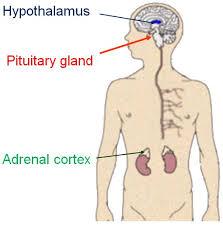
How do the brain and the body react to stress? Stress, such as the threat of attack, forces various changes in the body. First, adrenaline causes an increase in heart rate and blood pressure so that blood can be sent to muscles faster. Second, the brain’s hypothalamus signals the pituitary gland to stimulate the adrenal gland (specifically the adrenal cortex) to produce cortisol.
This stress hormone, a longer-acting steroid, helps the body to mobilize energy. However, prolonged exposure to cortisol can damage virtually every part of the body. Chronic high blood pressure can cause blood vessel damage and the long-term shutdown of digestion can lead to ulcers.
SimplyPsychology.org
Stress, such as the threat of attack, forces changes in the body carried out by the hypothalamus-pituitary-adrenal axis (HPA).
Why do some people experience more stress than others? Individuals who feel they have control over their lives appear to experience less stress. It also depends on personality and temperament. Aggressive, competitive types are more likely to define a situation as stressful than a passive, accommodating personality. A universal stress producer seems to be social isolation.
PTSD: A Breakthrough in Diagnosis
In 1980 the mental health community established the diagnosis of Post Traumatic Stress Disorder, PTSD, and revolutionized the way the field views the effects of stress. This change acknowledged that many of the symptoms people experience after exposure to trauma can be long-lasting, if not permanent. Before that shift, the field tended to view stress-related symptoms as a transient, normal response to an adverse life event, not requiring intensive treatment.
Furthermore, before 1980, people who did develop long-term symptoms following trauma were viewed as implicitly vulnerable; the role of the actual event in precipitating their symptoms was minimized. For a while, in a reversal of previous thinking, experts expected most trauma survivors to develop PTSD. More recent research has confirmed that only about 25 per cent of individuals who are exposed to trauma develop PTSD.
So who is likely to develop PTSD following a traumatic experience, and why? The answer is not yet clear, but it now appears that PTSD represents a failure of the body to extinguish or contain the normal nervous system response to stress. This failure is associated with many factors:
- the nature and severity of the traumatic event
- preexisting risk factors related to previous exposure to stress or trauma, particularly in childhood
- the individual’s history of psychological and behavioral problems, if any
- the person’s level of education, and other cognitive factors
- family history—whether parents or other relatives had anxiety, depression, or PTSD
People who develop PTSD are also more likely to develop other psychiatric disorders involving mood (depression, anxiety and panic, bipolar disorder), personality, eating, and substance dependence.
People also seek medical help for problems that may develop after the trauma that can mask or intensify PTSD symptoms. These symptoms include chronic pain, fatigue, headaches, muscle cramps, and self-destructive behavior, including alcohol or drug abuse and suicidal gestures. Often, survivors are not aware that their physical symptoms are related to their traumatic experiences. They may even fail to mention those disturbing events to their physicians, which can make PTSD difficult to diagnose accurately.
Some PTSD symptoms in teens may begin to look like those of adults. One difference is that teens are more likely than younger children or adults to show impulsive and aggressive behaviors.
School-aged children (ages 5-12)
These children may not have flashbacks or problems remembering parts of the trauma, the way adults with PTSD often do. Children, though, might put the events of the trauma in the wrong order. They might also think there were signs that the trauma was going to happen. As a result, they think that they will see these signs again before another trauma happens. They think that if they pay attention, they can avoid future traumas.
Children of this age might also show signs of PTSD in their play. They might keep repeating a part of the trauma. These games do not make their worry and distress go away. For example, a child might always want to play shooting games after he sees a school shooting. Children may also fit parts of the trauma into their daily lives. For example, a child might carry a gun to school after seeing a school shooting.
Teens (ages 12-18)
Some PTSD symptoms in teens may begin to look like those of adults. One difference is that teens are more likely than younger children or adults to show impulsive and aggressive behaviors.
Wikimedia Commons
Teen experience of PTSD can mimic those of adults and include re-experiencing a traumatic event, flashbacks, and nightmares.
Adult symptoms may include:
- Re-experiencing the traumatic event
- Increased anxiety and emotional arousal
- Intrusive, upsetting memories of the event
- Flashbacks (acting or feeling like the event is happening again)
- Nightmares (either of the event or of other frightening things)
- Feelings of intense distress when reminded of the trauma
- Loss of interest in activities and life in general
- Sense of a limited future (not expecting to live a normal lifespan, get married, have a career)
Below the surface, some children from deprived surroundings, have vastly different hormone levels than their parent-raised peers even beyond the baby years. Studies have shown that children who experienced early deprivation also had different levels of oxytocin and vasopressin (hormones that have been linked to emotion and social bonding), despite having had an average of three years in a family home.
It has been thought that these changes in hormones and neurotransmitters impair development of vulnerable brain regions. If we observe an association between a history of abuse and the presence of a physical abnormality, the abuse may have caused that abnormality. But it is also possible that the abnormality occurred first and elevated the likelihood of abuse, or that the abnormality ran in the family and led to more frequent abusive behavior by family members or other relatives.
People with PTSD actively avoid situations that might bring back memories of the trauma.
Thursday, October 13, 2016
Fear and the brain: A very timely issue

Fear is our most powerful emotion and triggering it can paralyze victims into submission.
Brain scientist Joseph LeDoux explains just how the fear response works, in this excerpt from my new book, Healing the Brain: Stress, Trauma and Development.
The Power of Emotions
By Joseph E. LeDoux, Ph.D.
(Book excerpt.) New York University neuroscientist Joseph LeDoux, Ph.D., and other neuroscientists have begun to examine the way the brain shapes our experience
—and our memories—to generate the varied repertoire of human emotions. Specifically, as
Dr. LeDoux explains, he chose to begin his inquiry by examining an emotion that is common to all living creatures: fear.
Mice serve researchers well as animal models. These very distant relatives possess
well over 90 per cent of the same genes as humans.
Years of research by many workers have given us extensive knowledge of the neural pathways
involved in processing acoustic information, which is an excellent starting point
for examining the neurological foundations of fear. The natural flow of auditory information\—the way you hear music, speech, or anything else—is that the sound comes into the ear,
enters the brain, goes up to a region called the auditory midbrain, then to the auditory
thalamus, and ultimately to the auditory cortex. Thus, in the auditory pathway, as in other sensory systems, the cortex is the highest level of processing.
So the first question we asked when we began these studies of the fear system was: Does the sound have to go all the way to the auditory cortex in order for the rat to learn that the sound paired with the shock is dangerous? When we made lesions in the auditory cortex, we found that the animal could still make the association between the sound and the shock, and would still react with fear behavior to the sound alone. Since information from all our senses is processed in the cortex—which ultimately allows us to become conscious of seeing the predator or hearing the sound—the fact that the cortex didn’t seem to be necessary to fear conditioning was both intriguing and mystifying. We wanted to understand how something as important as the emotion of fear could be mediated by the brain if it wasn’t going into the cortex, where all the higher processes occur. Some other area or areas of the brain must receive information from the thalamus and establish memories about experiences that stimulate a fear response. So we next made lesions in the auditory thalamus and then in the auditory midbrain. The midbrain supplies the major sensory input to the thalamus, which in turn supplies the major sensory input to the cortex. What we found was that lesions in either of these subcortical areas completely eliminated the rat’s susceptibility to fear conditioning. If the lesions were made in an unconditioned rat, the animal could not learn to make the association between sound and shock, and if the lesions were made on a rat that had already been conditioned to fear the sound, it would no longer react to the sound. But if the stimulus didn’t have to reach the cortex, where was it going from the thalamus?
Some other area or areas of the brain must receive information from the thalamus and establish memories about experiences that stimulate a fear response. To find out, we made a tracer injection in the auditory thalamus (the part of the thalamus that processes sounds) and found that some cells in this structure projected axons into the amygdala. This is key, because the amygdala has for many years been known to be important in emotional
responses. So it appeared that information went to the amygdala from the thalamus without going to the neocortex. We then did experiments with rats that had amygdala lesions, measuring freezing and blood pressure responses elicited by the sound after conditioning. We found that the amygdala lesion prevented conditioning from taking place. In fact, the responses are very similar to those of unconditioned animals that hear the sound for the first time, without getting the shock. So the amygdala is critical to this pathway. It receives information about the outside world directly from the thalamus, and immediately sets in motion a variety of bodily responses. We call this thalamoamygdala pathway the low road because it’s not taking advantage of all of the higherlevel information processing that occurs in the neocortex, which also communicates with the amygdala.
(Excerpted from States of Mind: New Discoveries About How Our Brains Make Us Who We Are, Roberta Conlan, editor. Dana Press and John Wiley & Sons, Inc., New York, 1999.)
Get a closer look at fear and human relations. CLICK HERE.

Subscribe to:
Posts (Atom)