Showing posts with label Mental Health. Show all posts

Thursday, October 14, 2021

Children who eat more fruit and veggies have better mental health


Date:
September 28, 2021
Source:
University of East Anglia
Summary:
New research finds that children who eat more fruit and veg have better mental health. The study is the first to investigate the association between fruit and vegetable intakes, breakfast and lunch choices, and mental wellbeing in UK school children. The research team studied data from almost 9,000 children in 50 schools. They found that the types of breakfast and lunch eaten by both primary and secondary school pupils were significantly important. 

Children who eat a better diet, packed with fruit and vegetables, have better mental wellbeing -- according to new research from the University of East Anglia.

Lead researcher Prof Ailsa Welch, from UEA's Norwich Medical School, said: "We know that poor mental wellbeing is a major issue for young people and is likely to have long-term negative consequences.

"The pressures of social media and modern school culture have been touted as potential reasons for a rising prevalence of low mental wellbeing in children and young people.

"And there is a growing recognition of the importance of mental health and wellbeing in early life -- not least because adolescent mental health problems often persist into adulthood, leading to poorer life outcomes and achievement.


Healing the Brain: Stress, Trauma and Development


“Easy to read. Difficult to put down.”--Micheal J. Colucciello, Jr., NY State pharmaceutical researcher, retired.

“David Balog takes a subject fraught with difficulty and makes it simple and accessible to everyone. The book goes a long way in helping one understand how and why and in what ways stress affects how we live and cope. Invaluable.”--Jessica Hudson, former president, National Association of Former Foster Children


"While the links between nutrition and physical health are well understood, until now, not much has been known about whether nutrition plays a part in children's emotional wellbeing. So, we set out to investigate the association between dietary choices and mental wellbeing among schoolchildren."

Wednesday, June 10, 2020

Unexpected uncertainty can breed paranoia


Date:
June 9, 2020
Source:
Yale University
Summary:
In times of unexpected uncertainty, such as the sudden appearance of a global pandemic, people may be more prone to paranoia, say researchers.

    
Silhouette of person, | Credit: © lassedesignen / stock.adobe.com
Silhouette of person, photo concept (stock image).
Credit: © lassedesignen / stock.adobe.com

In times of unexpected uncertainty, such as the sudden appearance of a global pandemic, people may be more prone to paranoia, Yale University researchers suggest in a new study published in the journal eLife.

Paranoia is a key symptom of serious mental illness, marked by the belief that other people have malicious intentions. But it also manifests in varying degrees in the general population. For instance, one previous survey found that 20% of the population believed people were against them at some time during the past year; 8% believed that others were actively out to harm them.

The prevailing theory is that paranoia stems from an inability to accurately assess social threats. But Corlett and lead author Erin Reed of Yale hypothesized that paranoia is instead rooted in a more basic learning mechanism that is triggered by uncertainty, even in the absence of social threat.

"We think of the brain as a prediction machine; unexpected change, whether social or not, may constitute a type of threat -- it limits the brain's ability to make predictions," Reed said. "Paranoia may be a response to uncertainty in general, and social interactions can be particularly complex and difficult to predict."


In a series of experiments, they asked subjects with different degrees of paranoia to play a card game in which the best choices for success were changed secretly. People with little or no paranoia were slow to assume that the best choice had changed. However, those with paranoia expected even more volatility in the game. They changed their choices capriciously -- even after a win. The researchers then increased the levels of uncertainty by changing the chances of winning halfway through the game without telling the participants. This sudden change made even the low-paranoia participants behave like those with paranoia, learning less from the consequences of their choices.

In a related experiment, Yale collaborators Jane Taylor and Stephanie Groman trained rats, a relatively asocial species, to complete a similar task where best choices of success changed. Rats who were administered methamphetamine -- known to induce paranoia in humans -- behaved just like paranoid humans. They, too, anticipated high volatility and relied more on their expectations than learning from the task.

Reed, Corlett and their team then used a mathematical model to compare choices made by rats and humans while performing these similar tasks. The results from the rats that received methamphetamine resembled those of humans with paranoia, researchers found.

"Our hope is that this work will facilitate a mechanistic explanation of paranoia, a first step in the development of new treatments that target those underlying mechanisms," Corlett said.

"The benefit of seeing paranoia through a non-social lens is that we can study these mechanisms in simpler systems, without needing to recapitulate the richness of human social interaction," Reed said.


Source:

Materials provided by Yale University. Original written by Bill Hathaway. 

Wednesday, December 18, 2019

Early-life exposure to dogs may lessen risk of developing schizophrenia

Learn more about the astonishing human brain.

Early-life exposure to dogs may lessen risk of developing schizophrenia

Findings do not link similar contact with cats to either schizophrenia or bipolar disorder

Ever since humans domesticated the dog, the faithful, obedient and protective animal has provided its owner with companionship and emotional well-being. Now, a study from Johns Hopkins Medicine suggests that being around "man's best friend" from an early age may have a health benefit as well -- lessening the chance of developing schizophrenia as an adult.

Johns Hopkins Medicine


And while Fido may help prevent that condition, the jury is still out on whether or not there's any link, positive or negative, between being raised with Fluffy the cat and later developing either schizophrenia or bipolar disorder.

"Serious psychiatric disorders have been associated with alterations in the immune system linked to environmental exposures in early life, and since household pets are often among the first things with which children have close contact, it was logical for us to explore the possibilities of a connection between the two," says Robert Yolken, M.D., chair of the Stanley Division of Pediatric Neurovirology and professor of neurovirology in pediatrics at the Johns Hopkins Children's Center, and lead author of a research paper recently posted online in the journal PLOS One.
In the study, Yolken and colleagues at Sheppard Pratt Health System in Baltimore investigated the relationship between exposure to a household pet cat or dog during the first 12 years of life and a later diagnosis of schizophrenia or bipolar disorder. For schizophrenia, the researchers were surprised to see a statistically significant decrease in the risk of a person developing the disorder if exposed to a dog early in life. Across the entire age range studied, there was no significant link between dogs and bipolar disorder, or between cats and either psychiatric disorder.
The researchers caution that more studies are needed to confirm these findings, to search for the factors behind any strongly supported links, and to more precisely define the actual risks of developing psychiatric disorders from exposing infants and children under age 13 to pet cats and dogs.
Learn more about the astonishing human brain.
According to the American Pet Products Association's most recent National Pet Owners Survey, there are 94 million pet cats and 90 million pet dogs in the United States. Previous studies have identified early life exposures to pet cats and dogs as environmental factors that may alter the immune system through various means, including allergic responses, contact with zoonotic (animal) bacteria and viruses, changes in a home's microbiome, and pet-induced stress reduction effects on human brain chemistry.
Some investigators, Yolken notes, suspect that this "immune modulation" may alter the risk of developing psychiatric disorders to which a person is genetically or otherwise predisposed.
In their current study, Yolken and colleagues looked at a population of 1,371 men and women between the ages of 18 and 65 that consisted of 396 people with schizophrenia, 381 with bipolar disorder and 594 controls. Information documented about each person included age, gender, race/ethnicity, place of birth and highest level of parental education (as a measure of socioeconomic status). Patients with schizophrenia and bipolar disorder were recruited from inpatient, day hospital and rehabilitation programs of Sheppard Pratt Health System. Control group members were recruited from the Baltimore area and were screened to rule out any current or past psychiatric disorders.
All study participants were asked if they had a household pet cat or dog or both during their first 12 years of life. Those who reported that a pet cat or dog was in their house when they were born were considered to be exposed to that animal since birth.
The relationship between the age of first household pet exposure and psychiatric diagnosis was defined using a statistical model that produces a hazard ratio -- a measure over time of how often specific events (in this case, exposure to a household pet and development of a psychiatric disorder) happen in a study group compared to their frequency in a control group. A hazard ratio of 1 suggests no difference between groups, while a ratio greater than 1 indicates an increased likelihood of developing schizophrenia or bipolar disorder. Likewise, a ratio less than 1 shows a decreased chance.
Analyses were conducted for four age ranges: birth to 3, 4 to 5, 6 to 8 and 9 to 12.
Surprisingly, Yolken says, the findings suggests that people who are exposed to a pet dog before their 13th birthday are significantly less likely -- as much as 24% -- to be diagnosed later with schizophrenia.
"The largest apparent protective effect was found for children who had a household pet dog at birth or were first exposed after birth but before age 3," he says.
Yolken adds that if it is assumed that the hazard ratio is an accurate reflection of relative risk, then some 840,000 cases of schizophrenia (24% of the 3.5 million people diagnosed with the disorder in the United States) might be prevented by pet dog exposure or other factors associated with pet dog exposure.
"There are several plausible explanations for this possible 'protective' effect from contact with dogs -- perhaps something in the canine microbiome that gets passed to humans and bolsters the immune system against or subdues a genetic predisposition to schizophrenia," Yolken says.
For bipolar disorder, the study results suggest there is no risk association, either positive or negative, with being around dogs as an infant or young child.
Overall for all ages examined, early exposure to pet cats was neutral as the study could not link felines with either an increased or decreased risk of developing schizophrenia or bipolar disorder.
"However, we did find a slightly increased risk of developing both disorders for those who were first in contact with cats between the ages of 9 and 12," Yolken says. "This indicates that the time of exposure may be critical to whether or not it alters the risk."
One example of a suspected pet-borne trigger for schizophrenia is the disease toxoplasmosis, a condition in which cats are the primary hosts of a parasite transmitted to humans via the animals' feces. Pregnant women have been advised for years not to change cat litter boxes to eliminate the risk of the illness passing through the placenta to their fetuses and causing a miscarriage, stillbirth, or potentially, psychiatric disorders in a child born with the infection.
In a 2003 review paper, Yolken and colleague E. Fuller Torrey, M.D., associate director of research at the Stanley Medical Research Institute in Bethesda, Maryland, provided evidence from multiple epidemiological studies conducted since 1953 that showed there also is a statistical connection between a person exposed to the parasite that causes toxoplasmosis and an increased risk of developing schizophrenia. The researchers found that a large number of people in those studies who were diagnosed with serious psychiatric disorders, including schizophrenia, also had high levels of antibodies to the toxoplasmosis parasite.
Because of this finding and others like it, most research has focused on investigating a potential link between early exposure to cats and psychiatric disorder development. Yolken says the most recent study is among the first to consider contact with dogs as well.
"A better understanding of the mechanisms underlying the associations between pet exposure and psychiatric disorders would allow us to develop appropriate prevention and treatment strategies," Yolken says.
Working with Yolken on the research team are the following members from Sheppard Pratt Health System: Cassie Stallings, Andrea Origoni, Emily Katsafanas, Kevin Sweeney, Amalia Squire, and Faith Dickerson, Ph.D., M.P.H.
The study was largely supported by grants from the Stanley Medical Research Institute.

Story Source:


Learn more about the astonishing human brain.
The study was largely supported by grants from the Stanley Medical Research Institute.


Story Source:

Friday, October 6, 2017

Diabetes and Your Brain: Understand the Connection & Safeguard Your Health

diabetes and the brain


Get a basic, non-complicated description of your brain!

First, What Can You Do?

Glucose (sugar) is the brain's only food. So a disease that involves the body's sugar levels needs special attention.

By tightly controlling diabetes and working on holistic ways to reverse diabetes via adopting a healthier diet and lifestyle, it is possible to prevent cognitive decline that often comes with poorly managed diabetes. In fact, studies have found that diabetes prevention and glucose control in midlife may protect against late-life cognitive decline, so it’s important to act now!

Diabetes is characterized by high blood sugar levels that result from the body’s inability to produce and/or use insulin. As can be imagined, these increased blood sugar levels have a harmful impact on the whole body, and the brain is no exception.
The human brain is a complex organ, and hence is very sensitive to the harmful effects of high or low blood sugar levels, since glucose and oxygen are the main fuel for brain function.
Now diabetes is a double edged sword — both hyperglycemia (or high blood glucose that comes with poorly managed diabetes) as well as hypoglycemia (or low blood glucose that can be caused by diabetes treatment) can negatively impact the brain. For diabetics, chance of brain related complications is just one more reason to keep your diabetes under control.

Effects of High Blood Glucose On The Brain

High levels of blood glucose entering the brain cause damage to blood vessels over time. The brain’s white matter is the area where nerves are linked and communicate in order to carry out every day activities of life. Think of the white matter as the subway of the brain, providing the essential connectivity, and uniting different regions of the brain into networks that perform various mental operations. When excess blood sugar levels damage the small blood vessels of the brain, this connectivity is disrupted and the result is often a dramatic disturbance of normal mental function. Over time, this damage causes changes in thinking, known as vascular cognitive impairment or vascular dementia.

Several scientific research studies have found that the longer you have diabetes, the more of a chance there is of cognitive impairment. Research done at Harvard Medical School found evidence that “Type 2 diabetes is associated with ... atrophy involving several brain regions...and this effect is intensified in cases with uncontrolled diabetes”. Both this study as well as another study published in The Official Journal of the American Academy of Neurology found a link between diabetes and cognitive impairment. These studies prove that in older people suffering from Type 2 Diabetes, diabetes-related-inflammation further ... accelerates decline in executive function and daily activities performance.
Besides cognitive function, diabetes also affects memory and can result in poor reasoning during intellectual tasks.
What is surprising here is that most doctors with a clinical practice treating diabetes every day find that cognitive impairment is less common in patients with diabetes Type 1, as this kind of diabetes is insulin-dependent and hence, often well-controlled. They find that in general, patients with Type 2 diabetes have developed this condition, because they’re less fit and lead a sedentary, unhealthy lifestyle, which also leads to obesity, heart disease, high cholesterol levels and high blood pressure – all of which can result in inflammation that also damages the blood vessels of the brain.

Source: Sepalika.com

Upcoming: The Effects of Low Blood Glucose on the Brain

Friday, June 2, 2017

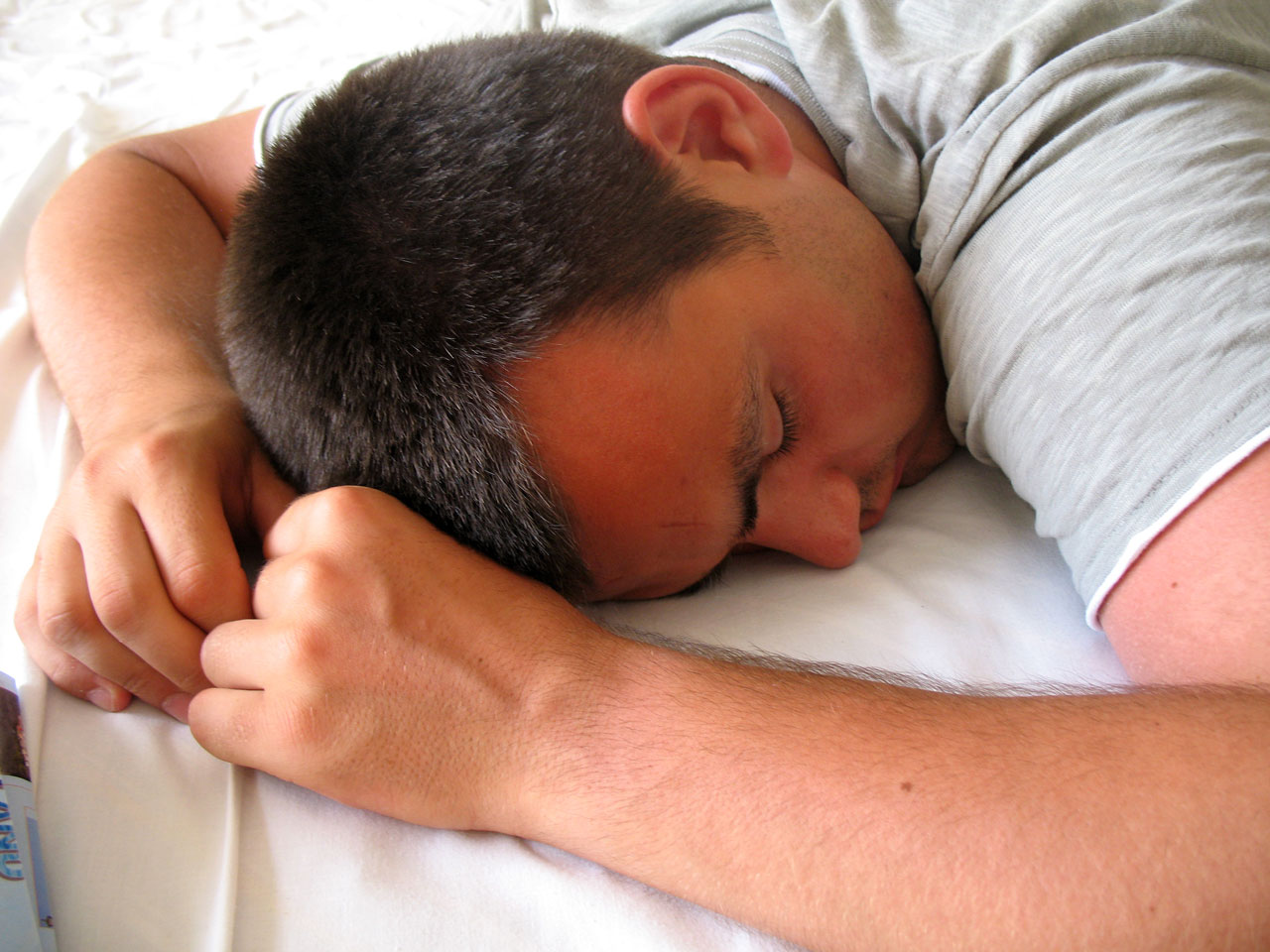
Sleep: Birds Do It, Fish Do It, Elephants, Too. You?

"To be scientifically literate is to empower yourself to know when someone else is lying."
--Neil deGrasse Tyson


Source: NIH.gov
Sleep might seem pretty simple, but scientists are still scratching their heads over questions surrounding this slumbering state. It's unclear exactly why organisms need to sleep, let alone whether every last species actually settles down for siestas.

Asleep
Public Domain Pictures
Researchers acknowledge that regular, consistent sleep plays a major role in brain and body health

Sleep itself isn't all that straightforward, so let's start by describing what's typically defined as sleep. During times of sleep, there's usually a reduction in physical activity and a decreased response to outside stimuli. Sleeping creatures often assume a customary posture -- whether that's lying down for people, hanging upside down for bats, or standing up as is sometimes the case for horses, giraffes and elephants. Sleep is also easily reversible, meaning it's a relatively simple matter to wake up, especially when compared to other states along the continuum of reduced consciousness, such as hibernation or a coma.
It seems most species do sleep, although differences exist between the sleeping patterns of different types of animals. Giraffes require very little sleep; they enjoy only about 30 minutes a day of deep sleep split into several separate sessions. Conversely, brown bats average close to 20 hours a day. Most mammal species need significantly more sleep when they're young, although baby orcas and baby bottlenose dolphins appear to not sleep at all during the first few months of life.


Fighting a National Sleep Crisis

Many people view sleep as merely a “down time” when their brains shut off and their bodies rest. People may cut back on sleep, thinking it won’t be a problem, because other responsibilities seem much more important. But research shows that a number of vital tasks carried out during sleep help people stay healthy and function at their best. While you sleep, your brain is hard at work forming the pathways necessary for learning and creating memories and new insights. Without enough sleep, you can’t focus and pay attention or respond quickly. A lack of sleep may even cause mood problems. Also, growing evidence shows that a chronic lack of sleep increases your risk of obesity, diabetes, cardiovascular disease, and infections.

Despite growing support for the idea that adequate sleep, like adequate nutrition and physical activity, is vital to our well-being, people are sleeping less. The nonstop “24/7” nature of the world today encourages longer or nighttime work hours and offers continual access to entertainment and other activities. To keep up, people cut back on sleep. A common myth is that people can learn to get by on little sleep (such as less than 6 hours a night) with no adverse effects. Research suggests, however, that adults need at least 7–8 hours of sleep each night to be well rested. Indeed, in 1910, most people slept 9 hours a night. But recent surveys show the average adult now sleeps fewer than 7 hours a night.

Chronic sleep loss or sleep disorders may affect as many as 70 million Americans.

More than one-third of adults report daytime sleepiness so severe that it interferes with work, driving, and social functioning at least a few days each month. Evidence also shows that children’s and adolescents’ sleep is shorter than recommended. These trends have been linked to increased exposure to electronic media. Lack of sleep may have a direct effect on children’s health, behavior, and development. Chronic sleep loss or sleep disorders may affect as many as 70 million Americans. This may result in an annual cost of $16 billion in health care expenses and $50 billion in lost productivity.

LEARN MORE ABOUT YOUR BRAIN:

Blogger sale: Just $7.00. Order on Amazon by clicking here.


Praise for Healing the Brain
"A book that can help medical professionals as well as the general public, Mr. Balog has tackled a subject that is complex and he makes it quite approachable. It has added and enriched my own practice of medicine by making me more aware of issues not often discussed in medical circles."--Peter Paganussi, MD, Virginia

"Author David Balog has done an excellent job of creating a book for educators (or anyone working with youth) that explains the complicated workings of the brain in an easy to understand manner. Balog goes on to discuss various types of trauma and how the adolescent brain responds to trauma such as depression, stress, addiction, risk taking, PTSD, etc. LGBT/Q youth may experience trauma in ways majority youth often do not. The author shares important coping strategies....I highly recommend this book!"--Carol Dopp, M.Ed. 


"David Balog understands the strain of alienation, so he tackles this subject with compassion and concern. Mr. Balog draws on his knowledge of brain science to give readers insight into what happens to young people under tremendous stress, and he offers practical advice on how to help and cope."--Gary Cottle, author

"Provides comfort and learning to the reader. Flows easily from one topic to the next and knits tidbits of information together in a unifying mosaic. Easy to read. Difficult to put down." --Michael J. Colucciello, Jr., New York State Dept. of Mental Health researcher, retired.

"Well researched, fleshed out with relevant case histories, this book packs a lot of solid information into its 152 pages. Written in an engaging style for the layman, it covers a wide range of topics. One learns a great deal about the biology of stress, particularly the vulnerability of the brain in the pre-adult years. This book also provides a glossary of key brain science terms and a listing of organizations serving the LGBT /Q community and resources on the brain."--Gary Bordzuk, librarian