Tuesday, July 4, 2017

Summer reading: Arm yourself with knowledge for Trumpcare fight

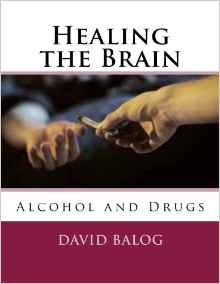
  • The brain controls much of our health. In the healthcare fight, arm yourself with the latest information on brain health. Whether it is drug addiction, stress and trauma, the common headache, memory loss and Alzheimer's, or stroke, there's an e-book for you, for only $2.00 per book for a limited time only. 

    These books are made possible by A Thousand Moms, a 501(c)3 in New York State (officially the National Association of Former Foster Children). Please help us support LGBTQ youth with your donation. Leave a message in your donation message regarding the e-book you wish. Thank you.

    Click here to donate and pick your ebook.


Healing the Brain Series

  • Books for parents, teachers, counselors, clergy and concerned individuals.
  • Presents easy-to-understand coverage of the brain's role in stress and health.

    • Titles also cover Fetal Alcohol Spectrum Disorders, Money & Stress, Concussions & TBI


Praise for Healing the Brain


Author David Balog has done an excellent job of creating a book for educators (or anyone working with youth) that explains the complicated workings of the brain in an easy to understand manner. Balog goes on to discuss various types of trauma and how the adolescent brain responds to trauma such as depression, stress, addiction, risk taking, PTSD, etc. LGBT/Q youth may experience trauma in ways majority youth often do not. The author shares important coping strategies....I highly recommend this book!--Carol Dopp, M.Ed. 


"David Balog understands the strain of alienation, so he tackles this subject with compassion and concern. Mr. Balog draws on his knowledge of brain science to give readers insight into what happens to young people under tremendous stress, and he offers practical advice on how to help and cope."--Gary Cottle, author


"Provides comfort and learning to the reader. Flows easily from one topic to the next and knits tidbits of information together in a unifying mosaic. Easy to read. Difficult to put down." --Michael J. Colucciello, Jr., New York State Dept. of Mental Health researcher, retired.

​

"Wonderfully written by Mr. Balog. A book that can help medical professionals as well as the general public, Mr Balog has tackled a subject that is complex and he makes it quite approachable. It has added and enriched my own practice of medicine by making me more aware of issues not often discussed in medical circles."--Peter Paganussi, MD, Virginia

Click here to donate and pick your ebook.


Sunday, July 2, 2017

Mixing booze, pot is a serious threat to traffic safety

Drivers testing positive for alcohol and marijuana are five times more likely to be responsible for causing fatal two-vehicle crashes than sober drivers involved in the same crashes

Summary:
Use of marijuana in combination with alcohol by drivers is especially dangerous, according to a study. Drivers who used alcohol, marijuana, or both were significantly more likely to be responsible for causing fatal two-vehicle crashes compared to drivers who were involved in the same crashes but used neither of the substances.
FULL STORY

Drivers who used alcohol, marijuana, or both were significantly more likely to be responsible for causing fatal two-vehicle crashes compared to drivers who were involved in the same crashes but used neither of the substances.
 
Credit: © chalabala / Fotolia

Use of marijuana in combination with alcohol by drivers is especially dangerous, according to a latest study conducted at Columbia University's Mailman School of Public Health. Drivers who used alcohol, marijuana, or both were significantly more likely to be responsible for causing fatal two-vehicle crashes compared to drivers who were involved in the same crashes but used neither of the substances. The findings are published in the journal, Annals of Epidemiology.

"The risk of crash initiation from concurrent use of alcohol and marijuana among drivers increases by more than fivefold when compared with drivers who used neither of the substances," said Guohua Li, MD, DrPH, professor of Epidemiology at the Mailman School of Public Health. The study also indicates that when used in isolation, alcohol and marijuana increase crash culpability by 437 percent and 62 percent, respectively.
SPECIAL EVENT: The Drug Crisis--for Parents, Teachers--all concerned individuals.
https://goo.gl/xkt6Jd


The three most common driving errors that led to these fatal crashes were failure to keep in proper lane (43 percent), failure to yield right of way (22 percent), and speeding (21 percent).
Since the mid-1990s, the prevalence of marijuana detected in fatally injured drivers has increased markedly. During the same time period, 28 states and the District of Columbia have enacted legislation to decriminalize marijuana for medical use, including eight states that have further decriminalized possession of small amounts for adult recreational use. Although toxicological testing data indicate a continuing increase in marijuana use among drivers, a positive test does not necessarily infer marijuana-induced impairment.

"While alcohol-impaired driving remains a leading cause of traffic fatalities in the United States, driving under the influence of marijuana and other drugs has become more prevalent in the past two decades," said Dr. Li, who is also the founding director of Columbia University's Center for Injury Epidemiology and Prevention. "Countermeasures targeting both drunk driving and drugged driving are needed to improve traffic safety."

Story Source:
Materials provided by Columbia University's Mailman School of Public Health.

Saturday, July 1, 2017

The Addiction Crisis: New Education Series for Parents, Teachers, Other Concerned Individuals

Please join us...for your family, for yourself.

Save the dates and register now for our "Network of Support: The Addiction Crisis and Our Families." A four-part conference call series on the basics of drug addiction as a brain disease and strategies for parents, teachers, and social workers to better cope with this crisis.

PLEASE SHARE THIS EMAIL WITH YOUR COLLEAGUES, CLIENTS, ETC.

 
Network of Support: The Addiction Crisis and Our Families
A four-part conference-call series for educators, parents, social workers, and other concerned individuals. Tuesdays--July 18, July 25, August 1, and August 8. 11:00 am-12:00 pm EDT or Wednesdays, July 19. July 26. August 2. and August 9, 7:00 pm-8:00 pm EDT. Presented by Fred Elia, president, A Thousand Moms, and David Balog, author, Dana Foundation’s Sourcebook of Brain Science and Healing the Brain: Stress, Trauma and LGBT/Q Youth.
Overdoses are now the leading cause of death in Americans under 50. Only 1 in 4 Americans with opioid addiction are getting the treatment they need. The national opioid addiction crisis is poised to get even worse as new synthetic drugs are introduced. The consequences for the foster care system are stark, and in particular, for LGBT/Q youth in foster care.

Presented in clear, uncomplicated language

To empower participants, coverage in this series will include the basic science behind addiction and why this understanding is so important. Each session will also offer practical strategies for coping with current or potential abuse by a loved one. Topics and dates:

Program:
 
How the Brain Works; Why is addiction a brain disease and why does it matter? Positive Parenting Prevents Drug Abuse: Communication. 60 mins Tues., July 18. 11:00 am - 12:00 pm EDT., or Wed., July 19. 7:00 pm - 8:00 pm EDT. 
 
Opioid/Heroin Abuse: From prescription painkiller to killer. Positive Parenting Prevents Drug Abuse: Encouragement, Negotiation. 60 mins Tues., July 25. 11:00 am - 12:00 pm EDT or Wed., July 26. 7:00 pm - 8:00 pm EDT. 
 
Methamphetamines, Cocaine: Dopamine, the body's life-or-death chemical. Positive Parenting Prevents Drug Abuse: Setting Limits, Supervision. 60 mins. Tues., Aug. 1. 11:00 am - 12:00 pm EDT or Wed., Aug. 2. 7:00 pm - 8:00 pm EDT. 
 
Alcohol, Marijuana: Different means and underestimated. Positive Parenting Prevents Drug Abuse: Knowing your child's friends.60 mins. Tues, Aug. 8. 11:00 am - 12:00 pm EDT. or Wed., Aug. 9. 7:00 pm - 8:00 pm EDT. 
Cost:
  • Organizations, $30 per session, or $100 for all 4 sessions (unlimited access).
  • Individuals: $15 per session, $40 for the entire series.
  • Scholarships available on a limited basis. Write or call to inquire.
  • Contributions are tax deductible.
Lines are limited. RSVP ASAP by July 9 to athousandmoms@yahoo.com or call 518 322-0607. Reserve your line with a contribution to www.AThousandMoms.org

Checks can be mailed to A Thousand Moms, 2367 Curry Road, Schenectady NY 12303.

You will be notified by email of the number to call, with the log-in code. Handouts for each session will be e-mailed to participants.

Wednesday, June 28, 2017

Suicide Is a Preventable Brain Disease


Suicide has claimed the lives of police men and women, soldiers, and our youth. It is a brain disease, as Kay Redfield Jamison, Ph.D., explains.


...Certainly, stress is important and often interacts dangerously with depression. But the most important risk factor for suicide is mental illness, especially depression or bipolar disorder (also known as manic-depressive illness). When depression is accompanied by alcohol or drug abuse, which it commonly is, the risk of suicide increases perilously.

Suicidal depression involves a kind of pain and hopelessness that is impossible to describe — and I have tried. I teach in psychiatry and have written about my bipolar illness, but words struggle to do justice to it. How can you say what it feels like to go from being someone who loves life to wishing only to die?

Suicidal depression is a state of cold, agitated horror and relentless despair. The things that you most love in life leach away. Everything is an effort, all day and throughout the night. There is no hope, no point, no nothing.

The burden you know yourself to be to others is intolerable. So, too, is the agitation from the mania that may simmer within a depression. There is no way out and an endless road ahead. When someone is in this state, suicide can seem a bad choice but the only one.

It has been a long time since I have known suicidal depression. I am one of millions who have been treated for depression and gotten well; I was lucky enough to have a psychiatrist well versed in using lithium and knowledgeable about my illness, and who was also an excellent psychotherapist.

Severely depressed patients, and their family members when possible, should be involved in discussions about suicide. Depression usually dulls the ability to think and remember, so patients should be given written information about their illness and treatment, and about symptoms of particular concern for suicide risk — like agitation, sleeplessness and impulsiveness. Once a suicidally depressed patient has recovered, it is valuable for the doctor, patient and family members to discuss what was helpful in the treatment and what should be done if the person becomes suicidal again.

People who are depressed are not always easy to be with, or to communicate with — depression, irritability and hopelessness can be contagious — so making plans when a patient is well is best. An advance directive that specifies wishes for future treatment and legal arrangements can be helpful. I have one, which specifies, for instance, that I consent to ECT if my doctor and my husband, who is also a physician, think that is the best course of treatment.

Learn more about the brain! Order today!


Praise for Healing the Brain
"A book that can help medical professionals as well as the general public, Mr. Balog has tackled a subject that is complex and he makes it quite approachable. It has added and enriched my own practice of medicine by making me more aware of issues not often discussed in medical circles."--Peter Paganussi, MD, Virginia

"Author David Balog has done an excellent job of creating a book for educators (or anyone working with youth) that explains the complicated workings of the brain in an easy to understand manner. Balog goes on to discuss various types of trauma and how the adolescent brain responds to trauma such as depression, stress, addiction, risk taking, PTSD, etc. LGBT/Q youth may experience trauma in ways majority youth often do not. The author shares important coping strategies....I highly recommend this book!"--Carol Dopp, M.Ed. 

"David Balog understands the strain of alienation, so he tackles this subject with compassion and concern. Mr. Balog draws on his knowledge of brain science to give readers insight into what happens to young people under tremendous stress, and he offers practical advice on how to help and cope."--Gary Cottle, author

"Provides comfort and learning to the reader. Flows easily from one topic to the next and knits tidbits of information together in a unifying mosaic. Easy to read. Difficult to put down." --Michael J. Colucciello, Jr., New York State Dept. of Mental Health researcher, retired.
"Well researched, fleshed out with relevant case histories, this book packs a lot of solid information into its 152 pages. Written in an engaging style for the layman, it covers a wide range of topics. One learns a great deal about the biology of stress, particularly the vulnerability of the brain in the pre-adult years. This book also provides a glossary of key brain science terms and a listing of organizations serving the LGBT /Q community and resources on the brain."--Gary Bordzuk, librarian

Monday, June 26, 2017

Diabetes and the eyes

How can diabetes affect the eyes?

Source: National Institute of Diabetes & Digestive & Kidney Diseases

Too much glucose, also called sugar, in your blood from diabetes can damage four parts of your eye:
  • Retina. The retina is the tissue that lines the back of your eye. The retina converts light coming into your eye into visual messages through the optic nerve to your brain. The macula is the small, sensitive, center part of the retina that gives sharp, detailed vision.
  • Lens. The lens of your eye is clear and is located behind the iris, the colored part of your eye. The lens helps to focus light, or an image, on the retina. 

    Drawing of a cross section of an eye with the following labeled: vitreous gel, iris, pupil, lens, retina, macula, and optic nerve.
  • Vitreous gel. The vitreous gel is a clear, colorless mass that fills the rear of your eye, between the retina and lens.
  • Optic nerve. The optic nerve, at the back of your eye, is your eye’s largest sensory nerve. The optic nerve connects your eye to your brain, carries visual messages from the retina to your brain, and sends messages between your brain and your eye muscles.
Diabetes damage to your eyes—called diabetic eye disease—can cause permanent vision loss, including low vision and blindness. Low vision means that even with regular glasses, contact lenses, medicine, or surgery, you can’t see well enough to easily complete everyday tasks.

How does diabetes affect the retina?

Over time, having high blood glucose levels from diabetes can damage the tiny blood vessels on the retina. Diabetic retinopathy is the medical term for damage to the retina from diabetes.
Retina damage happens slowly. First, the retina’s blood vessels swell. As retina damage worsens, the blood vessels become blocked and cut off the retina’s oxygen supply. In response, new, weak blood vessels grow on the retina and the surface of the vitreous gel. These blood vessels break easily and leak blood into the vitreous gel. The leaking blood keeps light from reaching the retina.
When that happens, you may see floating spots or almost total darkness. One of your eyes may be damaged more than the other, or both eyes may have the same amount of damage. Sometimes the blood clears out by itself. However, you might need surgery to remove the blood.
You might not have any problems with your vision until the damage is severe, so you should have an eye exam at least once a year, even if your vision seems fine. Call your eye doctor right away if you notice any changes in your vision.
Over the years, the swollen and weak blood vessels can form scar tissue and pull the retina away from the back of your eye. If the retina pulls away, a condition called detached retina, you may see floating spots or flashing lights. You may feel as if a curtain has been pulled over part of what you are looking at. A detached retina can cause vision loss or blindness if you don’t take care of it quickly. See an ophthalmologist—a doctor who diagnoses and treats all eye diseases—right away if you have these symptoms.
Drawing of a vase of roses as seen by someone with normal vision.
Normal vision
Drawing of a vase of roses as seen by someone with damage to the retina.
Vision with damage to the retina from diabetes


https://www.amazon.com/Healing-Brain-Stress-Trauma-Youth/dp/1534943773/ref=sr_1_1?ie=UTF8&qid=1498174347&sr=8-1&keywords=David+Balog
Praise for Healing the Brain
"A book that can help medical professionals as well as the general public, Mr. Balog has tackled a subject that is complex and he makes it quite approachable. It has added and enriched my own practice of medicine by making me more aware of issues not often discussed in medical circles."--Peter Paganussi, MD, Virginia

"Author David Balog has done an excellent job of creating a book for educators (or anyone working with youth) that explains the complicated workings of the brain in an easy to understand manner. Balog goes on to discuss various types of trauma and how the adolescent brain responds to trauma such as depression, stress, addiction, risk taking, PTSD, etc. LGBT/Q youth may experience trauma in ways majority youth often do not. The author shares important coping strategies....I highly recommend this book!"--Carol Dopp, M.Ed. 

"David Balog understands the strain of alienation, so he tackles this subject with compassion and concern. Mr. Balog draws on his knowledge of brain science to give readers insight into what happens to young people under tremendous stress, and he offers practical advice on how to help and cope."--Gary Cottle, author

"Provides comfort and learning to the reader. Flows easily from one topic to the next and knits tidbits of information together in a unifying mosaic. Easy to read. Difficult to put down." --Michael J. Colucciello, Jr., New York State Dept. of Mental Health researcher, retired.
"Well researched, fleshed out with relevant case histories, this book packs a lot of solid information into its 152 pages. Written in an engaging style for the layman, it covers a wide range of topics. One learns a great deal about the biology of stress, particularly the vulnerability of the brain in the pre-adult years. This book also provides a glossary of key brain science terms and a listing of organizations serving the LGBT /Q community and resources on the brain."--Gary Bordzuk, librarian

Thursday, June 22, 2017

“It Gets Better” Is Bad Advice For Gay Kids, Study Claims

June is LGBT Pride month, a commemoration of the struggle for gay rights. It honors the Stonewall uprising that took place in New York City in June, 1969

"Asking youth to accept negative experiences as the only coping strategy potentially exacerbates stress," claims researchers at the University of Arizona.


The It Gets Better projects was launched by Dan Savage and Terry Miller in 2010, in response to a chilling number of suicides by LGBT teens facing bullying. Since then, it’s added more than 50,000 videos from people of all walks of life.
   
But a new study suggests imagining a better future may not be an ideal coping mechanism for struggling teens—and may, in fact, do more harm than good.

University of Arizona professor Russell Toomey and his team examined profiles of 245 lesbian, gay and bisexual (LGB) young adults to see how they coped with sexual-minority stress during adolescence. Three common strategies emerged: Cognitive strategies (the “It Gets Better” approach), alternative-seeking strategies (changing social circles or schools), and “LGB-specific” strategies (joining a gay-straight alliance).

Young people who sought out LGB-specific strategies reported better psychosocial adjustment and were more likely to graduate high school. Cognitive and alternative-seeking strategies were associated with poorer adjustment, higher incidents of depression and lower self-esteem. Alternative-seeking strategies were even linked to lower likelihood of finishing high school.

“Our findings question the ’It Gets Better’ narrative that’s been given to LGB youth,” said Toomey. “Asking youth to accept negative experiences as the only coping strategy potentially exacerbates stress.”

Alternative-seeking strategies, like changing schools, put the onus on the victim, says Toomey.
“The child who has a different sexuality or gender identity expression is then labeled as the problem instead of really addressing the issue,” he explains. “Alternative-seeking strategies involve finding new spaces to thrive in, rather than coping with the space that you’re in… Our results find that that’s associated with more depressive symptoms, less self-esteem and less satisfaction in life.”

“Everybody needs support, and it’s really important, particularly in adolescence, to find other people who are like you, since you are going through, developmentally, a stage where you may frequently think that you’re the only one that’s experiencing whatever you’re experiencing. Having a support group where other people look like you and experience the same thing as you is really important for health, well-being, development and sense of identity.”

Toomey’s findings, based on data from San Francisco State University’s Family Acceptance Project, will be published in the Journal of Homosexuality.

Learn more about the brain! Order today!


https://www.amazon.com/Healing-Brain-Stress-Trauma-Youth/dp/1534943773/ref=sr_1_1?ie=UTF8&qid=1498174347&sr=8-1&keywords=David+Balog
 
Praise for Healing the Brain
"A book that can help medical professionals as well as the general public, Mr. Balog has tackled a subject that is complex and he makes it quite approachable. It has added and enriched my own practice of medicine by making me more aware of issues not often discussed in medical circles."--Peter Paganussi, MD, Virginia

"Author David Balog has done an excellent job of creating a book for educators (or anyone working with youth) that explains the complicated workings of the brain in an easy to understand manner. Balog goes on to discuss various types of trauma and how the adolescent brain responds to trauma such as depression, stress, addiction, risk taking, PTSD, etc. LGBT/Q youth may experience trauma in ways majority youth often do not. The author shares important coping strategies....I highly recommend this book!"--Carol Dopp, M.Ed. 

"David Balog understands the strain of alienation, so he tackles this subject with compassion and concern. Mr. Balog draws on his knowledge of brain science to give readers insight into what happens to young people under tremendous stress, and he offers practical advice on how to help and cope."--Gary Cottle, author

"Provides comfort and learning to the reader. Flows easily from one topic to the next and knits tidbits of information together in a unifying mosaic. Easy to read. Difficult to put down." --Michael J. Colucciello, Jr., New York State Dept. of Mental Health researcher, retired.
 
"Well researched, fleshed out with relevant case histories, this book packs a lot of solid information into its 152 pages. Written in an engaging style for the layman, it covers a wide range of topics. One learns a great deal about the biology of stress, particularly the vulnerability of the brain in the pre-adult years. This book also provides a glossary of key brain science terms and a listing of organizations serving the LGBT /Q community and resources on the brain."--Gary Bordzuk, librarian

Wednesday, June 21, 2017

Progress on Parkinson's

Parkinson's is partly an autoimmune disease, study finds

First direct evidence that abnormal protein in Parkinson's disease triggers immune response

Date:
June 21, 2017
Source:
Columbia University Medical Center
Summary:
Researchers have found the first direct evidence that autoimmunity plays a role in Parkinson's disease, suggesting that immunosuppressants might play a role in treatment.

Autoimmunity plays a role in Parkinson's disease, according to new research.
Credit: © Feng Yu / Fotolia

Researchers have found the first direct evidence that autoimmunity -- in which the immune system attacks the body's own tissues -- plays a role in Parkinson's disease, the neurodegenerative movement disorder. The findings raise the possibility that the death of neurons in Parkinson's could be prevented by therapies that dampen the immune response.

The study, led by scientists at Columbia University Medical Center (CUMC) and the La Jolla Institute for Allergy and Immunology, was published today in Nature.

"The findings raise the possibility that the death of neurons in Parkinson's could be prevented by therapies that dampen the immune response."

"The idea that a malfunctioning immune system contributes to Parkinson's dates back almost 100 years," said study co-leader David Sulzer, PhD, professor of neurobiology (in psychiatry, neurology and pharmacology) at CUMC. "But until now, no one has been able to connect the dots. Our findings show that two fragments of alpha-synuclein, a protein that accumulates in the brain cells of people with Parkinson's, can activate the T cells involved in autoimmune attacks.

"It remains to be seen whether the immune response to alpha-synuclein is an initial cause of Parkinson's, or if it contributes to neuronal death and worsening symptoms after the onset of the disease," said study co-leader Alessandro Sette, Dr. Biol. Sci., professor in the Center for Infectious Disease at La Jolla Institute for Allergy and Immunology in La Jolla, Calif. "These findings, however, could provide a much-needed diagnostic test for Parkinson's disease, and could help us to identify individuals at risk or in the early stages of the disease."

Scientists once thought that neurons were protected from autoimmune attacks. However, in a 2014 study, Dr. Sulzer's lab demonstrated that dopamine neurons (those affected by Parkinson's disease) are vulnerable because they have proteins on the cell surface that help the immune system recognize foreign substances. As a result, they concluded, T cells had the potential to mistake neurons damaged by Parkinson's disease for foreign invaders.

The new study found that T cells can be tricked into thinking dopamine neurons are foreign by the buildup of damaged alpha-synuclein proteins, a key feature of Parkinson's disease. "In most cases of Parkinson's, dopamine neurons become filled with structures called Lewy bodies, which are primarily composed of a misfolded form of alpha-synuclein," said Dr. Sulzer.

The Sulzer and Sette labs are now analyzing these responses in additional patients, and are working to identify the molecular steps that lead to the autoimmune response in animal and cellular models.
"Our findings raise the possibility that an immunotherapy approach could be used to increase the immune system's tolerance for alpha-synuclein, which could help to ameliorate or prevent worsening symptoms in Parkinson's disease patients," said Dr. Sette.

Story Source:
Materials provided by Columbia University Medical Center.


Learn more about the brain! Order today!


Praise for Healing the Brain
"A book that can help medical professionals as well as the general public, Mr. Balog has tackled a subject that is complex and he makes it quite approachable. It has added and enriched my own practice of medicine by making me more aware of issues not often discussed in medical circles."--Peter Paganussi, MD, Virginia

"Author David Balog has done an excellent job of creating a book for educators (or anyone working with youth) that explains the complicated workings of the brain in an easy to understand manner. Balog goes on to discuss various types of trauma and how the adolescent brain responds to trauma such as depression, stress, addiction, risk taking, PTSD, etc. LGBT/Q youth may experience trauma in ways majority youth often do not. The author shares important coping strategies....I highly recommend this book!"--Carol Dopp, M.Ed. 

"David Balog understands the strain of alienation, so he tackles this subject with compassion and concern. Mr. Balog draws on his knowledge of brain science to give readers insight into what happens to young people under tremendous stress, and he offers practical advice on how to help and cope."--Gary Cottle, author

"Provides comfort and learning to the reader. Flows easily from one topic to the next and knits tidbits of information together in a unifying mosaic. Easy to read. Difficult to put down." --Michael J. Colucciello, Jr., New York State Dept. of Mental Health researcher, retired.
"Well researched, fleshed out with relevant case histories, this book packs a lot of solid information into its 152 pages. Written in an engaging style for the layman, it covers a wide range of topics. One learns a great deal about the biology of stress, particularly the vulnerability of the brain in the pre-adult years. This book also provides a glossary of key brain science terms and a listing of organizations serving the LGBT /Q community and resources on the brain."--Gary Bordzuk, librarian