Monday, November 14, 2016

Depressed post-Trump? Know the signs.


Depressed after the recent election? Many Americans are. When does just having the "blues" turn into something serious, worthy of medical attention? Read this excerpt from our new book, Healing the Brain.

Scientists have long acknowledged the brain’s circuitry and biochemical processes as integral aspects of depression, specifically as these processes control neurotransmitters that control mood. Beginning in the 1970s, neuroimaging technologies rapidly advanced the study of how brains function – or fail to function. Functional magnetic resonance imaging (fMRI), which became available to researchers over the past 20 years, gives cognitive neuroscientists a 3-D view of neural activity within the brain.

Studies using this technology demonstrate the role of neurotransmitters serotonin, norepinephrine, and dopamine as they regulate mood in the human body. Scientists still aren’t exactly sure why individuals with depression have low amounts of these neurotransmitters, yet they do know that for some, antidepressants that specifically target how the brain balances these these neurotransmitters are an effective therapeutic intervention.

Studies show the benefits of combining medication and psychotherapy.

Yet much controversy surrounds the issue of prescribing antidepressants, with some claiming that too often an individual is prescribed a pill without receiving the benefits of psychotherapy or talk therapy. Leigh Matthews, psychologist and director of Urban Psychology in Brisbane, Australia, treats adult clients for depression. There is an abundance of studies evidencing the efficacy of the combination of medication and psychotherapy.

But psychology, Matthews said, tries to first focus on treatment without medication, so it’s not always respected by other disciplines, such as general practice physicians or psychiatrists. But the process of psychotherapy and its outcomes last far longer than simply prescribing medication. Yet there are times when medication is absolutely essential, according to Matthews, who also supervises psychologists-in-training at the University of QLD, and those completing their internships through the Australian College of Applied Psychology.

She said when clients are so depressed that they can’t get out of bed, think rationally, or use any of the strategies proposed in session, then it’s time for medication. Or when clients verbalize suicidal ideation and intent indicating severe depression, then medication is absolutely required.

Also if an individual has a long history of depression, or a strong family history suggesting a genetic basis, then “perhaps they, like a diabetic requiring insulin, need long-term pharmacotherapy to rectify neurochemical imbalances.”

Read the Book!


Sunday, November 13, 2016

Trump and LGBT Youth (and Adult) Depression

So it's been a few days since the astonishing annointing of Mr. Trump. Calls to suicide hotlines have spiked among our most vulnerable and that includes gay youth. We look closer in this excerpt from our new book Healing the Brain.

Risk Factors for Depression in Gay Teenagers
Gay teenagers not only face the normal physical and emotional stresses of adolescence, but must also contend with developing their sexual identities in a potentially hostile environment.

While straight teenagers also work to develop sexual identities, their peers are generally more accepting of their choices. But gay teenagers often must deal with rejection and teasing because of their sexual orientations.

While society has generally grown more tolerant of homosexuality, gay teenagers still face frequent discrimination and bullying, according to “Victimization of Lesbian, Gay, and Bisexual Youth in a Community Setting.”

The article, published in The Journal of Community Psychology, examined how frequently gay teenagers experienced rejection, victimization, and other stressors in their lives.

Results from the study showed 80 per cent of the gay teens experienced verbal insults while 44 per cent experienced physical assault.

Researchers Anthony R. D'Augelli and Neil W. Pilkington sampled 194 gay teenagers and surveyed how often they were verbally insulted, physically assaulted, and how their homosexuality affected their family and peer relationships. Results from the study showed 80 per cent of the teens experienced verbal insults because peers knew or thought the teens were gay, while a further 44 per cent experienced physical assault. Additionally, 43 per cent of males and 54 per cent of females said they had lost at least one friend after disclosing their sexuality
.
Even though these teens are victimized, they are often fearful to seek help or report bullying because it would reveal their sexual orientations. Their parents might not accept being gay and feel unsympathetic and even might blame the teenager for the bullying. Consider a 14-year-old boy who is a freshman in high school. The boy experiences the same stresses about tests and homework as the other students, but he keeps his biggest source of his stress hidden from his peers, family members, and teachers.

From a young age, the teen knew he was attracted to other boys. Until high school though, he never experienced the kind of bullying he now faces. Now, walking the halls, he's often called a “sissy,” “girly-boy,” and other more vulgar anti-gay slurs. Soon, the boy wonders if something is wrong with him. He wonders why the other boys in class won't accept him, and if he'll ever be “normal” in their eyes.

He literally has no one to turn to. He hasn't told his parents or close friends his secret, and is afraid that they'll reject him just as his other peers have. The worst part is that the harassment is getting worse, and he isn't sure how to handle the situation anymore. Fearing stigmatization, the boy in the example felt forced to conceal his homosexuality from potential support groups like friends, counselors, and family members. But sometimes, by “coming out” to these groups, some gay teenagers find the help they need to combat negative experiences in high school.

The American Academy of Child and Adolescent Psychiatry lists several concerns of gay teenagers as they develop sexual identities.
Some of these concerns include:

Saturday, November 12, 2016

PTSD and Trump: How's Your Health?

After the nation- world-wide shock of Trump's election, many are having health problems. Stress is real and affects our brain and therefore our health. Learn from this excerpt in Healing the Brain.


A Harvest of Psychiatric Disorders
PTSD: A Breakthrough in Diagnosis
In 1980 the mental health community established the diagnosis of Post Traumatic Stress Disorder, PTSD, and revolutionized the way the field views the effects of stress. This change acknowledged that many of the symptoms people experience after exposure to trauma can be long-lasting, if not permanent. Before that shift, the field tended to view stress-related symptoms as a transient, normal response to an adverse life event, not requiring intensive treatment.

Furthermore, before 1980, people who did develop long-term symptoms following trauma were viewed as implicitly vulnerable; the role of the actual event in precipitating their symptoms was minimized. For a while, in a reversal of previous thinking, experts expected most trauma survivors to develop PTSD. More recent research has confirmed that only about 25 per cent of individuals who are exposed to trauma develop PTSD.

So who is likely to develop PTSD following a traumatic experience, and why? The answer is not yet clear, but it now appears that PTSD represents a failure of the body to extinguish or contain the normal nervous system response to stress. This failure is associated with many factors:

  • the nature and severity of the traumatic event
  • preexisting risk factors related to previous exposure to stress or trauma, particularly in childhood
  • the individual’s history of psychological and behavioral problems, if any
  • the person’s level of education, and other cognitive factors
  • family history—whether parents or other relatives had anxiety, depression, or PTSD

People who develop PTSD are also more likely to develop other psychiatric disorders involving mood (depression, anxiety and panic, bipolar disorder), personality, eating, and substance dependence.

People also seek medical help for problems that may develop after the trauma that can mask or intensify PTSD symptoms. These symptoms include chronic pain, fatigue, headaches, muscle cramps, and self-destructive behavior, including alcohol or drug abuse and suicidal gestures. Often, survivors are not aware that their physical symptoms are related to their traumatic experiences. They may even fail to mention those disturbing events to their physicians, which can make PTSD difficult to diagnose accurately.


Friday, November 11, 2016

Now Trump: Minority Stress and LGBT/Q Health

A few days after the earthquake of Trump's election, we must face our fears. Here is one view of gay life pre-Trump. What will the next years bring. From our book, Healing the Brain.
 

Gay/artist and activist Leo Herrera recently wrote: “I grew up an illegal Mexican immigrant in Republican Arizona, as far from “gay” as possible. Yet, the challenges and hopes I’ve faced as a gay man are the same as all of my peers across the world, as if homosexuality can transcend culture, geography and race. Homophobia is the same in New York City as it is in Russia, HIV and its stigma are as devastating in the South as they are in San Francisco, our sexual freedom is as reviled in America as in Uganda…and yet we are all moving forward on a global scale: our contributions to nightlife and the arts are as pronounced in Berlin as they are in Provincetown, the legalization of our unions is spanning continents, the unmistakable softness of our gestures transcends language. I don’t know if these universal similarities make homosexuality a culture, a race or a shared experience. What I do know is that they stir a deep pride in me that is almost religious.”

Get the book!


Thursday, November 10, 2016

Minority stress, now on steroids


Fifty per-cent of America is angry at the election results. None more than minorities. Here is the section on minority stress from our book, Healing the Brain.

The following is adapted from “Public Health Implications of Same-Sex Marriage,” Am J Public Health. 2011 June; 101(6): 986–990. William C. Buffie, MD. (Dr. Buffie has provided medical information for A Thousand Moms.)

One only has to consider the rash of recent teen suicides resulting from anti-gay bullying to begin to comprehend the magnitude of the public health problem faced by this country and its LGBT sexual minority. Despite the prevalence of same-sex households and campaigns to protect human rights, gay persons find the very nature of their being constantly debated within our legislative bodies, the courts, and the mainstream media. They are subject to ridicule and are commonly the targets of demeaning and derogatory slang terms or insensitive jokes. Their morality and value as human beings are frequently questioned by individuals and organizations ignorant or unaccepting of current medical and social  science literature concerning the gay population….

Being cast in such a light strongly contributes to the phenomenon known as “minority stress,” which members of this community experience in their struggle for validation and acceptance in our heterosexist society.

for LGBT People in America
Wikimedia Commons
To assert and celebrate their community, each year LGBT/Q individuals gather in June at Pride events worldwide.

Unique to the LGBT form of minority stress—as opposed to minority stress engendered by societal prejudice based upon race, ethnicity, gender, or disability—is that one's sexual orientation usually is invisible to others. As a result, in addition to being the target of overt discrimination, LGBT individuals are constantly subject to subtle, inadvertent, or insensitive attacks on the core of their very nature, even by people who profess no disdain or disrespect for them.

For instance, if someone has a lesbian colleague but doesn't know the colleague's orientation, an innocent question—such as asking her if she has a boyfriend, rather than asking “Are you seeing someone special?”—implies a judgment regarding what is “normal.” When the “other” is invisible, faceless, or nameless, it is common for those in power to ignore the reality of the other's existence and the challenges the other faces. This interplay of power and prejudice, whether overt or covert, constitutes the phenomenon of heterosexism. Similarities to the racism and sexism so prevalent during the civil rights movements of past generations are obvious.

Internalizing Prejudice

This sexual-minority status, as explained by Riggle and Rostosky, is defined by a culture of devaluation, including overt and subtle prejudice and discrimination, [one that] creates and reinforces the chronic, everyday stress that interferes with optimal human development and well-being.

LGBT individuals, stigmatized by negative societal attitudes directed at the essence of their being, struggle on a daily basis to balance the dual dangers of publicly engaging their need for equality and validation and remaining closeted to find some calm through an escape from public scrutiny. Many gay persons internalize such discrimination and prejudice. Fractured social-support mechanisms and minority-stress–associated low self-esteem contribute to a high prevalence of self-destructive behaviors, such as substance abuse, suicide, and risky sexual behavior.

Institutionalized stigma stands at the begets higher rates of sexually transmitted diseases, depression, suicide, and drug use.

Hatzenbuehler et al. studied more than 34,000 lesbian, gay, and bisexual participants and found empirical evidence of the negative health effects of discriminatory policies relative to marriage equality. They surveyed participants in 2001 and 2002 on a range of psychological health indicators, and they administered the same survey in 2004 and 2005, after 14 states approved constitutional amendments limiting marriage to opposite-sex unions. In the second set of responses, participants reported significantly higher rates of psychiatric disorders, with increases of 36% for any mood disorder, 248% for generalized anxiety disorder, 42% for alcohol use disorder, and 36% for psychiatric comorbidity. In the comparable control group from states without such amendments during the same time period, there were no significant increases in these psychiatric disorders.

Although causality may be difficult to establish, the association and prevalence of these disorders suggest that institutionalized stigma and its attendant internalized prejudice (i.e., minority stress) stand at the forefront of this cycle, begetting higher rates of sexually transmitted diseases, depression, suicide, and drug use—all of which, when combined with suboptimal access to health care and fractured family-support systems, eventually contribute to higher overall mortality as well as morbidity from various cancers, cirrhosis, hypertension, and heart disease….


Wednesday, November 9, 2016

PTSD: Wounds that Time Won't Heal

With many Americans in shock after this election, it's good to take a look at our stress response. Excerpted from Healing the Brain.

The Biology of Stress

Imagine you are a zebra grazing on the plains of Africa. It's midday. The sun is bright, the food is plentiful.

Suddenly you sense an attack. A lion is chasing you. Its fight or flight in action.

Your brain tells your body to prepare for a fight or take flight. The body responds by preparing extra hormones to create more energy and by increasing the rate the heart pumps blood to the muscles. For most animals, this stress reaction lasts for just a short time and it saves lives.

Wikimedia Commons
Why don’t zebras get ulcers? According to Dr. Robert Sapolsky, their stress is decidedly short term, not long term.

As a body is preparing for fight or flight, however, practically all systems, such as digestion, physical growth, and warding off diseases are placed on hold. This means that people for whom stress has become a way of life are endangering their overall health. Researchers have learned by studying primates whose systems are similar to human beings that those who learn to have control over their lives and are able to reduce or avoid stress live longer and healthier lives.

Are zebras better equipped to deal with stress than humans? No. However, according to Dr. Robert Sapolsky, author of Why Zebras Don't Get Ulcers, "For a zebra, stress is three minutes of some screaming terror running from a lion. After the chase, either it's over or they are." On the other hand humans, he says, have constructed a network of social stressors. Since we are obliged to live in this framework, stress builds up.

Nature.com
While the stress response activates automatically, its duration and intensity relies on factors such as individual temperament.

How do the brain and the body react to stress? Stress, such as the threat of attack, forces various changes in the body. First, adrenaline causes an increase in heart rate and blood pressure so that blood can be sent to muscles faster. Second, the brain’s hypothalamus signals the pituitary gland to stimulate the adrenal gland (specifically the adrenal cortex) to produce cortisol.

This stress hormone, a longer-acting steroid, helps the body to mobilize energy. However, prolonged exposure to cortisol can damage virtually every part of the body. Chronic high blood pressure can cause blood vessel damage and the long-term shutdown of digestion can lead to ulcers.


SimplyPsychology.org
Stress, such as the threat of attack, forces changes in the body carried out by the hypothalamus-pituitary-adrenal axis (HPA).

Why do some people experience more stress than others? Individuals who feel they have control over their lives appear to experience less stress. It also depends on personality and temperament. Aggressive, competitive types are more likely to define a situation as stressful than a passive, accommodating personality. A universal stress producer seems to be social isolation.

PTSD: A Breakthrough in Diagnosis
In 1980 the mental health community established the diagnosis of Post Traumatic Stress Disorder, PTSD, and revolutionized the way the field views the effects of stress. This change acknowledged that many of the symptoms people experience after exposure to trauma can be long-lasting, if not permanent. Before that shift, the field tended to view stress-related symptoms as a transient, normal response to an adverse life event, not requiring intensive treatment.

Furthermore, before 1980, people who did develop long-term symptoms following trauma were viewed as implicitly vulnerable; the role of the actual event in precipitating their symptoms was minimized. For a while, in a reversal of previous thinking, experts expected most trauma survivors to develop PTSD. More recent research has confirmed that only about 25 per cent of individuals who are exposed to trauma develop PTSD.

So who is likely to develop PTSD following a traumatic experience, and why? The answer is not yet clear, but it now appears that PTSD represents a failure of the body to extinguish or contain the normal nervous system response to stress. This failure is associated with many factors:

  • the nature and severity of the traumatic event
  • preexisting risk factors related to previous exposure to stress or trauma, particularly in childhood
  • the individual’s history of psychological and behavioral problems, if any
  • the person’s level of education, and other cognitive factors
  • family history—whether parents or other relatives had anxiety, depression, or PTSD

People who develop PTSD are also more likely to develop other psychiatric disorders involving mood (depression, anxiety and panic, bipolar disorder), personality, eating, and substance dependence.


Tuesday, November 8, 2016

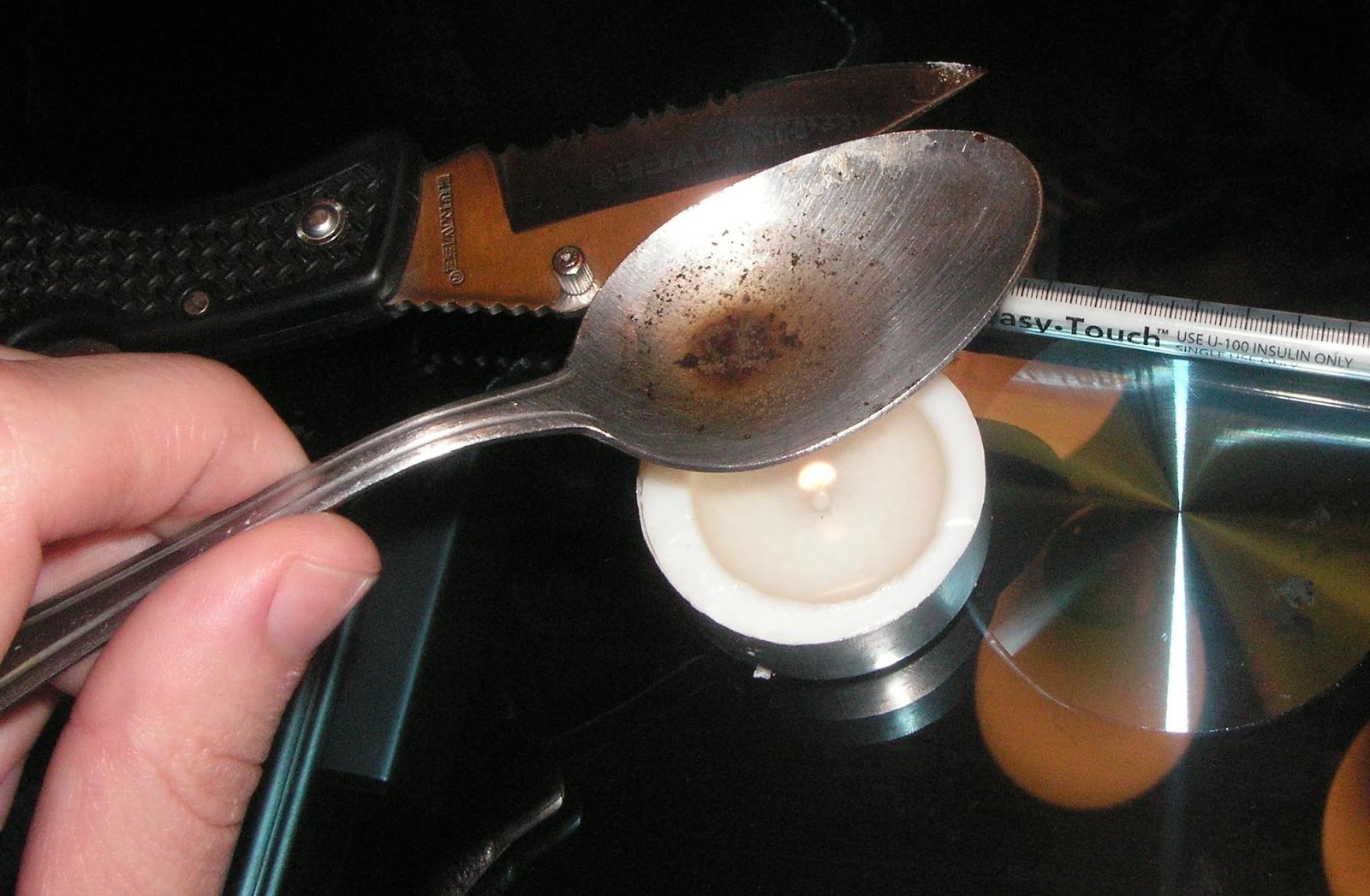
How heroin destroys lives

A friend once said that he was warned not to even try heroin. "You will," he was told, "feel like you need to shower constantly."  In this excerpt from Healing the Brain, we look at essentials of heroin.

The Heroin Epidemic
Heroin is an illegal, highly addictive drug processed from morphine, a naturally occurring substance extracted from the seed pod of certain varieties of poppy plants. It is typically sold as a white or brownish powder that is “cut” with sugars, starch, powdered milk, or quinine. Pure heroin is a white powder with a bitter taste that predominantly originates in South America and, to a lesser extent, from Southeast Asia, and dominates U.S. markets east of the Mississippi River.

File:Heroin.JPG
Wikimedia Commons
Increased use of heroin has ravaged families, schools, communities, and a generation of youth.

Highly pure heroin can be snorted or smoked and may be more appealing to new users because it eliminates the stigma associated with injection drug use. “Black tar” heroin is sticky like roofing tar or hard like coal and is predominantly produced in Mexico and sold in U.S. areas west of the Mississippi River.

The dark color associated with black tar heroin results from crude processing methods that leave behind impurities. Impure heroin is usually dissolved, diluted, and injected into veins, muscles, or under the skin.

What are the immediate (short-term) effects of
heroin use?
Once heroin enters the brain, it is converted to morphine and binds rapidly to opioid receptors. Abusers typically report feeling a surge of pleasurable sensation—a “rush.” The intensity of the rush is a function of how much drug is taken and how rapidly the drug enters the brain and binds to the opioid receptors. With heroin, the rush is usually accompanied by a warm flushing of the skin, dry mouth, and a heavy feeling in the extremities, which may be accompanied by nausea, vomiting, and severe itching. After the initial effects, users usually will be drowsy for several hours; mental function is clouded; heart function slows; and breathing is also severely slowed, sometimes enough to be life-threatening. Slowed breathing can also lead to coma and permanent brain damage.

What are the long-term effects of heroin use?
Repeated heroin use changes the physical structure and physiology of the brain, creating long-term imbalances in neuronal and hormonal systems that are not easily reversed.

Studies have shown some deterioration of the brain’s white matter due to heroin use, which may affect decision-making abilities, the ability to regulate behavior, and responses to stressful situations. Heroin also produces profound degrees of tolerance and physical dependence. Tolerance occurs when more and more of the drug is required to achieve the same effects. With physical dependence, the body adapts to the presence of the drug and withdrawal symptoms occur if use is reduced abruptly. Withdrawal may occur within a few hours after the last time the drug is taken. Symptoms of withdrawal include restlessness, muscle and bone pain, insomnia, diarrhea, vomiting, cold flashes with goose bumps (“cold turkey”), and leg movements. Major withdrawal symptoms peak between 24–48 hours after the last dose of heroin and subside after about a week. However, some people have shown persistent withdrawal signs for many months.

Finally, repeated heroin use often results in addiction—a chronic relapsing disease that goes beyond physical dependence and is characterized by uncontrollable drug-seeking no matter the consequences. Heroin is extremely addictive no matter how it is administered, although routes of administration that allow it to reach the brain the fastest (i.e., injection and smoking) increase the risk of addiction. Once a person becomes addicted to heroin, seeking and using the drug becomes their primary purpose in life.